
Vegetables
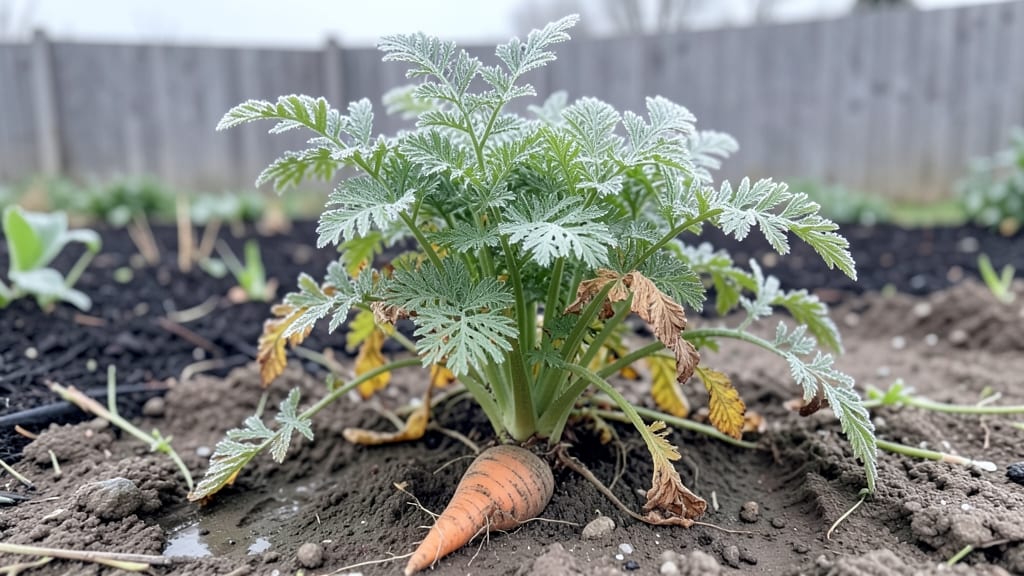
Carrot seeds cannot survive frost, requiring soil temperatures above 50°F (10°C) to germinate properly. Light frosts delay sprouting, while prolonged freezing kills them. Plant in spring after the last frost date for best results.
Carrot seeds are particularly sensitive to cold because their germination process relies on active enzyme systems that shut down below 50°F (10°C).
Unlike hardy crops like spinach or peas, which can tolerate cooler soils, carrot seeds need consistent warmth to break dormancy and sprout. 🌱 Even a brief frost won't kill the seeds outright, but it creates a hostile environment where moisture freezes and thaws unpredictably, often leading to uneven or failed germination.
For gardeners in colder climates, starting seeds indoors under grow lights is the most reliable workaround before transplanting after the last frost date.
What many growers don't realize is that even light frost exposure can compromise seed viability over time. The delicate seed coats crack under freeze-thaw cycles, exposing the embryo to fungal infections.
I've seen firsthand how seeds planted too early in cool, damp soils often rot before they even have a chance to sprout—this is why timing is everything. For maximum success, wait until soil temperatures consistently stay above 50°F (10°C) for at least a week before planting outdoors.
💡 In This Article
- Carrot Seed Germination and Cold Temperature Science
- Protecting Carrot Seeds from Frost Damage
Carrot seed germination and cold temperature science
The key to understanding why carrot seeds struggle with frost lies in their germination biology. These seeds rely on specific enzymes—like α-amylase and β-glucanase—to break down stored starches and cell wall components, fueling the embryonic root's growth.
When temperatures drop below 50°F (10°C), these enzyme systems become sluggish or inactive, halting the biochemical reactions needed for sprouting. The seed's metabolic rate plummets, and without warmth to activate these processes, germination simply stalls or fails entirely. 🔥
Frost creates additional problems through physical disruption. Ice crystals forming in the soil exert pressure on seed coats, sometimes cracking them open prematurely. This exposes the delicate embryo to pathogens like Pythium fungi, which thrive in cold, wet conditions.
Unlike hardy crops such as lettuce (which can germinate at 40°F/4°C) or radishes (45°F/7°C), carrot seeds lack protective mechanisms against freeze-thaw cycles. Their optimal germination window is narrow: 70-85°F (21-29°C), where enzyme activity peaks and moisture absorption occurs efficiently.
Here's what's actually happening at the cellular level: Cold temperatures cause lipid membranes in seed cells to stiffen, reducing permeability and blocking water uptake—the first critical step in germination. The embryo's mitochondria (energy producers) also become less efficient below 50°F (10°C), limiting ATP production needed for cell division.
This explains why even "surviving" frost-exposed seeds often sprout weakly or produce stunted seedlings. The damage accumulates over time, making prolonged cold exposure particularly destructive. ✨
Comparing carrot seeds to other cool-season crops reveals their sensitivity. Lettuce seeds, for example, contain natural antifreeze proteins that protect their membranes during light frosts. Radishes produce secondary metabolites that enhance cold tolerance. Carrots lack these adaptations, making them more akin to warm-season crops like tomatoes in their temperature requirements.
This is why gardeners in Zone 5 or colder regions often treat carrot seeds like delicate annuals rather than hardy vegetables.
One surprising detail is how soil moisture interacts with cold. Wet, frozen soil creates an anaerobic environment where seeds suffocate from lack of oxygen—a common issue in spring planting. The combination of cold and moisture also promotes rot-causing bacteria, which can turn a frost-delayed planting into a total loss.
This is why many experts recommend waiting until soil temperatures are consistently above 50°F (10°C) for at least 7-10 days before planting carrot seeds outdoors. 💫
The science extends to seed storage too. Carrot seeds stored below 40°F (4°C) for extended periods can experience reduced viability due to lipid peroxidation—where cell membranes break down from oxidative stress.
This makes fresh seeds (stored at 68°F/20°C) more frost-sensitive than properly aged seeds, which have undergone controlled drying to stabilize their membranes. For gardeners, this means checking seed packets for harvest years and storing them in cool, dry conditions before planting.