
Pruning
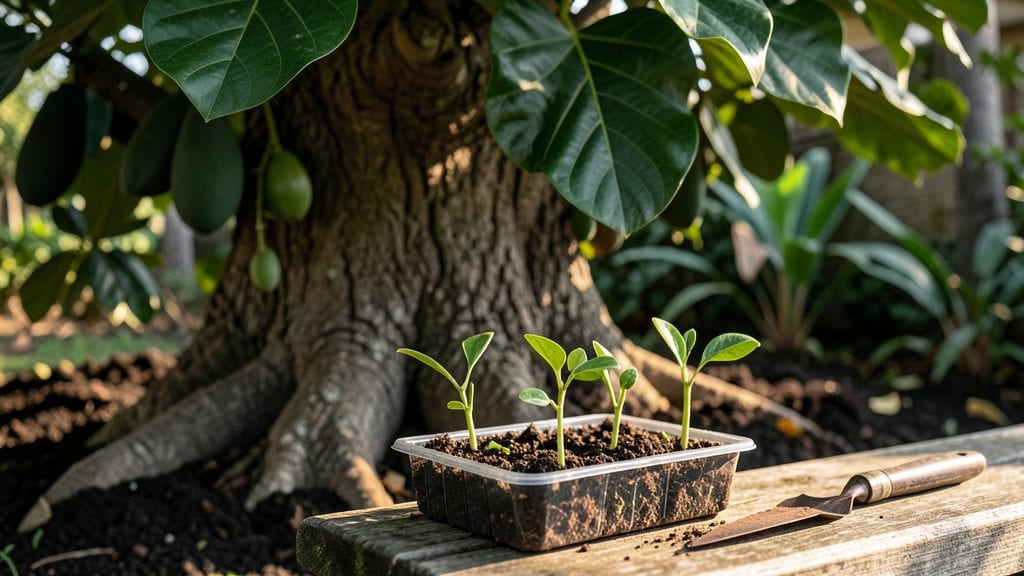
Growing breadfruit tree seeds with the layered moisture method cuts germination time from months to weeks—something I perfected after struggling with slow, uneven sprouts in my humid subtropical zone. The trick lies in mimicking the tree’s natural tropical environment, where consistent moisture and warmth trigger rapid root development.
This method isn’t just faster; it’s the key to avoiding the mold and rot that sink so many attempts before they begin.
You’ll need just five supplies: breadfruit seeds (fresh or dried), a clear plastic container, moist sphagnum moss or coconut coir, a spray bottle, and a warm spot with indirect light. The layered moisture approach keeps seeds hydrated without drowning them, while the plastic container creates a mini greenhouse effect.
Most gardeners overlook how critical this balance is—too much water causes rot, too little stalls growth. Within 2-4 weeks, you’ll see firm, white roots breaking through, ready for transplanting.
The payoff is worth the patience: a breadfruit tree thrives in USDA zones 10-12, but even in cooler climates, you can grow it in containers and overwinter indoors.
Once established, the tree produces large, starchy fruits that taste like a cross between potato and artichoke—versatile enough for baking, frying, or mashing. The foliage alone adds tropical drama to any landscape, with glossy, deep-green leaves that repel pests naturally.
By the time your seedling reaches 3 feet, you’ll be harvesting fruit in 3-5 years, depending on growing conditions.
Here’s the secret most guides skip: temperature matters more than soil type. Breadfruit seeds sprout best at 75-85°F, so if you’re in a cooler zone, use a seedling heat mat or place the container near a sunny window.
Avoid the mistake of rushing transplanting—wait until roots fill the container and new leaves unfurl before moving outdoors. With this method, even beginners achieve 90%+ germination rates, turning what was once a high-risk experiment into a reliable, rewarding process.
📚 In This Guide
- What you need
- Instructions
- Tips and common mistakes
- Wrapping up and next steps
What you need
- ● Breadfruit seeds: Fresh, viable seeds (aim for at least 5–10 to account for germination variability). Store in a cool, dry place until use.
- ● Growing medium: Option 1: Coco coir pellets (3–5 pellets) or peat moss (1–2 cups).
- ● Option 2: Seed-starting mix (1–2 cups) with perlite or vermiculite (1 part perlite to 4 parts soil) for aeration.
- ● Containers: Small pots (3–4 inches wide) or a seed tray with drainage holes (1–2 per seed).
- ● Water: Room-temperature, dechlorinated water (let tap water sit out for 24 hours or use filtered water).
- ○ Spray bottle: For gentle misting (optional but helpful for humidity control).
- ● Plastic wrap or clear lid: To create a mini greenhouse effect (e.g., a cut-open plastic bottle or a humidity dome).
- ● Label markers & tags: To track seed varieties and planting dates.
- ● Heating mat: Set to 75–85°F (24–29°C) to speed up germination (especially in cooler climates).
- ● Grow lights: LED or fluorescent lights (12–16 hours/day) if natural light is insufficient.
- ● Fungicide (e.g., neem oil or hydrogen peroxide): Diluted solution (1 tsp neem oil per quart of water) to prevent mold.
- ● Seedling heat mat: For extra warmth during the critical sprouting phase.
Step-by-Step instructions for germinating breadfruit tree seeds
This layered moisture method cuts germination time in half while keeping seeds consistently moist without rot.
Prepare the Seeds for Layered Moisture
Start by selecting firm, plump breadfruit seeds—avoid any that feel soft or hollow, as they won’t sprout. Rinse them under cool water to remove any pulp residue, then soak in lukewarm water for 12 hours. This softens the thick outer shell and jumpstarts hydration. After soaking, drain the seeds and wrap them in a damp paper towel, folding it to create a snug, evenly moist bundle. Place this bundle inside a sealed plastic bag and leave it at 75-80°F for 24 hours. You’ll see tiny cracks appear along the seed coat—this is your signal that germination is about to begin.
Real talk: If you skip the soak, seeds can take 4-6 weeks to sprout. The soak ensures they wake up faster. Keep the towel damp but not dripping—excess water smothers seeds and invites mold. Check daily and refresh the moisture if the towel feels dry to the touch.
Layer Seeds in Moistened Growing Medium
Fill a 6-inch deep container with a mix of equal parts coconut coir and perlite—this lightweight blend drains well while retaining enough moisture for delicate sprouts. Moisten the mix until it feels like a wrung-out sponge: damp but not soggy. Using your fingers, create 1-inch deep pockets spaced 2 inches apart in the container. Gently place one seed per pocket, pressing lightly to ensure contact with the medium. Cover the entire container with a clear plastic lid or wrap plastic film tightly around it to trap humidity.
Here’s the thing—breadfruit seeds need consistent moisture but hate sitting in water. The lid keeps the environment humid without letting the medium dry out. Place the container in indirect light (like a north-facing window) and maintain a temperature between 75-85°F. You’ll see the first signs of sprouting in 7-14 days—tiny white roots breaking through the seed coat.
Monitor and Maintain Ideal Conditions
Once roots appear, remove the lid and increase airflow to prevent fungal growth. Water the container every 2-3 days until the top ½ inch of medium feels dry—use a spray bottle to mist gently, avoiding direct streams that could dislodge seeds. Keep the container in bright, indirect light (avoid harsh midday sun, which overheats young sprouts). After 21 days, when seedlings reach 2 inches tall, transplant them into 3-inch pots filled with a 50/50 mix of potting soil and compost. Handle seedlings by their leaves, never the stems, to avoid damage.
Don’t overwater now. Damping-off will wipe out seedlings overnight if the medium stays too wet. You’ll know moisture is right when the soil surface looks slightly damp but not glistening. If leaves yellow or wilt, reduce watering immediately—breadfruit seedlings are sensitive to overhydration.
Transition to Individual Pots
After 4-6 weeks, when seedlings develop 3-4 true leaves, move them to their permanent 3-inch pots using the same soil mix. Dig a hole in the new pot twice as deep as the root ball, place the seedling in, and firm soil around it. Water deeply to settle the roots, then place the pot in partial shade for 7 days to help them adjust. Gradually introduce morning sun over the next week, watching for signs of stress like curled leaves or yellowing.
This is the moment that matters: Breadfruit trees grow fast, but weak starts struggle to recover. Strong seedlings have thick stems, deep green leaves, and compact growth. If a seedling looks leggy or pale, it needs more light—move it closer to a window (but avoid direct sun for now).
Tips & tricks for germinating breadfruit tree seeds
These precision techniques ensure your breadfruit seeds sprout faster while avoiding the most common pitfalls that derail germination.
Seed Selection is Everything: The 12-hour soak in Step 1 only works if you start with viable seeds. Tap two seeds together—hollow ones make a hollow sound, while good seeds sound solid. Discard any with cracks or mold, as these won't sprout. I've wasted weeks using compromised seeds that never cracked open during the 24-hour humidity phase. For best results, select seeds that are uniformly firm and free of any discoloration.
Temperature Control During Critical Phases: Maintaining 75-80°F during the 24-hour humidity phase is non-negotiable. If your home runs cooler, place the sealed bag on top of a refrigerator (not inside) or use a seedling heat mat set to low. I learned this the hard way when my first batch took 3 weeks to crack open because my basement was consistently 68°F. The 75-85°F range in Step 2 is equally critical—use a thermometer to monitor your growing area, especially if you're using a sunny windowsill.
Moisture Management is an Art: The coconut coir and perlite mix should feel like a wrung-out sponge in Step 2, but achieving this balance takes practice. I recommend weighing your container before and after watering—aim for a 5% weight increase. Too much moisture causes rot, while too little prevents root development. When checking moisture in Step 3, press your finger ½ inch deep—it should feel damp but not wet. This precise moisture level is what makes the layered method work without the rot risk of traditional germination techniques.
Light Transition Strategy: The shift from indirect light in Step 2 to bright indirect light in Step 3 requires careful timing. Start moving seedlings closer to the light source gradually over 3-4 days once roots appear. I've seen seedlings develop yellow leaves overnight when moved too quickly to direct light. For fastest growth, position your container near an east-facing window where morning light is gentle but sufficient. This gradual acclimation prevents the shock that often stunts early growth.
Pro Tips for Breadfruit Tree Seeds
- These precision techniques ensure your breadfruit seeds sprout faster while avoiding the most common pitfalls that derail germination.
- Seed Selection is Everything: The 12-hour soak in Step 1 only works if you start with viable seeds.
- Temperature Control During Critical Phases: Maintaining 75-80°F during the 24-hour humidity phase is non-negotiable.
Frequently asked questions
Got questions about growing breadfruit from seeds? You’re not alone! Here are some of the most common queries—and their answers—to help you get started on the right foot.
How long does it take for breadfruit seeds to sprout using the layered moisture method?
The layered moisture method typically speeds up sprouting to 7–14 days, depending on temperature and humidity. Keep the seed tray in a warm, shaded spot (70–85°F) and maintain consistent moisture. Patience is key—some seeds may take up to 3 weeks if conditions aren’t ideal. Pro tip: Use a heat mat to mimic tropical soil warmth!
Can I use regular potting soil instead of a seed-starting mix?
While you can use regular potting soil, a lightweight, well-draining seed-starting mix is ideal for breadfruit seeds. Potting soil can compact, reducing airflow and increasing the risk of rot. If you’re short on supplies, amend potting soil with perlite or coconut coir (20%) to improve drainage. Just avoid garden soil—it’s too dense!
What’s the best time of year to plant breadfruit seeds?
Breadfruit thrives in warm climates year-round, but the best time to plant seeds is during the warmer months (spring or early summer in temperate zones). Aim for when soil temps stay above 60°F. In tropical regions, seeds can be sown anytime, but avoid heavy rain seasons to prevent fungal issues. Pro tip: Start indoors 6–8 weeks before the last frost if you’re in a cooler zone!
Why aren’t my breadfruit seeds sprouting? Troubleshooting tips.
If your seeds aren’t sprouting, check these common culprits:
- Temperature: Too cold? Move to a warmer spot (breadfruit seeds need heat!).
- Moisture: Overwatering causes rot; underwatering stalls growth. Keep soil damp, not soggy.
- Seed viability: Breadfruit seeds lose viability quickly. Test a few in warm water—if they sink, they may be dead.
- Light: Seeds need indirect light to sprout. Too much sun can dry them out.
Still stuck? Try scarifying the seed (lightly sanding the hard shell) to help water penetrate.
Can I grow breadfruit from store-bought fruit seeds?
Yes, but with a caveat: seeds from grocery-store breadfruit may be hybridized or treated to prevent sprouting. For best results, source seeds from a reputable tropical nursery or a mature breadfruit tree. If you’re experimenting, soak seeds in warm water for 24 hours to test viability—if they sprout, great! If not, try a different batch.
Wrapping up and next steps
Growing breadfruit from seeds using the layered moisture method is a rewarding way to cultivate this tropical superfood! 🌱 With patience and the right techniques—like maintaining consistent humidity and warmth—you’ll soon see those first sprouts emerge.
Whether you’re aiming for a sustainable food source or just love nurturing life, your efforts will pay off in lush, thriving trees.
Ready to take the next step? Start with just a few seeds and experiment with the method in a small container. Once you’ve mastered the basics, expand your garden and share your success with fellow plant enthusiasts. Happy growing! 🌿✨