
Vegetables
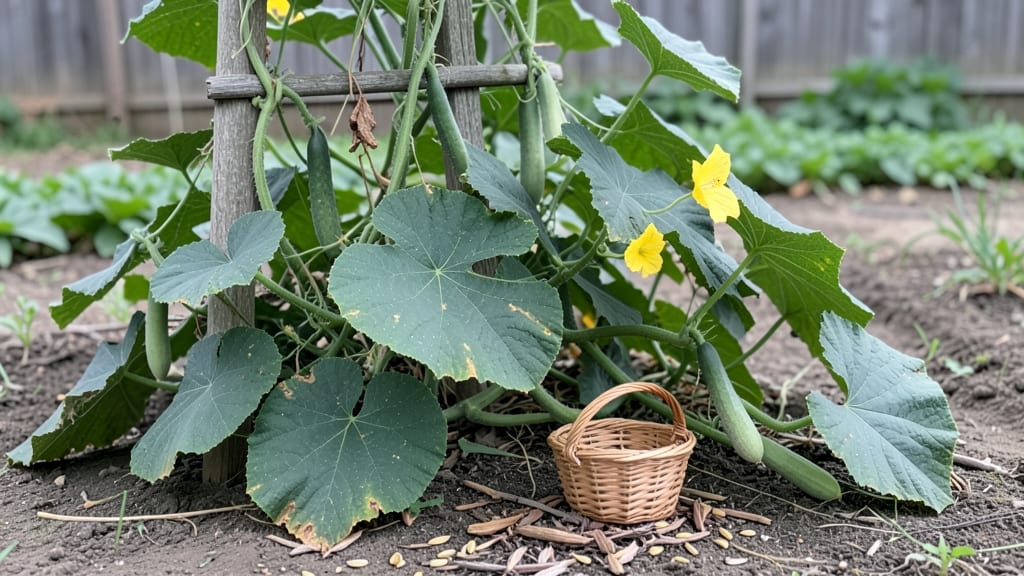
While cucumber seeds themselves aren't harmful, their size can be a concern for smaller dogs—think of them like tiny marbles that might get lodged in their throat. 🔥 I always recommend cutting cucumbers into bite-sized pieces for my own pup, even when removing the seeds, to prevent any accidental swallowing.
The real benefit comes from the cucumber's high water content, which helps hydration without adding calories, making it a great low-calorie treat option.
For extra safety, you can peel cucumbers or remove seeds entirely, especially if your dog tends to gulp food quickly. Just remember—moderation is key, and always introduce new foods gradually to monitor your dog's reaction.
💡 In This Article
- Cucumber Seed Safety for Dogs Explained
- Serving Cucumber to Dogs: Best Practices
Cucumber seed safety for dogs explained
The safety of cucumber seeds for dogs comes down to their natural composition and physical properties. Cucumber seeds are non-toxic because they lack harmful compounds like cyanide or oxalates found in some other plant seeds.
Their smooth, oval shape and small size (typically 1-2 millimeters in length) make them easy for most dogs to pass through their digestive system. In fact, the seeds contain trace amounts of healthy nutrients like fiber and magnesium, though these are minimal compared to the cucumber's flesh.
However, the real concern lies in the physical risks rather than toxicity. For dogs weighing under 20 pounds, even a few seeds can pose a choking hazard if swallowed whole, as their throats are narrower. Think of it like feeding a pea-sized object to a Chihuahua—it's a tight fit!
The seeds' hard texture also means they don't break down easily in the stomach, which could lead to mild gastrointestinal irritation if consumed in excessive quantities (typically more than 5-10 seeds per pound of body weight).
What most people don't realize is how digestive transit time plays a role here. A dog's digestive system processes food much faster than ours—usually within 6-8 hours for small treats. This means seeds have minimal time to cause significant issues unless eaten in very large amounts.
The cucumber's flesh, with its 95% water content, actually helps flush out any seeds that pass through, acting like a natural lubricant for the digestive tract.
Seed size matters more than you'd think. A large breed dog like a Labrador can safely handle a few seeds without issue, while a small breed like a Pomeranian might struggle with even one. The key factor is the dog's throat size relative to the seed dimensions.
For reference, a typical cucumber seed is about the same diameter as a grain of rice—something most dogs can handle, but not without potential risks for tiny pups.
Here's what happens when seeds are ingested: they pass through the esophagus, enter the stomach where stomach acid may slightly soften them, then move into the intestines where they're either excreted whole or broken down over 24-48 hours.
The smooth surface of cucumber seeds means they don't lodge in the intestinal walls like some other seeds might. Still, the volume is what creates risk—imagine trying to digest a handful of marbles versus just one!
For extra cautious pet owners, removing seeds entirely eliminates any risk while preserving the cucumber's hydrating benefits. Simply slice the cucumber lengthwise and scrape out the seeds with a spoon—it takes 2 minutes and gives you complete peace of mind.
This method works especially well for teacup breeds or dogs with a history of gulping food too quickly.
The bottom line? Cucumber seeds are safe in moderation because nature designed them to be easily digestible. The real watch-out is the quantity and dog size combination.
Always err on the side of caution by serving cucumber in bite-sized pieces and monitoring your dog's reaction after introducing any new food. 💫