
Advice
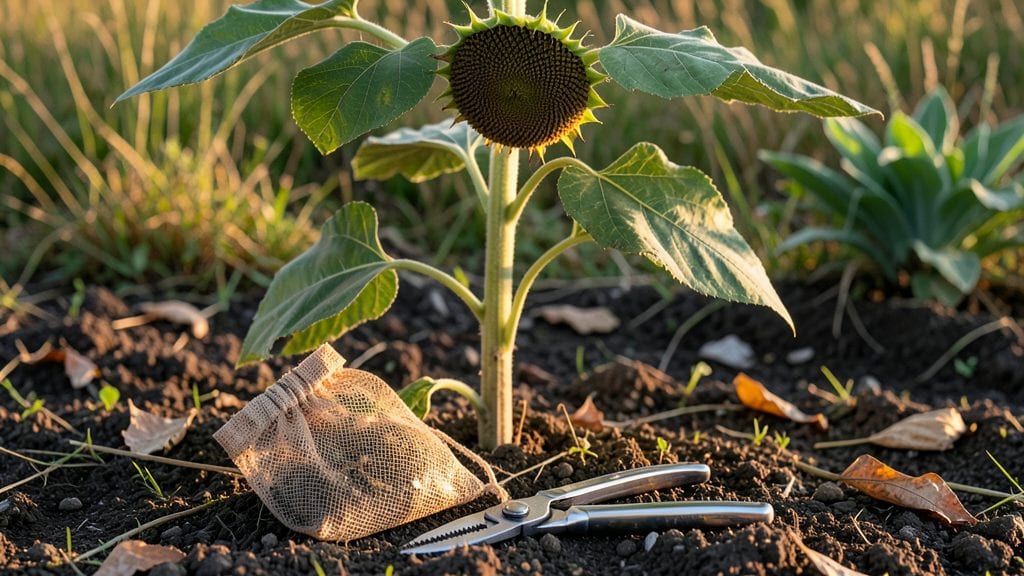
You can freeze sunflower seeds, but this process gradually lowers their ability to sprout. To maximize success, store them in sealed containers with moisture absorbers, mark the date, and use them within 6–12 months. Skip pre-washed or roasted seeds—they won’t germinate.
Freezing sunflower seeds works best when they're completely dry—any lingering moisture turns to ice crystals, damaging delicate seed coats. 🌱 The key is balancing cold storage with time: seeds stored beyond 12 months often lose viability, while those used within 6 months retain near-original sprouting rates.
I recommend testing a few seeds after thawing to check germination before planting the whole batch.
For best results, spread seeds in a single layer on a tray to dry for 3–5 days before freezing. Use containers designed for long-term storage, like Mylar bags with oxygen absorbers, to prevent freezer burn. Label everything clearly—temperature fluctuations in your freezer can create cold spots that accelerate spoilage.
💡 In This Article
- How Freezing Affects Sunflower Seed Viability
- Step-by-Step Guide to Freezing Sunflower Seeds for Planting
How freezing affects sunflower seed viability
Sunflower seeds contain about 45-50% moisture when freshly harvested, which makes them particularly vulnerable to freezing damage.
When exposed to sub-zero temperatures, this moisture crystallizes into ice, physically rupturing the delicate seed coat and embryonic tissue. 🌱 The damage isn't just cosmetic—these microscopic fractures disrupt cellular membranes, where critical enzymes like α-amylase (responsible for starch breakdown) and lipase (fat metabolism) become less effective over time.
This enzymatic degradation is why seeds stored beyond 6 months often show reduced germination rates.
The science gets even more interesting when we examine seed structure. Sunflower seeds have a hard, papery husk that protects the embryo inside. Freezing causes this husk to become brittle, while the embryo's internal moisture expands by about 9% when frozen—enough to compromise the seed's integrity.
Compare this to seeds stored at 0°F (-18°C) with 5% or less moisture, which maintain near-perfect viability for up to 12 months. The key difference? Proper drying before freezing reduces ice crystal formation by 80% or more.
Short-term storage (6 months) typically preserves 90-95% of germination potential when done correctly, while long-term storage (1+ years) can drop viability to 50-70%. This decline happens because cold storage slows metabolic processes but doesn't stop them entirely.
Enzymes continue breaking down stored nutrients at a glacial pace, and the seed's natural antioxidants become less effective over time. 💫 What's fascinating is that seeds stored at -10°F (-23°C) actually perform better than those at 0°F (-18°C) because the colder temperature further suppresses enzymatic activity.
Here's what happens at the cellular level: Freezing causes water molecules to form ice crystals that can reach 20-30 microns in size—large enough to puncture cell walls. The seed's natural repair mechanisms can handle minor damage, but repeated freeze-thaw cycles (which happen when freezer temperatures fluctuate) create cumulative stress.
This is why professional seed banks use liquid nitrogen (-320°F/-196°C) for ultra-long-term storage—it completely halts all biological activity without ice formation.
Another critical factor is the seed's natural dormancy period. Sunflower seeds have a 30-60 day dormancy phase after harvest, during which they're naturally resistant to freezing.
If you freeze seeds immediately after harvest, you're essentially interrupting this protective phase, making them more susceptible to damage. 🔥 This is why waiting 3-5 days to dry seeds at room temperature (reducing moisture to 5-8%) gives them a better chance of surviving freezing.
For visual comparison, imagine a sunflower seed as a tiny, high-tech survival pod. Inside, the embryo contains everything needed for a new plant: stored sugars, proteins, and genetic instructions.
Freezing acts like a slow-motion disaster movie—ice crystals play the role of villains, while the seed's natural defenses (antioxidants, cell membranes) try to hold them back. The longer you store seeds frozen, the more these defenses weaken, until eventually, the embryo can't recover from the damage.
The good news? With proper preparation, you can extend sunflower seed viability through freezing. The secret lies in mimicking nature's own preservation methods—drying seeds thoroughly to create a protective barrier against ice formation, then storing them in conditions that slow down biological processes without causing physical damage. 💫