Advice
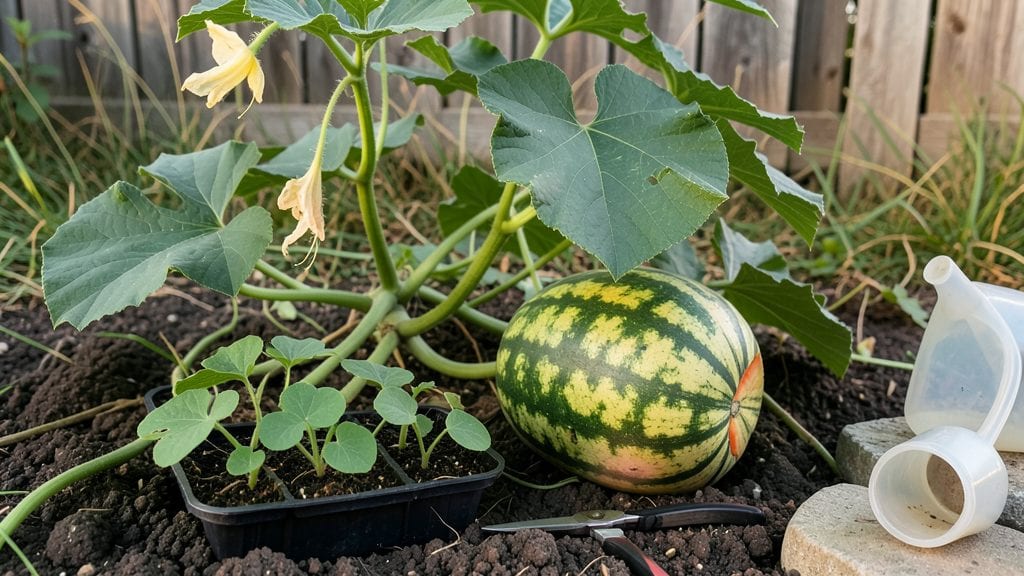
You can grow watermelon from watermelon seeds, but your success hinges on using fresh, high-quality seeds and creating ideal growing conditions with warm soil and full sunlight exposure. Commercial seeds outperform those salvaged from store-bought fruit, which often fail due to processing or poor viability.
Watermelon seeds thrive when planted in soil temperatures between 70°F and 90°F, which is why many gardeners start seeds indoors in biodegradeable pots before the last frost. 🌱 The key difference between store-bought and home-saved seeds lies in treatment—commercial varieties are often pre-selected for disease resistance and uniform ripening, while seeds from grocery store melons may carry weaker genetics or chemical residues.
For best results, pair your seeds with well-draining soil amended with compost and a balanced fertilizer to give young plants the nutrients they crave during their rapid growth phase.
Once sprouted, watermelon vines need ample space to sprawl—3-4 feet of diameter per plant—or you'll face competition for sunlight and nutrients. Many gardeners use trellises to save space while improving air circulation, which helps prevent common fungal diseases.
The harvest window typically opens 70-90 days after planting, though heirloom varieties may take longer to reach maturity.
💡 In This Article
- Watermelon Seed Germination Requirements Explained
- Step-by-Step Watermelon Seed Planting Guide
Watermelon seed germination requirements explained
Here's what's actually happening when watermelon seeds germinate: they require precise conditions to break dormancy and activate their metabolic processes. The optimal soil temperature range of 70-90°F triggers enzymatic activity that converts stored nutrients into energy for root development.
Below 50°F, germination stalls completely, while above 95°F, seeds may dry out before sprouting. This temperature sensitivity explains why gardeners in cooler climates often use black plastic mulch to raise soil temps by 5-10°F.
The science behind seed viability involves moisture balance—watermelon seeds need consistent moisture but will rot if submerged.
Think of it like a sponge: too dry and the seed can't activate, too wet and oxygen gets cut off. 💧 The ideal moisture level maintains 40-60% humidity around the seed while keeping the soil evenly damp (like a wrung-out sponge).
Store-bought seeds undergo rigorous testing to ensure 90%+ germination rates, while seeds from grocery store melons often show 30-50% viability due to handling and processing.
Seed age plays a critical role in germination success. Fresh seeds (less than 1 year old) maintain 85%+ viability, while seeds older than 2 years drop to 40-60% success rates.
The key factor is the seed coat's ability to absorb water—over time, it becomes harder and more resistant. This is why commercial seeds are packaged with desiccant packets to maintain low humidity during storage.
When you save seeds from homegrown melons, store them in a cool (40°F), dry place with 30% humidity or less to preserve viability.
Genetic consistency differs dramatically between store-bought and home-saved seeds. Commercial varieties undergo 3-5 years of breeding to develop disease resistance, uniform ripening, and sweetness levels.
When you plant seeds from a hybrid watermelon (like 'Sugar Baby'), the resulting plants may not produce identical fruit to the parent. 🌱 Meanwhile, heirloom seeds maintain genetic purity, but their germination rates can vary by 20-30% due to natural genetic diversity.
This is why seed catalogs specify "heirloom" or "hybrid" designations—it tells you what to expect from your harvest.
What most people don't realize is how light affects germination. Watermelon seeds are photoblastic, meaning they need darkness to sprout. When planting, cover seeds with 1-2 inches of soil to block light while keeping them moist.
The roots will grow downward toward water sources, while the shoot will push upward through the soil surface. This dual growth pattern requires consistent moisture—if the soil dries out during this critical 7-14 day period, the seedling may fail to emerge or develop weak roots.
Consider these key factors when preparing your seeds: store-bought seeds often come pre-treated with fungicides to prevent soil-borne diseases, while home-saved seeds may need a 24-hour soak in warm water to soften the seed coat.
The soaking process mimics natural rainfall conditions that trigger germination in the wild. For best results, use seeds that are 1/4 inch long and plump—smaller or shriveled seeds typically indicate poor viability.
Remember this rule of thumb: if your seeds float in water, they're not viable. Viable seeds sink because they're denser due to stored nutrients.
This simple test can save you from planting dozens of non-germinating seeds. 💫 The same principle applies to soil preparation—heavy clay soils that stay soggy will drown seeds, while sandy soils may dry out too quickly.
The perfect medium is a loamy soil with 10-20% organic matter to retain moisture while allowing excess water to drain away.