Watering
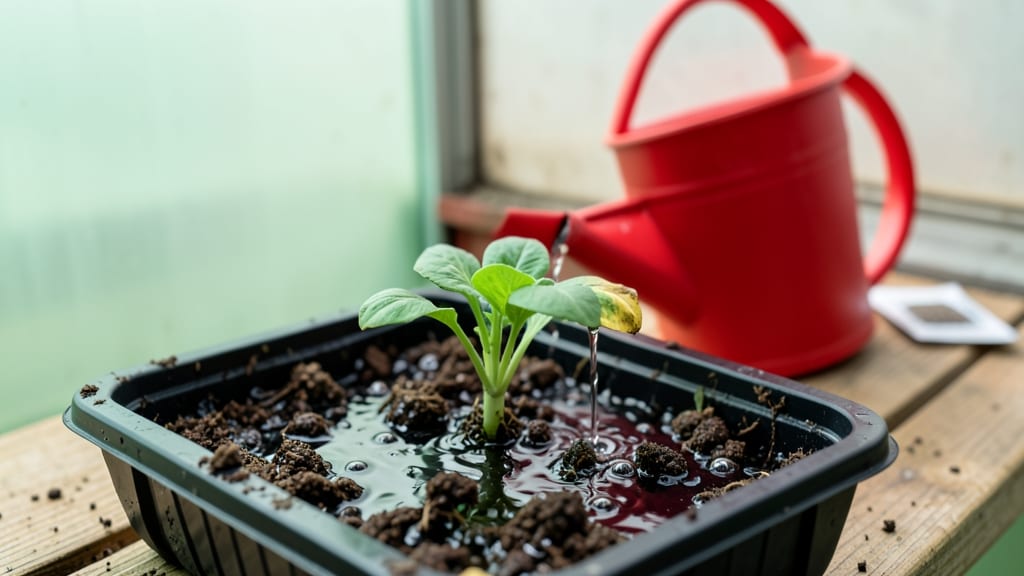
You can overwater seeds, and doing so suffocates emerging roots, triggers rot, and kills seedlings before they sprout. Maintain lightly damp—not saturated—soil and use containers with drainage holes to prevent waterlogging.
Overwatering creates an oxygen-deprived environment where seeds suffocate, unable to break through soil for air. 💧 The worst damage happens during germination when delicate roots need both moisture and airflow to develop.
I’ve seen trays of seeds turn into moldy messes overnight when left in standing water—always check soil moisture by touching it before adding more water.
For new seedlings, focus on surface-level hydration: use a spray bottle to mist soil lightly rather than drowning it. If your tray lacks drainage, add a layer of perlite or coarse sand to the bottom.
Yellowing leaves often signal overwatering, but don’t panic—let the soil dry slightly and improve airflow immediately.
💡 In This Article
- How Overwatering Damages Seed Germination
- Proper Watering Techniques for New Seedlings
How overwatering damages seed germination
When seeds sit in soggy soil, they suffocate because water displaces oxygen in the tiny air pockets around roots. Seeds need both moisture and oxygen to activate enzymes that break down stored nutrients for growth.
Without oxygen, these enzymes can't function, and the seed's metabolic processes shut down—often before it even sprouts. Think of it like trying to breathe through a wet sponge: the struggle cuts off essential energy supply.
Excess water also creates anaerobic conditions where harmful bacteria and fungi like Pythium thrive. These microbes outcompete beneficial soil microbes, releasing toxins that rot seed coats and emerging roots.
The damage isn't just visible—it's chemical: enzymes like pectinases that normally soften seed hulls for germination become overwhelmed by microbial activity, trapping seeds in a cycle of decay. Even a 24-hour waterlogging period can be fatal for many species.
The ideal moisture balance sits at about 40-60% soil water content—enough to keep seeds hydrated but not saturated. For comparison, a wrung-out sponge holds roughly this level of moisture without dripping.
Overwatering disrupts this balance by creating a hydrostatic pressure that crushes delicate root hairs, while also leaching away vital nutrients like nitrogen and phosphorus that seeds need to kickstart growth.
Visual clues appear quickly: soil turns grayish and clumps together when overwatered, while properly hydrated soil crumbles easily between fingers. The worst offenders are fine-textured soils like clay, which hold water like a sponge but suffocate roots.
Coarse soils like sandy loam drain better but require more frequent monitoring to avoid drying out completely.
What most gardeners miss is that seeds don't need constant moisture—they need consistent access to it. A light misting every 2-3 days often works better than daily drowning. The key is mimicking natural rainfall patterns where seeds experience alternating wet-dry cycles that trigger germination hormones.
This is why professional growers use bottom-watering techniques to control moisture precisely.
Even after germination, overwatering stresses seedlings by diluting soil nutrients and encouraging fungal growth on stems.
The roots can't absorb water efficiently when submerged, leading to a vicious cycle where the plant weakens and becomes more susceptible to disease. 💧 The solution lies in observation: if condensation forms on the inside of your seed tray lid, you've overdone it.