
Watering
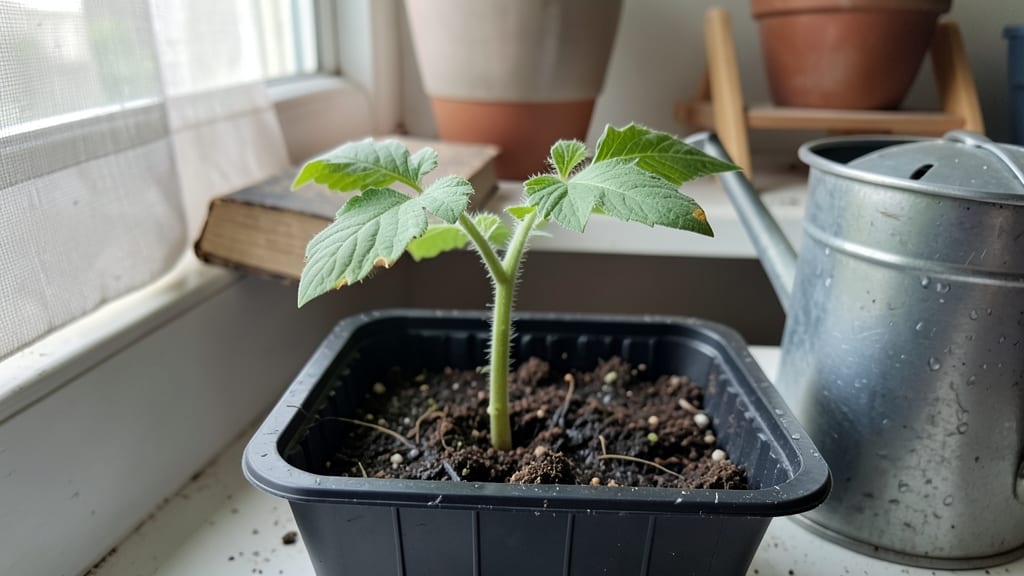
You can overwater seeds, which suffocates developing roots, promotes rot, or halts germination by trapping too much moisture that cuts off oxygen and invites mold. Maintain evenly moist—not waterlogged—soil until seedlings sprout.
Seedlings need moisture to wake up, but too much water creates a suffocating environment where roots can't breathe. 💫 The problem starts when soil stays soggy for more than a day—this triggers anaerobic conditions that slow down germination and encourage harmful microbes.
I've seen even hardy seeds like beans struggle when kept in damp conditions, while delicate varieties like lettuce can rot within hours. The key is balance: soil should feel like a damp sponge, not a dripping towel.
Different seeds have different tolerance levels—fast-germinating varieties handle brief dampness better than slow starters. For example, chives sprout in just 10 days, while okra can take weeks, making proper moisture control even more critical for the latter.
Always check your seed packet for specific guidance, as some tropical seeds actually prefer slightly wetter conditions than desert-adapted varieties.
💡 In This Article
- How Seed Drowning Disrupts Germination Science
- Optimal Watering Techniques for Seedling Success
How seed drowning disrupts germination science
Here's what's actually happening when seeds drown: their metabolic processes rely on oxygen for cellular respiration, which provides the energy needed to break down stored nutrients and activate growth. When soil stays saturated, it creates anaerobic conditions where oxygen levels drop below 5%—the threshold where root cells start suffocating.
This triggers a cascade where enzymes responsible for breaking down starches (like amylase) become less active, slowing germination by up to 40% in sensitive species like lettuce.
The problem worsens because excess moisture creates the perfect breeding ground for pathogens. Fungal spores like Pythium and Phytophthora thrive in waterlogged soil, releasing toxins that damage seed coats and seedling tissues.
Beans, for example, develop brown, mushy roots within 24-48 hours of drowning, while lettuce seeds often fail to sprout entirely due to fungal competition. The texture of drowned seeds becomes slimy rather than firm—a clear sign of microbial overgrowth.
What most people don't realize is how moisture affects seed metabolism at the cellular level. Seeds contain enzymes that require oxygen to convert stored fats and proteins into sugars for growth. Without oxygen, these enzymes become inactive, and the seed enters a state of metabolic dormancy.
This explains why some seeds (like tomatoes) may appear to "sleep" for weeks after being overwatered—even if they eventually sprout, their early development is stunted by 10-15 days compared to properly watered counterparts.
Temperature plays a hidden role too. Warm, saturated soil accelerates microbial growth 3x faster than cool conditions, making tropical seeds (like basil) particularly vulnerable.
The science here involves a balance: soil should stay at 60-75°F with moisture levels that allow air pockets—think of it like a damp sponge where water drains freely. Desert-adapted seeds (like cacti) can handle brief dry spells, but tropical varieties need consistent moisture without suffocation.
Consider these key factors when troubleshooting: the first 3-5 days after planting are critical, as seeds are most vulnerable. A simple test is to press your finger 1 inch deep into the soil—if water drips out, it's too wet.
Lettuce seeds, for instance, need soil that feels like a wrung-out sponge, while beans tolerate slightly drier conditions. The difference lies in their evolutionary adaptations to either moist forests or arid environments.
One surprising detail is how seed coatings affect water tolerance. Many commercial seeds have protective layers that slow water absorption, but these can fail if submerged.
For example, coated tomato seeds may take 72 hours to germinate in ideal conditions, but only 48 hours if kept too damp—after which they rot. This is why precision matters: even a 0.5-inch difference in water depth can mean the difference between thriving seedlings and total loss.
Remember this rule: seeds need moisture to wake up, but they need air to grow. The balance is delicate—like Goldilocks' porridge. 🌱