
Diseases
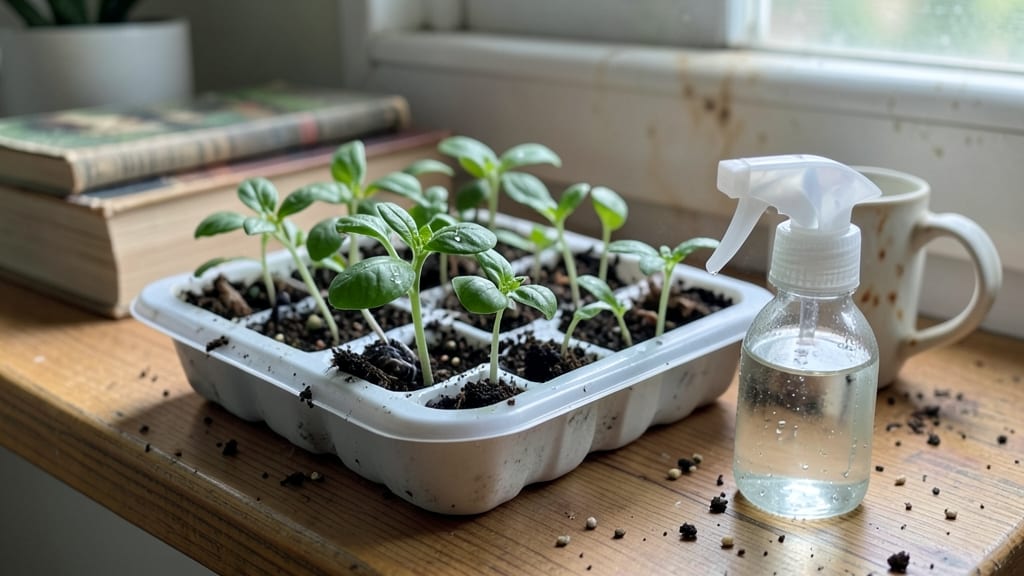
Damping off seeds is the silent killer of your seed-starting dreams—those fuzzy, moldy stems that collapse seedlings before they even get their first true leaves. I’ve lost entire flats of seedlings to it, and I’ll never forget the heartbreak of watching tiny sprouts turn to mush overnight.
The good news? It’s preventable with simple adjustments to water, air, and soil.
This fungal rot thrives in damp, crowded conditions, turning your seed trays into a petri dish of disaster. You’ll spot it as soft, blackened stems at soil level or a fuzzy white mold clinging to seedlings like a ghostly shroud.
The key to stopping it is acting fast—sterilizing soil, spacing seeds properly, and watering from below to keep foliage dry.
Once you spot damping off, remove affected seedlings immediately (don’t compost them—the spores spread). Improve airflow by thinning seedlings and adding a fan on low. For organic control, cinnamon powder or neem oil works wonders; if it’s severe, copper-based fungicides cut it off before it spreads.
With these tweaks, your seed trays stay healthy and your seedlings grow strong.
The real secret? Prevention. Sterilize soil before planting, avoid overwatering, and keep humidity in check. I’ve saved hundreds of seedlings using these methods—your future harvests depend on it. Let’s get your seeds growing without the fungal setbacks.
The Hidden Triggers Behind Seed Rot
Damping off in seeds isn’t just a random misfortune—it’s the result of a perfect storm of moisture, warmth, and fungal activity. Understanding the root causes helps you take proactive steps to protect your seedlings before they even sprout.
Here’s why this destructive process happens, broken down into the most common culprits.
Fungal pathogens like Pythium and Rhizoctonia thrive in soggy conditions. When seed-starting mixes retain too much moisture—whether from overwatering, poor drainage, or dense, compacted soil—these fungi multiply rapidly. The excess water also weakens seed coats and young roots, making them prime targets for infection.
Why it’s dangerous:
- Seeds absorb water and oxygen through their coats. If the medium stays waterlogged, oxygen is depleted, suffocating seeds and seedlings.
- Fungi release enzymes that break down seed tissues, causing them to collapse before germination.
- Even after sprouting, stems become mushy and fall over (damping off), often within days.
💡 Pro Tip: Aim for a moisture level where the mix feels like a damp sponge—not dripping. Use containers with drainage holes and avoid bottom-watering unless necessary.
Stagnant air creates a greenhouse effect, trapping humidity and heat around seeds. Fungal spores float in the air and land on damp surfaces, germinating when conditions are ideal. Without airflow, spores can’t disperse, and the environment stays perpetually moist—perfect for fungal growth.
Why it’s dangerous:
- High humidity (above 70%) accelerates fungal spread, especially in enclosed trays or plastic domes.
- Condensation on lids or walls of containers drips onto seeds, delivering a direct water source for pathogens.
- Seeds in crowded trays compete for oxygen, weakening their defenses.
💡 Pro Tip: Use a small fan on low speed (2–3 hours daily) to improve airflow. Space seeds according to package instructions, and avoid overcrowding trays.
Fungal spores are everywhere—even in "sterile" potting mixes. If the seed-starting medium contains organic matter (like compost) that hasn’t been pasteurized or if tools (like tweezers or scissors) are reused without cleaning, spores hitch a ride to your seeds. Some pathogens, like Phytophthora, can persist in soil for years.
Why it’s dangerous:
- Unsterilized mixes may harbor dormant spores that activate when moisture is added.
- Reused containers or tools can transfer fungi from one batch of seeds to the next.
- Some spores are microscopic and invisible until conditions (like warmth and humidity) trigger their growth.
💡 Pro Tip: Sterilize tools with 70% isopropyl alcohol or a 10% bleach solution (rinse well). Use fresh, pasteurized seed-starting mix (or bake homemade mixes at 180°F for 30 minutes).
Fungi love warmth—most damping-off pathogens grow fastest between 68–86°F (20–30°C). While this temperature range is ideal for seed germination, it’s also prime real estate for fungal reproduction. High humidity (above 80%) further accelerates spore germination and hyphal growth.
Why it’s dangerous:
- Seeds germinate faster in warmth, but so do fungi—often outpacing the seedlings.
- Heat mats or heated seed trays can create microclimates that trap moisture near seeds.
- Outdoor sowing in warm, rainy seasons increases risk, as spores are washed from the air onto seeds.
💡 Pro Tip: Avoid bottom heat if possible, or use it sparingly (only during germination). For outdoor sowing, wait for cooler, drier conditions or use row covers to reduce humidity.
By addressing these four key factors—moisture, airflow, contamination, and temperature—you can disrupt the conditions that fungi need to thrive. Prevention starts with breaking the cycle before it begins.
Stop Seed Rot Before It Starts
Damping off in seeds is a frustrating but beatable challenge—especially when you’re eager to see those first sprouts break through the soil. The good news? With the right fixes and prevention strategies, you can create an environment where your seeds thrive instead of rot.
Below, we’ll break down practical solutions for each common cause, so you can take action fast.
Problem: Seeds left in soggy soil suffocate, inviting fungal growth like Pythium or Phytophthora.
Solutions:
- ✅ Use well-draining soil mixes – Combine potting soil with perlite, vermiculite, or coconut coir (50/50 ratio) to improve aeration.
- 💧 Water lightly and consistently – Mist seeds instead of drowning them. Aim for moist (not wet) soil—think of a damp sponge, not a soaked towel.
- 🏗️ Elevate trays or pots – Place them on a wire rack or saucer with pebbles to prevent water pooling at the bottom.
- 🌡️ Monitor humidity – If using a humidity dome, remove it once seeds sprout to reduce excess moisture.
💡 Pro Tip: Test your soil’s moisture by squeezing a handful—if water drips out, it’s too wet. If it crumbles easily, you’re golden.
Problem: Contaminated soil, tools, or old seed trays harbor dormant fungi waiting to strike.
Solutions:
- 🔥 Sterilize everything – Soak seed trays, pots, and tools in a 10% bleach solution (1 part bleach to 9 parts water) for 10 minutes, then rinse well.
- 🌡️ Heat-treat soil – Bake potting mix at 180°F (82°C) for 30 minutes to kill fungi (or use store-bought sterile seed-starting mix).
- 🧼 Use fungicides (preventively) – Drench soil with a copper-based fungicide or hydrogen peroxide (3%) before planting. For seeds, soak them in a 1:10 hydrogen peroxide-water mix for 5 minutes.
- 🚫 Avoid reusing old soil – Fungal spores persist, so refresh soil annually or mix in compost to dilute contaminants.
✨ Bonus: Add 1 tsp cinnamon or garlic powder per gallon of soil—natural antifungals that won’t harm seeds.
Problem: Cool or fluctuating temps slow growth, making seeds vulnerable to rot.
Solutions:
- 🌡️ Use a heat mat – Place trays on a seedling heat mat (70–75°F / 21–24°C) to speed germination and deter fungi.
- 🏡 Keep seeds warm – If indoors, place trays on top of the fridge (not inside) for consistent warmth.
- 🌡️ Avoid cold drafts – Keep seeds away from windows, doors, or AC vents that cause temperature swings.
- 📅 Time it right – Plant seeds when outdoor temps are consistently above 50°F (10°C) for most veggies.
💡 Pro Tip: Some seeds (like peas or beans) germinate better in cooler temps—check seed packets for ideal ranges.
Problem: Weak seeds or nutrient-deficient soil make plants more susceptible to damping off.
Solutions:
- 🌱 Pre-soak seeds – Soak in lukewarm water for 4–12 hours to soften seed coats and encourage faster, stronger germination.
- 🍄 Add mycorrhizal fungi – Mix beneficial fungi into soil to outcompete harmful pathogens (available at garden centers).
- 🌿 Use compost tea – Brew aerated compost tea (steep compost in water for 24–48 hours, strain) and use as a soil drench to boost microbial activity.
- 🥄 Feed lightly post-germination – Once sprouts appear, use a diluted fish emulsion (1 tsp/gallon) to give seedlings a nutrient boost.
🎯 Prevention Hack: Plant marigolds or thyme nearby—their natural antifungal properties can protect seedlings.
Problem: Repeated damping off means your setup needs an overhaul.
Solutions:
- 🧹 Clean workspace – Wipe down tables, shelves, and tools with rubbing alcohol between uses.
- 🗑️ Dispose of infected seedlings – Never compost damping-off victims—bag and trash them to prevent spore spread.
- 🔄 Rotate seed-starting areas – Avoid planting in the same spot year after year to break fungal cycles.
- 📅 Space out plantings – Instead of sowing all seeds at once, stagger them every 2–3 weeks to avoid overcrowding (which traps moisture).
🔥 Emergency Fix: If you spot damping off mid-growth, prune affected seedlings at soil level—sometimes new shoots emerge from the base!
Final Thought: Damping off is a setback, not a sentence. By controlling moisture, sterilizing tools, and giving seeds the right conditions, you’ll turn your seed-starting game around in no time. 🌱💪 Try one or two fixes this season and watch your sprouts thrive!
Frequently asked questions
What does seed rot look like on my seedlings?
Seed rot from damping off appears as soft, blackened stems at the soil line that collapse easily. You might also see fuzzy white or gray mold on the soil surface or seedlings that suddenly wilt and fall over. Check the base of stems—healthy seedlings should be firm, while infected ones will feel mushy when touched.
Can I save seedlings already showing signs of damping off?
Remove affected seedlings immediately to prevent spread—don’t compost them (spores can survive). For mild cases, improve airflow with a small fan and reduce watering. Some seedlings may recover if you cut them back to healthy tissue near the soil, but severe cases are often beyond saving.
How often should I water seeds to prevent fungal issues?
Water just enough to keep the soil lightly moist—think of a damp sponge, not dripping wet. Most seeds need watering every 2-3 days, but check soil moisture daily. Bottom-watering (placing trays in shallow water) helps avoid overwatering while keeping roots hydrated. Always use sterilized water or let tap water sit out for 24 hours to remove chlorine.
Are some plants more prone to damping off than others?
Yes! Delicate seedlings like tomatoes, peppers, and lettuce are especially vulnerable, while hardier plants like marigolds or radishes tolerate damp conditions better. To reduce risk, start these sensitive seeds in a sterile, well-draining mix and avoid overcrowding.
Will cinnamon really help prevent damping off?
Sprinkle 1 teaspoon of cinnamon powder per gallon of soil before planting—it’s a natural antifungal that won’t harm seeds. Reapply lightly after watering. For extra protection, mix with garlic powder (½ tsp/gallon), another effective deterrent against fungal spores.