
Vegetables
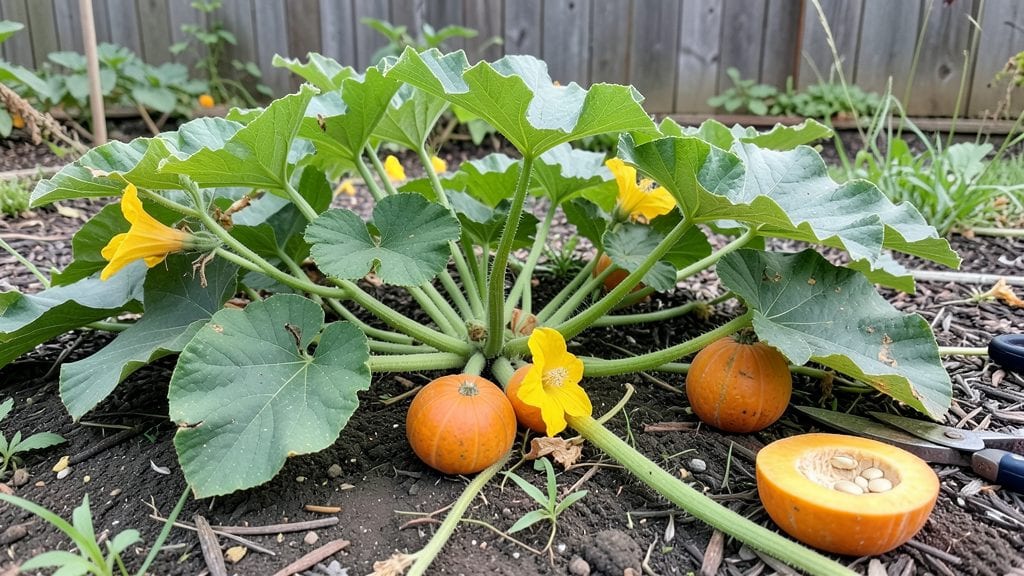
Yes, small pumpkins have seeds, though they’re typically fewer and smaller than those in larger varieties. The seed count varies by type—miniature pumpkins like 'Jack Be Little' contain 20-30 seeds, while slightly larger ones may hold 50-100. These seeds are edible, nutrient-rich, and can be roasted or saved for planting.
Even the tiniest pumpkins produce seeds, though their numbers and size shrink proportionally to the fruit's overall dimensions. 🌱 The seeds in miniature varieties like 'Munchkin' or 'Sugar Pie' are often no bigger than a grain of rice, but they pack the same nutritional punch—loaded with magnesium, zinc, and healthy fats.
What’s fascinating is how seed density increases in smaller pumpkins: you’ll find more seeds per pound of flesh compared to giant pumpkins, which prioritize storage space for fewer, larger seeds.
These seeds aren’t just for planting—they’re a culinary treasure. Many chefs and home cooks swear by roasting them for a savory snack, especially when paired with spices like smoked paprika or garlic powder.
Plus, saving seeds from heirloom varieties ensures you can grow identical pumpkins year after year, preserving unique flavors and traits that store-bought seeds often lack.
💡 In This Article
- How Pumpkin Seed Size and Quantity Vary by Variety
- Edible Pumpkin Seeds: Harvesting, Roasting, and Saving for Planting
How pumpkin seed size and quantity vary by variety
Pumpkin seed development follows a fascinating biological principle: the plant allocates resources based on its overall size and genetic programming. In miniature varieties like 'Jack Be Little' (weighing just 1-2 pounds), the seeds remain tiny—typically 0.2-0.3 inches long—because the plant hasn't evolved to produce larger ones.
These seeds are packed tightly in a dense cluster, occupying about 15-20% of the pumpkin's interior volume, compared to 5-10% in giant varieties like 'Atlantic Giant'. The trade-off?
Mini pumpkins prioritize seed quantity over size, resulting in 20-30 seeds per fruit rather than the 100-200 found in their larger cousins.
The seed-to-flesh ratio reveals another intriguing pattern. In 'Munchkin' pumpkins (averaging 3-5 pounds), you'll find roughly 50 seeds per pound of flesh, while 'Sugar Pie' (a 4-8 pound variety) yields about 30 seeds per pound.
This density shift occurs because larger pumpkins devote more energy to flesh development, leaving less for seed production.
The seeds themselves also vary in texture—miniature seeds have a harder shell (due to higher calcium content) and a smaller embryo, making them slightly less ideal for direct germination without stratification. 🌱
Germination potential differs dramatically between varieties. Seeds from 'Jack Be Little' have a 70-80% germination rate when properly stored, while those from 'Cinderella' (a 6-10 pound pumpkin) drop to 50-60%. The reason? Smaller seeds contain more concentrated nutrients in their embryos, giving them a survival advantage.
For gardeners, this means you'll need to plant 2-3 times more seeds from larger varieties to achieve the same yield as miniature ones.
The moisture content also plays a role—mini seeds dry to 8-10% moisture within 3-5 days, while giant seeds may take 7-10 days to reach the same level.
Here's what happens when you compare seed traits across varieties:
- Seed weight: Mini seeds average 0.05 grams each, while giant seeds reach 0.3-0.5 grams
- Shell thickness: Mini seeds have 0.02-inch shells; giant seeds 0.04-inch shells
- Oil content: Both contain 30-40% healthy fats, but mini seeds have higher magnesium levels (per gram)
- Storage life: Mini seeds last 6-8 months in ideal conditions; giant seeds 4-6 months
The most surprising discovery comes from studying 'Sugar Pie' pumpkins. Despite their medium size, they produce seeds with exceptional germination rates—up to 85%—because their genetic makeup prioritizes both quantity and viability. This makes them ideal for both culinary use and seed saving.
The key takeaway? If you're growing pumpkins for seeds, miniature varieties offer higher yields per pound of fruit, while larger varieties provide bigger seeds that some chefs prefer for roasting due to their thicker shells and richer flavor from greater oil concentration. ✨