
Lawn
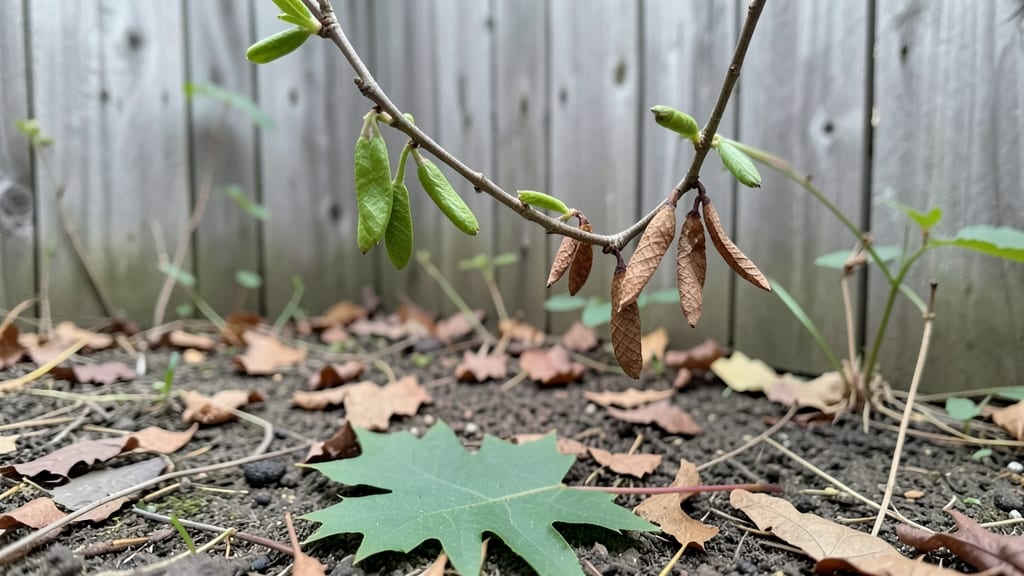
Mastering maple seed identification by their wings is like reading a tree’s fingerprint—once you learn the shapes, you’ll spot sugar maples, red maples, and silver maples anywhere they fall. 🌿 I’ve spent years collecting these seeds, and the first thing I noticed is how dramatically their wings differ: sugar maples have broad, rounded wings, while red maples are narrower with a sharper point, and silver maples look almost triangular.
The size matters too—sugar maple wings stretch about 1.5 inches long, while red maple wings are shorter and more delicate.
Grab a ruler and a magnifying glass—this is where the real fun starts. The wing’s shape isn’t just for show; it tells you how the seed will fly and where it’ll land. Sugar maple wings are built for stability, while red maple wings spin faster, carrying seeds farther.
Silver maple wings, with their V-shape, make them the most erratic fliers of the bunch. I once tried growing seeds from a mix of these, and the sugar maples germinated first because their wings protect the seed better during long falls.
Once you’ve matched the wing to the tree, the next step is verifying the seed’s health. Press gently on the nut inside—it should feel firm, not shriveled. Store them in a cool, dry place until planting season, and you’ll be ready to grow your own maple trees.
The payoff? A backyard full of shade, fall color, and future seeds to identify all over again.
This method works for backyard collectors, forest walkers, or anyone curious about the trees around them. Just watch out for hybrid maples—their wings can be confusing, but they usually end up somewhere between sugar and red. Now, let’s get those seeds sorted!
How Nature Shapes Seed Design
Maple seeds—those iconic helicopter-shaped wonders—don’t just flutter randomly from the sky. Their distinct wing shapes and sizes are the result of evolutionary biology, environmental pressures, and the unique traits of different maple species.
Understanding why these variations exist helps you decode which tree you’re looking at. Here’s the science behind the spectacle.
Maple seeds evolved their signature samara wings (those paper-thin extensions) as a survival strategy. The primary goal? Dispersal. Unlike heavy acorns or dense nuts, maple seeds rely on wind for distribution, and their wings act like tiny parachutes. But here’s the twist: not all wings are created equal.
- Larger wings = longer flights. Species like the sugar maple (Acer saccharum) have broad, rounded wings that catch more air, allowing seeds to travel farther—sometimes up to 1,000 feet or more. This reduces competition near the parent tree and increases the chances of landing in nutrient-rich soil.
- Smaller wings = precision landing. Trees like the boxelder (Acer negundo) produce seeds with narrower wings, which spiral more tightly. These seeds tend to fall closer to the parent tree, often clustering in urban or disturbed areas where boxelders thrive.
- Shape matters for stability. The helicopter effect isn’t just for fun—it’s aerodynamics in action. Asymmetric wing designs (like the slight twist in a silver maple’s samara) create a gyroscopic effect, preventing seeds from tumbling end-over-end. This ensures a controlled descent, improving landing accuracy.
Pro Tip: 🌡️ If you’re identifying seeds in late summer, note the temperature and wind conditions. Cooler, still days produce slower-falling seeds, while gusty weather can send them spiraling wildly—sometimes even reversing direction mid-flight!
Each maple species has unique wing dimensions because they’ve adapted to their local ecosystems. Here’s how geography and competition play a role:
| Species | Wing Shape/Size | Why It Evolved |
|---|---|---|
| Acer saccharum (Sugar Maple) | Broad, rounded wings (1.5–2.5" long) | Needs to disperse seeds into undisturbed forests. Larger wings ensure seeds avoid obstacles like tall grasses or other trees. |
| Acer rubrum (Red Maple) | Narrower, more elongated (1–1.5" long) | Thrives in wetlands and edges. Smaller wings allow seeds to drop quickly in windy, open areas where water or shallow soil dominates. |
| Acer negundo (Boxelder) | Very narrow, almost straight wings (0.75–1.25" long) | Adapted to urban and disturbed soils. Seeds cluster near the parent tree, which boxelders often dominate in. |
| Acer platanoides (Norway Maple) | Short, stubby wings (1–1.5" long) with a blunt tip | Competes aggressively in shaded, compacted soils (common in parks). Seeds don’t need to travel far—they rely on rapid germination to outcompete grass. |
Key Takeaway: 🎯 The ratio of wing length to seed weight is the biggest clue. Heavier seeds (like those of the sugar maple) need bigger wings to stay aloft, while lighter seeds (like boxelder) can get by with smaller ones.
Maple seeds don’t just evolve for pretty flights—they’re shaped by real-world challenges. Here’s how:
- Wind patterns. Trees in open fields (like red maples) develop seeds with stiffer wings to resist being blown too far. In contrast, forest-dwelling species (like sugar maples) have softer, more flexible wings to navigate through gaps in the canopy.
- Rain and humidity. Seeds in wet climates (e.g., silver maples) often have water-resistant wing tissues to prevent rot before landing. Their wings also drip water efficiently, reducing weight mid-flight.
- Avoiding predators. Birds like goldfinches and squirrels love maple seeds—but some species have evolved bitter-tasting wings (e.g., Norway maple) to deter snacking. Others, like boxelder, produce seeds so quickly that predators can’t eat them all before they germinate.
- Soil type. Seeds in rocky or shallow soils (e.g., striped maple) have shorter wings to ensure they land quickly and don’t get buried by wind or debris.
Fun Fact: 🔍 Some maple species, like the Japanese maple (Acer palmatum), have deliberately asymmetrical wings to confuse predators—making them harder to spot and eat mid-flight!
Next time you see a maple seed spiraling down, remember: it’s not just a pretty trick—it’s millions of years of engineering for survival. And now, you’re equipped to tell which tree it came from just by its wing design!
Quick Fixes for Maple Seed Confusion
Now that you understand why maple seed identification can be tricky—whether it’s due to seasonal variations, tree maturity, or similar-looking species—here’s how to tackle the problem with practical, step-by-step solutions. These fixes will help you confidently distinguish between species, avoid misidentifications, and even prevent future headaches.
The most reliable way to identify maple seeds (samaras) is by examining their wing shape and proportions. Use this quick-reference guide to narrow down the possibilities:
| Feature | Sugar Maple | Silver Maple | Red Maple | Boxelder Maple |
|---|---|---|---|---|
| Wing Shape | Broad, rounded, symmetrical | Narrow, elongated, slightly asymmetrical | Medium, slightly curved wings | Narrow, straighter, less curved |
| Wing Length | 1.5–2.5 inches | 1–1.5 inches | 1–2 inches | 1–1.5 inches |
| Seed Pod Angle | ~180° (flat, almost straight) | ~120° (more open) | ~150° (moderately open) | ~135° (slightly open) |
Pro Tip: 💡 Hold the samara up to a bright light or window. The way the wings catch the light can reveal subtle differences in thickness and curvature that aren’t visible in shadow.
The base of the samara (where it connects to the stem) often holds clues:
- Sugar and Red Maples: The stem attaches near the center of the wings, creating a balanced look.
- Silver and Boxelder Maples: The stem leans toward one wing, making the samara look slightly off-center.
- Young or Damaged Samaras: If the wings are uneven, it might be a Boxelder or a hybrid—these trees produce less symmetrical seeds.
Fix: 🔥 Use a magnifying glass to inspect the attachment point. If you’re still unsure, snap a photo and compare it side-by-side with online databases like iNaturalist or the USDA Forest Service’s maple guide.
If you’re dealing with a large batch of seeds (like after a windstorm), measure a sample to spot patterns:
- Pick 5–10 representative samaras from different trees in your area.
- Measure wing length with a ruler (or even a printed ruler for a DIY tool).
- Note the angle by folding the wings together—does it form a straight line (Sugar Maple) or a noticeable gap (Silver Maple)?
Prevention Tip: 🌡️ Keep a small notebook or digital folder labeled by season. Jot down observations like:
- "June 10: Found samaras with 1.2-inch wings, slight curve—likely Red Maple."
This builds a personal reference library for future identifications.
Samaras don’t tell the whole story—where they fall matters:
- Sugar Maple: Prefers rich, moist soil; leaves have deep lobes with serrated edges.
- Silver Maple: Thrives in wet areas; leaves are silvery-green underneath.
- Red Maple: Adaptable; leaves turn bright red in fall.
- Boxelder: Often grows in urban areas; leaves are asymmetrical with pointed lobes.
Fix: 👨🍳 If you’re near the tree, collect a leaf and compare it to a field guide. No tree? Look for leaf litter on the ground—Boxelder leaves decompose faster and look more jagged.
Even experts mix up maple seeds sometimes. Here’s how to prevent mistakes: - ❌ Assuming all samaras are the same size. Wing length varies by tree age and health.
A young Sugar Maple might produce smaller samaras than a mature one. - ❌ Ignoring hybrids. Crossbreeds (like Acer × freemanii) can have mixed traits.
If wings are intermediate, note it as "possible hybrid." - ❌ Relying on color alone. Maple samaras are usually brown/tan, but disease or drought can cause discoloration. Focus on structure, not hue.
Pro Tip: ✨ If you’re still stuck, ask local arborists or university extension offices. Many offer free plant ID services via email or social media.
When all else fails, leverage apps and online resources:
- Seek by iNaturalist (free, crowdsourced ID help).
- PictureThis App (uses AI to analyze plant parts).
- Google Lens (upload a photo of the samara + leaf for instant matches).
Prevention Tip: 🎯 Save high-quality photos of both the samara and the tree (if visible) for future reference. Label files clearly, like "2024MapleSamaraSilverMaple_Suburbia.jpg."
Before finalizing your identification, run through this 3-step sanity check:
- Wings: Symmetrical/rounded? → Likely Sugar Maple.
- Attachment: Centered or off-kilter? → Off-center = Silver/Boxelder.
- Habitat: Urban, wet, or forest? → Cross-reference with common species in your area.
By combining physical measurements, habitat clues, and tech tools, you’ll turn guesswork into foolproof maple seed identification—no more second-guessing those autumn whirlwinds!
Frequently asked questions
How do I tell the difference between sugar maple and red maple seeds?
Look at the wing shape and size: sugar maple seeds have broad, rounded wings (1.5–2.5 inches) that form a near-straight line when folded. Red maple wings are narrower (1–2 inches) with a slight curve and appear more delicate. Hold them up to light—the sugar maple’s wings are thicker and more substantial.
Can I identify maple seeds without seeing the tree?
Yes! Focus on three key traits: wing shape, size, and attachment point. For example, boxelder maple seeds have narrow, straight wings (0.75–1.5 inches) with an off-center stem, while silver maple wings are triangular and asymmetrical. Pair this with the location where you found them—urban areas often have boxelders, while forests favor sugar maples.
Why do some maple seeds spin differently?
The spin depends on wing design: sugar maple wings are symmetrical and broad, creating a stable, slow spiral. Red maple wings are narrower and curved, making them spin faster. Silver maple wings are asymmetrical, causing erratic, unpredictable flights. Wind conditions also play a role—gusty days make all seeds tumble more chaotically.
What should I do if my maple seeds look damaged or shriveled?
Damaged seeds won’t germinate well, but you can still use them for identification practice. Check for firm, plump nuts inside—if they’re shriveled, the seed is likely nonviable. For storage, keep healthy seeds in a cool, dry place (like a paper bag in the fridge) until planting season. Avoid plastic bags, which trap moisture and cause rot.
Are there apps that can help identify maple seeds?
Try Seek by iNaturalist (free) or PictureThis (AI-powered) to upload photos of the wings and seed. For quick reference, the USDA Forest Service’s maple guide has side-by-side comparisons. Pro tip: snap photos from multiple angles—include the attachment point and any visible leaf litter nearby for better accuracy.