Trees
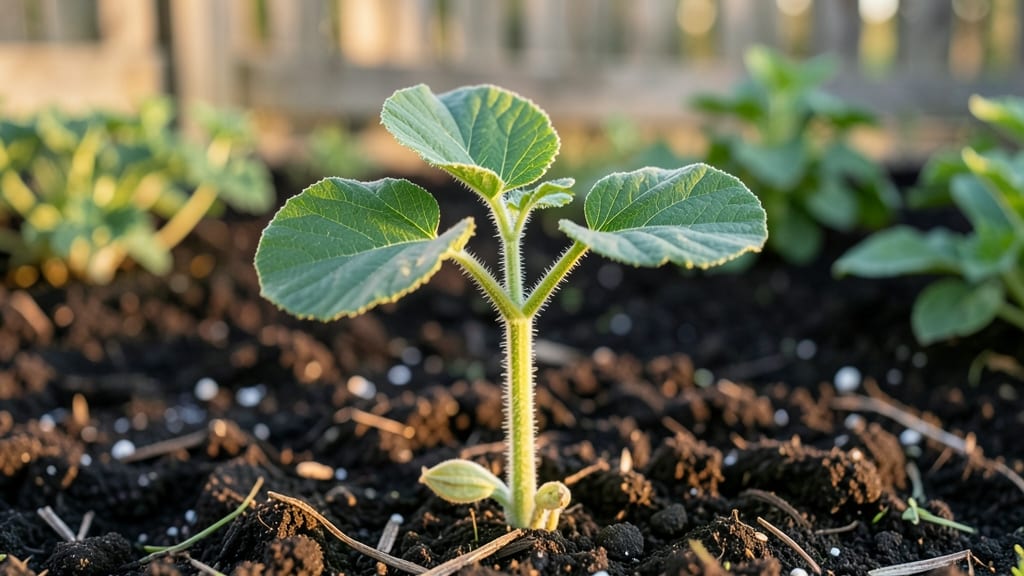
Mastering melon seedling identification begins with those first two tiny round leaves—the cotyledons—but the real differences from squash or cucumber seedlings emerge as they grow. The moment true leaves appear, you’ll spot the telltale lobed, jagged edges that set melons apart from their squash cousins.
I’ve pulled up enough mistaken seedlings to know the difference matters, especially when space is tight.
Healthy melon seedlings have deep green stems that stay sturdy, not floppy, and their first true leaves grow in a fan shape with three to five pointed lobes. Compare them to cucumber seedlings—they’re smoother, with more rounded leaves, and their stems stay thinner.
If yours look leggy or yellowing, it’s not the variety but too much shade or inconsistent watering.
Once you’ve confirmed the shape, handle them gently—melon seedlings are delicate until they develop a thicker main stem. Transplant them when they’re about 4 inches tall, using well-draining soil and a 5-gallon container or garden bed with full sun.
The key is patience; they’ll start vining within weeks, but the early ID saves you from wasting space on the wrong plants.
This works for cantaloupes, honeydews, and watermelons alike—just watch for those lobed leaves and you’ll never mix them up again. Even if you’ve struggled with seedling confusion before, this method cuts through the guesswork. Let’s get those plants growing strong.
Root Causes of Misidentifying Seedlings
Struggling to tell your melon seedlings apart from other young plants? The confusion often stems from a mix of biological, environmental, and human factors. Understanding these root causes can help you sharpen your eye—and your garden’s success. Here’s why misidentification happens, broken down into the key culprits.
Young melon seedlings (like cantaloupe, honeydew, or watermelon) share striking similarities with other cucurbit family members—such as squash, cucumbers, or even weeds—during their first few weeks. Here’s why:
- Leaf shape confusion: Early melon leaves are often lobed or serrated, mimicking squash or pumpkin seedlings. For example, a sugar baby watermelon seedling’s first true leaves might look nearly identical to a zucchini’s, especially if both are still in the "cotyledon" (seed leaf) stage.
- Stem color variability: Melon stems can range from light green to reddish-purple, depending on the variety and sunlight exposure. A dark purple-stemmed seedling might be mistaken for a red kale or even a beet sprout if you’re not paying close attention.
- Slow growth differences: Some melon varieties (like casaba) germinate slower than others, leaving them smaller and harder to distinguish from slower-growing weeds (e.g., purslane or chickweed).
Pro tip: 💡 Use a magnifying glass to inspect leaf veins and stem texture—melon seedlings often have hairy stems and palmate veins (veins spreading from a single point), while weeds typically lack these features.
Stress from temperature, moisture, or light can alter a seedling’s appearance, making it look unhealthy—or even like a different plant entirely. Common triggers include:
| Stress Factor | How It Affects Seedlings | Misidentification Risk |
|---|---|---|
| 🔥 Overheating (soil temps >85°F) | Leaves turn yellow or brown at the edges, stems may purple. | Could be mistaken for heat-stressed herbs (e.g., basil) or fungal infection. |
| 💧 Overwatering (soggy soil) | Leaves yellow and wilt, stems soft and mushy. | May resemble damping-off disease or rotten weed seedlings. |
| ☀️ Low light (shady spots) | Leaves small, pale, and stretched (etiolation). | Could look like weak weed growth or nutrient-deficient seedlings. |
Actionable fix: 🌡️ Keep seedlings in consistent 70–85°F soil temps and provide bright, indirect light (e.g., a grow light 2–3 inches above seedlings). If stress is suspected, compare stressed seedlings to healthy sibling plants for accurate ID.
Even experienced gardeners misidentify seedlings when they rely on assumptions or partial observations. Common pitfalls:
- Focusing only on leaves: Melon seedlings’ true leaves (the second set after cotyledons) are critical for ID, but many gardeners mistake cotyledons (seed leaves) for the "real" leaves. Cotyledons can look like tiny squash leaves or even bean leaves.
- Ignoring stem texture: Melon stems are often hairy or ridged, while weeds like lamb’s quarters have smooth, waxy stems. Skipping this check leads to mistakes.
- Planting too densely: Crowded seedlings compete for light, causing them to grow lanky or distorted. A stretched melon seedling might resemble a tall weed (e.g., amaranth) if you don’t inspect the base.
Quick check: ✨ Gently tug the seedling—melon roots are white and fibrous, while weed roots (e.g., dandelion) are often taproots or thin and brittle.
By recognizing these causes—biological overlap, environmental stress, and observation gaps—you’ll train your eye to spot melon seedlings with confidence. Next up: practical tips to avoid these pitfalls in your garden.
Quick fixes for seedling struggles
When your melon seedlings aren’t thriving, the right steps can turn things around fast. Below are practical solutions tailored to common issues—from stunted growth to odd leaf patterns—along with prevention tips to keep your seedlings strong.
---
Cause: Overcrowding, poor light, or inconsistent watering. Solution: - 🔥 Thin seedlings – Space them 2–3 inches apart to reduce competition for nutrients. - 🍳 Boost light exposure – Move seedlings to a sunny windowsill or under grow lights (12–16 hours/day). - 👨🍳 Adjust watering – Keep soil moist but not soggy (stick your finger in—if the top inch is dry, water lightly).
Prevention: ✔ Use larger pots (5+ inches deep) for better root growth. ✔ Start with high-quality seedling mix (well-draining, rich in organic matter).
---
Cause: Overwatering, nutrient deficiency, or fungal diseases (like powdery mildew). Solution: - 🌡️ Check soil moisture – Let the top inch dry out between waterings to prevent root rot. - 💡 Fertilize gently – Use a balanced, water-soluble fertilizer (5-5-5 ratio) every 2 weeks once true leaves appear. - 🎯 Combat fungal issues – Spray leaves with a baking soda solution (1 tsp baking soda + 1 quart water + few drops of dish soap) or neem oil (1 tbsp per quart of water).
Prevention: ✔ Water at the base (avoid wetting leaves to reduce mildew risk). ✔ Improve airflow with a small fan (5–10 mins/day) to dry leaves faster.
---
Cause: Tiny pests sucking sap or weaving webs on seedlings. Solution: - 🔪 Blast off pests – Spray seedlings with soapy water (1 tsp mild soap per quart of water) or neem oil. - 🕷️ Introduce beneficial insects – Ladybugs or lacewings eat aphids naturally. - 🌿 Use row covers if pests are severe (especially for outdoor seedlings).
Prevention: ✔ Inspect new plants before bringing them indoors. ✔ Rotate crops if growing melons in the same spot yearly.
--- Cause: Cold temperatures, transplant shock, or poor soil. Solution: - 🌡️ Warm up the soil – If temps drop below 50°F (10°C), use a seedling heat mat or move pots indoors. - 💪 Give them a boost – Mix compost or worm castings into the soil for extra nutrients. - 🌱 Transplant carefully – If moving outdoors, harden off seedlings (acclimate to sun/wind over 7–10 days).
Prevention: ✔ Start seeds indoors 3–4 weeks before the last frost for stronger seedlings. ✔ Use black plastic mulch outdoors to warm soil faster.
--- Need a quick reference? Here’s a cheat sheet for common issues:
| Problem | Quick Fix | Prevention Tip | |---------------------------|----------------------------------------|-------------------------------------| | Damping off (black stem) | Remove affected seedlings, improve airflow, reduce watering | Use sterile potting mix, avoid overcrowding | | Pale leaves | Add iron supplement or chelated iron | Test soil pH (melons prefer 6.0–6.8) | | Slow germination | Keep soil warm (70–85°F), moist, and in dark | Soak seeds overnight before planting |
--- Pro Tip: 💡 Rotate your seedlings a quarter-turn daily to ensure even light exposure—this prevents them from stretching toward one side!
With these fixes, your melon seedlings will be strong, healthy, and ready for transplanting in no time. 🚀
Frequently asked questions
How do I tell melon seedlings apart from squash seedlings at the cotyledon stage?
At the cotyledon stage, both melon and squash seedlings look nearly identical with their round, smooth seed leaves. The key difference appears when the true leaves emerge—melon seedlings develop 3-5 jagged lobes (like a rough star shape), while squash leaves are more rounded with smoother edges. Check the stem too: melon stems often have fine hairs.
Why do my melon seedlings look pale or yellow?
Pale or yellowing seedlings usually signal nutrient deficiency (often iron or nitrogen) or overwatering. First, check soil moisture—melon seedlings prefer consistently moist but not soggy soil. If the soil is too wet, reduce watering. For yellowing between veins, add a chelated iron supplement or use compost tea to boost nutrients.
Can I transplant melon seedlings too early?
Yes, transplanting too early is risky because melon seedlings are sensitive to cold. Wait until they have 4-6 true leaves and are at least 4 inches tall. Harden them off for 7-10 days before moving outdoors, and avoid transplanting when nighttime temps drop below 55°F (13°C). Use black plastic mulch to warm the soil faster.
What’s the difference between watermelon and cantaloupe seedlings?
At first glance, they’re nearly identical, but watermelon seedlings often develop slightly larger cotyledons and deeper green stems than cantaloupe. The real clue comes later: watermelon true leaves tend to be more deeply lobed (almost finger-like), while cantaloupe leaves have softer, rounded lobes
How do I know if my melon seedling is healthy?
A healthy melon seedling has deep green, firm leaves with no yellowing or browning. The stem should be sturdy and upright, not leggy or mushy. Roots should be white and fibrous when gently pulled. If leaves are small or pale, it may need more light; if they’re wilted, check for overwatering or pests.