
Watering
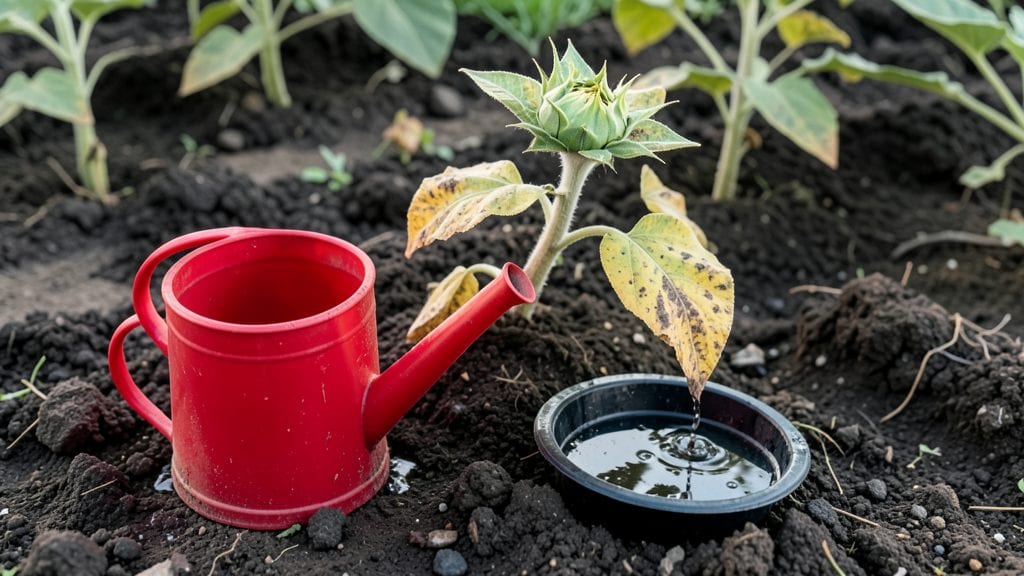
Overwatered sunflower seedlings turn into a sad, yellowing mess faster than you’d think—especially when the soil stays soggy for days. I’ve pulled more droopy sunflowers from waterlogged pots than I’d like to admit, but there’s always a way to bring them back.
The key is acting fast before the roots suffocate or rot sets in completely.
The first sign—those yellow leaves—is actually a cry for help, not a death sentence. Sunflowers need moisture, but their roots can’t breathe if they’re drowning. Check the soil: if it’s damp more than an inch down, you’ve overdone it.
Drainage is everything—whether you’re using pots with holes or garden beds, excess water needs somewhere to go. A quick fix? Gently loosen the soil around the base to help air circulate while you adjust your watering routine.
Within a week of proper care, you’ll see new green growth pushing through. Let the top inch of soil dry out between waterings, and always water at the base—not over the leaves—to avoid fungal issues.
Your sunflower will bounce back stronger, and you’ll spot the early signs of overwatering before they become a problem.
This works for seedlings in pots, raised beds, or even direct-sown in the ground. The same rules apply: never let them sit in wet soil, and always choose containers with drainage.
With these adjustments, your sunflowers will grow tall, sturdy, and full of promise instead of wilting under your well-meaning watering.
Root Causes Of Excess Moisture
Sunflowers thrive in sunlight, but their roots can’t handle too much water—especially when they’re still young and vulnerable. Overwatering disrupts their natural growth cycle, leading to yellowing leaves, wilting, or even root rot.
Let’s break down the key reasons why this happens, so you can adjust your care routine and give your seedlings the right balance of hydration.
Sunflowers need well-draining soil to prevent water from pooling around their roots. If your container or garden bed lacks proper drainage, excess water sits instead of draining away, suffocating the roots.
- Why it matters: Roots need oxygen to absorb nutrients. Waterlogged soil displaces oxygen, causing roots to suffocate and turn mushy.
- Common culprits:
- Clay-heavy or compacted soil (holds water like a sponge).
- Containers without drainage holes (water has nowhere to go).
- Overzealous mulching (too much organic matter traps moisture).
- Actionable fix: Amend soil with perlite, sand, or coconut coir to improve aeration. If potted, ensure holes are present and elevate pots to prevent water buildup.
Sunflowers are drought-tolerant once established, but seedlings have delicate root systems that can’t handle excessive moisture. Watering on a strict schedule—without checking soil conditions—leads to oversaturation.
- Why it matters: Young roots absorb only what they need. Too much water forces them to work harder, depleting energy meant for leaf and stem growth.
- Common mistakes:
- Watering daily (seedlings need moisture, but not constantly).
- Ignoring weather (rainy days + watering = double the problem).
- Using a spray bottle for prolonged misting (keeps leaves wet, encouraging fungal issues).
- Actionable fix: Water deeply but infrequently—about 1 inch per week for seedlings (adjust for heat/humidity). Stick your finger 1 inch into the soil; if it’s dry, water. If damp, wait.
Sunflowers dislike soggy conditions when temperatures swing. Cold, damp soil slows root activity, while high humidity traps moisture against leaves and stems, creating a breeding ground for disease.
- Why it matters: Cool soil reduces microbial activity, preventing roots from breaking down excess water. Meanwhile, humid air prevents evaporation, keeping the soil wet longer.
- Common triggers:
- Planting in early spring or fall (soil stays cold and slow to dry).
- Using clear plastic domes or tight mulch (traps humidity).
- Nighttime watering (cooler temps slow evaporation).
- Actionable fix:
- Water in the morning so leaves dry by evening.
- Avoid mulching too close to the stem (leave a 2-inch gap).
- Use row covers or shade cloth in hot/humid climates to regulate moisture.
Waterlogged conditions create the perfect environment for fungi like Pythium or Fusarium, which attack sunflower roots and leaves. Yellowing, blackened stems, and stunted growth are red flags.
- Why it matters: Fungi thrive in stagnant water, blocking nutrient uptake and clogging root tissues. Seedlings become weak and prone to collapse.
- Signs to watch for:
- Leaves turn yellow or brown at the edges.
- Stems feel soft or mushy when touched.
- White, cottony growth at the soil line (fungal hyphae).
- Actionable fix:
- Immediately reduce watering and improve airflow.
- Apply a fungicide (copper-based or neem oil) if infection is suspected.
- Repot affected seedlings into fresh, sterile soil to break the cycle.
Now that you know the why, the next step is addressing the issue. Check out our fixes for yellowing leaves to revive your sunflower seedlings and get them back on track!
Revive Your Drowning Sunflower
An overwatered sunflower seedling can feel like a lost cause, but with the right steps, you can nurse it back to health—even if its leaves are yellowing or wilting.
The key is acting fast and addressing the root cause (literally). Below, we’ll break down solutions by symptom and provide prevention tips to keep your sunflower thriving.
Cause: Waterlogged soil cuts off oxygen, suffocating roots and causing leaves to turn yellow or brown.
How to Fix It:
- 🔥 Stop Watering Immediately
- Pause all watering for 2–3 days to let the soil dry out. Overwatering is the fastest way to kill a seedling, so patience is key.
- 🍳 Drain the Excess Moisture
- Gently remove the seedling from its pot and inspect the roots. If they’re mushy or black, trim the damaged parts with sterilized scissors.
- Place the seedling in a tray of dry, well-draining soil mix (see prevention tips below) or a paper towel to absorb excess moisture.
- 👨🍳 Repot in Fresh, Dry Soil
- Use a pot with drainage holes (if repotting) and fill it with a fast-draining mix (e.g., 60% potting soil + 30% perlite + 10% coarse sand).
- Plant the seedling at the same depth as before and water lightly only when the top inch of soil feels dry.
- 🌡️ Optimize Drainage
- If your pot lacks drainage, poke holes in the bottom or switch to a terracotta pot, which breathes better than plastic.
Prevention Tips:
- 💡 Water only when the top 1–2 inches of soil are dry (stick your finger in to check).
- ✨ Use a moisture meter for precise readings—sunflowers hate soggy feet!
- 🎯 Elevate pots on saucers or trays to prevent water pooling.
Cause: Overwatering weakens cell structure, leading to floppy stems and leaves. Fungal infections (like damping-off) can also strike in overly wet conditions.
How to Fix It:
- 🔪 Trim Affected Foliage
- Snip off yellow or blackened leaves with clean scissors to redirect energy to healthy growth.
- 🥘 Boost Airflow
- Move the seedling to a bright, indirect spot with good ventilation (e.g., near an open window or fan on low).
- Avoid crowded trays—space seedlings 6+ inches apart.
- 💪 Apply Fungicide (If Needed)
- If you spot mold or black stems, spray with a copper-based fungicide or hydrogen peroxide (1 part 3% H₂O₂ to 4 parts water).
- 🌡️ Gradually Reintroduce Water
- After 3–4 days, water sparingly (just enough to moisten the soil, not soak it).
Prevention Tips:
- 🔥 Use sterilized soil to prevent fungal spores.
- ✨ Mulch lightly (with perlite or straw) to retain just enough moisture without suffocating roots.
- 🎯 Avoid watering at night—damp leaves invite pests and disease.
Cause: Chronic overwatering leads to root rot, where roots turn brown/mushy and the seedling collapses.
How to Fix It:
- 🍳 Act Fast—Remove the Seedling
- Gently wash off soil to assess root health. Healthy roots are firm and white; rotten roots are slimy and dark.
- 🔪 Prune Damaged Roots
- Cut away all black/mushy roots with sterilized scissors. Keep only firm, white roots.
- 👨🍳 Repot in Dry, Fungicide-Treated Soil
- Soak the remaining roots in a hydrogen peroxide solution (1:9 ratio) for 10 minutes to kill fungi.
- Plant in a new pot with fresh, fast-draining soil (add 20% coconut coir for moisture control).
- 🌡️ Adjust Watering Habits
- Water only when the soil is bone-dry (test with your finger). Use a spray bottle for the first week to avoid shock.
Prevention Tips:
- 💡 Choose well-draining pots (terracotta or fabric grow bags).
- ✨ Monitor soil moisture—sunflowers prefer dry spells between waterings.
- 🎯 Rotate pots weekly to ensure even drying.
Pro Tip: Sunflowers are drought-tolerant once established! Once your seedling recovers, reduce watering to 1–2 times per week (adjust for heat/humidity). 🌞
Frequently asked questions about overwatered sunflower seedlings
How do I know if my sunflower seedling is overwatered?
Check for these key signs: yellowing leaves (especially lower ones), wilting despite moist soil, or stems that feel soft when touched. If the soil smells sour or roots appear mushy when you gently remove the plant, you’ve definitely overwatered.
Can I save a sunflower seedling with root rot?
Yes, but act fast! Trim away all black/mushy roots, soak the healthy ones in diluted hydrogen peroxide (1:9 ratio) for 10 minutes, then repot in fresh, dry soil with perlite. Water lightly only when the soil is completely dry. If over 50% of roots are rotted, recovery is unlikely.
Why do sunflower leaves turn yellow after watering?
Yellowing leaves signal oxygen deprivation—roots can’t breathe in soggy soil. Sunflowers need well-draining soil; clay or compacted soil holds too much moisture. Test soil moisture by sticking your finger 1 inch deep—if damp, wait before watering again.
How often should I water sunflower seedlings?
Water deeply but infrequently: aim for 1 inch per week (adjust for heat/humidity). Let the top 1–2 inches of soil dry out between waterings. Morning watering prevents fungal growth, and using a moisture meter avoids guesswork.
What’s the best soil mix to prevent overwatering?
Use a fast-draining blend: 60% potting soil, 30% perlite, and 10% coarse sand. This combo prevents compaction while retaining enough moisture. For containers, ensure drainage holes are present—water should flow freely through the pot.