
Pruning
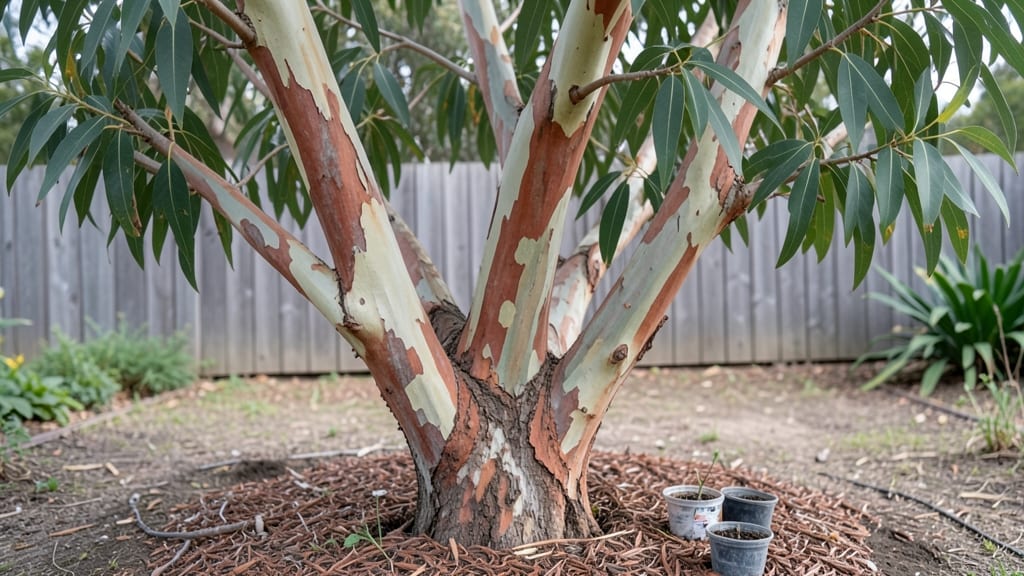
Growing rainbow gum tree seeds from scratch might seem slow, but with the right tricks, you’ll see those striking silver-blue leaves emerge within 3-4 weeks—faster than most native trees.
I’ve learned that soaking seeds overnight cuts germination time by nearly half, and using a heat mat keeps them cozy like a greenhouse without the fuss. The key isn’t patience—it’s creating the right conditions from day one.
These drought-loving trees thrive in well-draining soil with full sun exposure, but their real magic happens when you mimic their natural habitat. A mix of 50% potting soil, 30% perlite, and 20% coarse sand keeps roots happy while preventing rot.
My first batch struggled until I added a clear plastic dome—it traps humidity without smothering the seeds, and within 10 days, tiny sprouts appeared where nothing had before.
Once your seedlings hit 4-6 inches tall, they’re ready for their first pruning to encourage that fast, bushy growth you’re after. Pinch back the top set of leaves to force branching, and you’ll see multiple stems forming instead of one leggy shoot.
The result? A thick, drought-resistant canopy that turns heads in any landscape—no pruning skills required.
Here’s the best part: these trees handle transplanting like pros once they’re 6 months old, and their silver foliage stays vibrant even in dry spells.
Whether you’re filling a large yard or a container, this guide gives you the shortcut to growing one of nature’s most striking trees—without the wait.
Natural Growth Triggers Explained
Rainbow gum trees (Corymbia splendens) produce vibrant, eye-catching seed pods as part of their natural lifecycle—but why do they form at all? The process is driven by a mix of biological cues and environmental factors, each playing a critical role in seed development.
Understanding these triggers can help gardeners anticipate and even encourage healthy seed production in their own trees.
The most significant factor in seed pod formation is the tree’s response to seasonal changes. Rainbow gum trees are native to Australia’s arid and semi-arid regions, where they’ve evolved to thrive in hot, dry climates. Their seed production is closely tied to:
- Day length (photoperiod): As daylight hours shorten in late summer or early autumn, the tree’s hormonal balance shifts. Longer periods of darkness trigger the production of florigen, a protein that signals the tree to initiate flowering and, eventually, seed development.
- Temperature fluctuations: The tree requires a period of warm days (above 70°F/21°C) followed by cooler nights (below 60°F/15°C) to break dormancy and stimulate flowering. This mimics the natural transition from summer to autumn in its native habitat.
- Heat stress: Intense heatwaves can accelerate flowering, but prolonged extreme heat (above 95°F/35°C) may reduce seed viability. The tree prioritizes survival over reproduction under severe stress.
Actionable tip: If your tree isn’t producing seeds, ensure it’s planted in a location with full sun exposure (6+ hours daily) and mimics these seasonal temperature shifts. In cooler climates, consider using a grow light to extend daylight hours slightly in late summer to encourage flowering.
Contrary to what many assume, water restriction—specifically controlled drought stress—actually stimulates seed production in rainbow gum trees. Here’s how it works:
| Mechanism | Effect on Seed Formation |
|---|---|
| Root zone drying | When soil moisture drops, the tree’s roots release abscisic acid (ABA), a hormone that triggers flowering in response to perceived "dry season" conditions. |
| Partial root restriction | Gentle root pruning or planting in slightly compacted soil can create mild water stress, prompting the tree to focus on reproductive growth over foliage expansion. |
| Irrigation pauses | Stopping watering for 4–6 weeks in late summer (when pods begin to form) can boost seed development, but avoid letting the tree wilt completely. |
⚠️ Warning: Overwatering or consistently soggy soil suppresses flowering because the tree prioritizes leaf and root growth over reproduction. Aim for deep, infrequent watering (e.g., every 10–14 days) once established.
A rainbow gum tree’s ability to produce seeds depends heavily on its overall health, which is directly linked to nutrient balance. Key factors include:
- Phosphorus (P): Essential for energy transfer in cells, phosphorus deficiency stunts flower and seed development. Test soil for levels below 20 ppm and amend with bone meal or superphosphate.
- Potassium (K): Supports enzyme activity critical for pollen and seed formation. A deficiency (soil levels < 100 ppm) can lead to weak or empty seed pods.
- Micronutrients (Zinc, Boron, Manganese): These act as cofactors in reproductive processes. Zinc deficiency, for example, causes sterile flowers, while boron aids in cell wall formation for seed pods.
- Carbon balance: Healthy photosynthesis (driven by sunlight and CO₂) provides the energy needed for seed production. Prune competing branches to ensure the tree directs resources upward.
Pro tip: Apply a balanced fertilizer (e.g., 10-10-10) in early spring to support foliage growth, then switch to a low-nitrogen, high-phosphorus formula (e.g., 5-10-10) in late summer to encourage flowering. Mulch with compost to improve soil microbial activity, which enhances nutrient uptake.
Even if your tree flowers beautifully, seed pods won’t form without successful pollination. Rainbow gum trees rely on:
- Native pollinators: In Australia, birds (like lorikeets), insects (e.g., bees, wasps), and even bats transfer pollen between flowers. In other regions, honeybees and native solitary bees are the primary pollinators.
- Wind assistance: While not the primary method, light winds can carry pollen, especially in trees with pendulous flowers.
- Timing: Flowers typically open in late summer to early autumn (varies by climate). If no pollinators are present during this window, fertilization fails.
Actionable fix: If your tree flowers but produces few pods, attract pollinators by:
- Planting native flowers (e.g., grevilleas, banksias) nearby to create a pollinator-friendly habitat.
- Avoiding pesticides, especially neonicotinoids, which harm bees.
- Gently hand-pollinating flowers with a soft brush if local pollinators are scarce (use this as a last resort).
Key takeaway: Seed production in rainbow gum trees is a delicate balance of light, temperature, water stress, nutrients, and pollination. By mimicking their native conditions—especially seasonal cues and controlled drought—you can encourage robust seed development while keeping your tree thriving.
Fixing Common Rainbow Gum Tree Issues
Growing a vibrant rainbow gum tree (Eucalyptus deglupta) is rewarding, but like any fast-growing, drought-tolerant species, it can face challenges—whether from poor pruning, environmental stress, or pests. Below, we break down practical solutions for the most common problems, paired with prevention tips to keep your tree thriving.
Cause: Aggressive growth, lack of pruning, or weak structural branches. Fix:
- 🔪 Trim strategically in late winter or early spring (before new growth). Focus on:
- Removing dead, crossing, or inward-growing branches first.
- Thinning the canopy by cutting back 1/3 of the oldest growth to encourage airflow and sunlight penetration.
- Never remove more than 25% of the foliage in one session to avoid shocking the tree.
- 🌱 Shape gradually—avoid drastic cuts. Use clean, sharp pruners (sterilized with rubbing alcohol) to prevent disease.
💡 Prevention Tip:
- Schedule light pruning every 6–12 months to maintain shape and health. Young trees benefit from formative pruning (training the central leader) to prevent a weak structure.
Cause: Overwatering, nutrient deficiency, fungal infections, or pests like psyllids. Fix:
- 💧 Adjust watering—rainbow gums are drought-tolerant. Water deeply but infrequently (1–2 times per week in dry spells), ensuring the soil drains well. Avoid soggy roots!
- 🌱 Fertilize wisely—use a balanced, slow-release fertilizer (e.g., 10-10-10) in early spring. Avoid high-nitrogen fertilizers, which can burn roots.
- 🍄 Treat fungal issues with a copper fungicide spray if you spot dark spots or powdery mildew. Prune affected branches 1 inch below the damage.
- 🐜 Combat pests like eucalyptus psyllids with neem oil spray or horticultural oil (apply in early morning or evening to avoid harming bees).
💡 Prevention Tip:
- Mulch around the base (2–3 inches of organic mulch) to retain moisture and regulate soil temperature. Keep mulch 6 inches away from the trunk to prevent rot.
Cause: Poor pruning techniques, storm damage, or rapid growth stress. Fix:
- 🛠️ Support weak branches with tree straps or cables if they’re at risk of splitting. Redirect weight by pruning nearby branches to reduce strain.
- 🌳 Prune for strength—remove water sprouts (fast-growing vertical shoots) and co-dominant stems (competing leaders) to avoid a weak fork.
- 🌧️ Protect from storms—if your tree is young or in a windy area, stake it temporarily until the trunk thickens (usually 2–3 years).
💡 Prevention Tip:
- Prune in stages—never remove large branches all at once. Cut branches in 3 steps (undercut, then make the main cut, and finally remove the stub) to avoid tearing the bark.
Cause: Stress from drought, poor soil, or lack of pruning attracts pests. Fix:
- 🐜 Early detection is key—check for:
- Psyllids: Sticky residue ("honeydew") on leaves, curled or distorted foliage.
- Borer holes: Small exit holes in the trunk or sawdust-like frass.
- Scale insects: White or brown bumps on branches.
- 🌿 Natural remedies:
- Psyllids: Spray with soapy water (1 tsp mild soap per quart of water) or kaolin clay (a physical barrier).
- Borers: Apply beneficial nematodes (for larvae) or borer-specific traps.
- Scale: Scrape off infestations with a soft brush and treat with horticultural oil.
- 🔥 Severe cases? Use systemic insecticides (like imidacloprid) as a last resort—follow label instructions carefully.
💡 Prevention Tip:
- Encourage natural predators like ladybugs and lacewings by planting companion native shrubs (e.g., grevilleas or banksias). Avoid broad-spectrum pesticides, which harm beneficial insects.
Cause: Rainbow gums are tropical/subtropical—they cannot tolerate frost below 28°F (-2°C). Fix:
- 🌡️ Protect young trees with:
- Burlap wraps or frost cloth (remove during the day to avoid overheating).
- String lights or heat lamps (safely placed) for extreme cold snaps.
- 🌱 Prune damaged branches after the frost threat passes—cut back to healthy green tissue.
- 🌿 Move potted trees indoors or to a sheltered garage if possible.
💡 Prevention Tip:
- Choose the right location—plant in microclimates (e.g., near a south-facing wall) that trap heat. Avoid low-lying areas where cold air pools.
To keep your rainbow gum tree healthy and vibrant, follow these golden rules: ✅ Prune at the right time—late winter/early spring (before new growth) or summer (after flowering). ✅ Use the right tools—bypass pruners for small branches, loppers for medium, and a pruning saw for thick limbs. ✅ Sterilize cuts—wipe tools with rubbing alcohol between trees to prevent disease spread. ✅ Seal large wounds (over 2 inches) with pruning sealant to reduce rot risk. ✅ Monitor for stress—if your tree drops leaves after pruning, it may be over-pruned.
Next time, go lighter!
Final Thought: Rainbow gum trees are forgiving but finicky—consistent, gentle pruning and proactive care will keep them lush, colorful, and resilient for decades. 🌈✨
Frequently asked questions about rainbow gum tree seeds
How long does it take for rainbow gum tree seeds to germinate?
Most rainbow gum seeds sprout within 2-4 weeks when kept in warm, moist conditions. Soaking seeds overnight in warm water first can cut germination time by nearly half. Use a heat mat set to 75-80°F for faster results—just keep the soil consistently moist (not soggy) during this period.
Can I grow rainbow gum trees from seeds collected from my yard?
Yes, but viability drops after 6-12 months of storage. For best results, collect fresh seeds from healthy trees and store them in a cool, dry place (like the fridge) until ready to plant. If your seeds are older, try soaking them in warm water for 24 hours before planting to encourage germination.
What's the best soil mix for rainbow gum tree seedlings?
Use a fast-draining blend of 50% potting soil, 30% perlite, and 20% coarse sand to mimic their native habitat. Avoid heavy clay soils—root rot is the #1 killer of young seedlings. Add a clear plastic dome or humidity tray to maintain moisture while preventing fungal issues.
Why aren't my rainbow gum seeds sprouting?
Check these common issues: too cold (needs 70°F+), dry soil, or old seeds. Try scratching the seed coat lightly with sandpaper to break dormancy, or use a germination accelerator like hydrogen peroxide (3% solution) for 12 hours before planting. Patience is key—some seeds take up to 8 weeks!
When should I transplant my rainbow gum seedlings outdoors?
Wait until seedlings are 4-6 inches tall with 4-5 true leaves and all frost risk has passed. Harden them off for 7-10 days by gradually increasing sunlight exposure. Plant in full sun with well-draining soil, and water deeply once weekly once established.