Picking
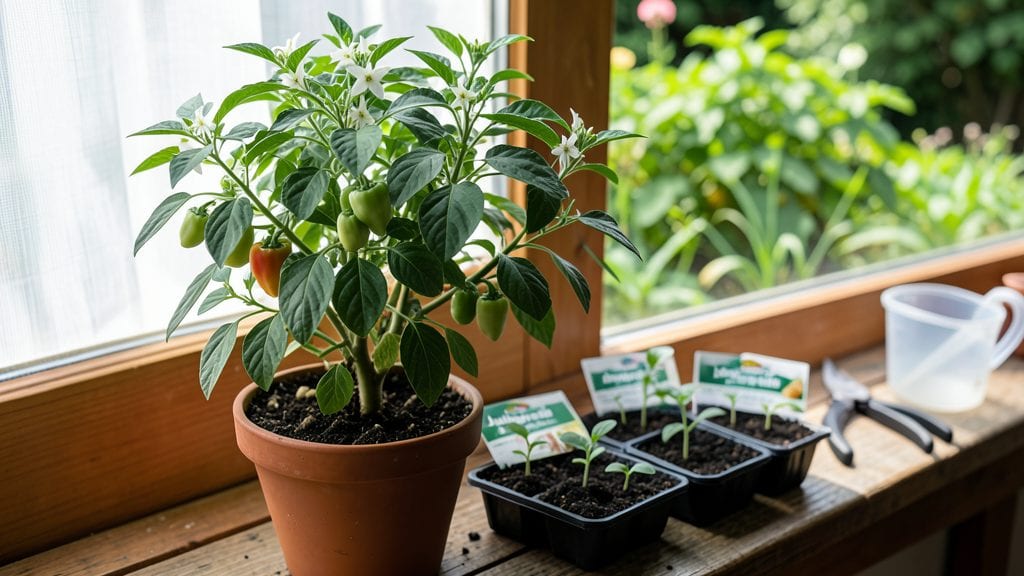
Starting jalapeno peppers from seed gives you fiery plants that store-bought transplants can't match. I've learned the exact timing and tricks to turn those tiny seeds into robust plants ready for your garden by summer—no guesswork, no wasted seeds.
The secret lies in warm soil, patience, and knowing when to push those seeds just deep enough for confidence, not despair.
You'll need a sunny windowsill or grow light, seed-starting mix that drains like a dream, and containers with drainage holes. Most beginners overwater or plant too shallow, but I'll show you the foolproof method that works even if you've killed seedlings before.
Think of it as a 6-week relationship with your plants—consistent light, gentle watering, and zero impatience.
By week 3, you'll spot those first green hooks breaking through the soil, and by week 6, you'll be transplanting sturdy seedlings that outperform anything from the nursery. The payoff? Homegrown jalapenos with heat levels you control, whether you want mild kick or full-on fire.
Plus, you'll save money and avoid the sad fate of store-bought plants that bolt before they fruit.
This method works for any climate—just adjust your starting time based on your last frost date. Whether you're a first-timer or a seasoned gardener looking to expand your heat collection, these steps will have you growing peppers that make neighbors ask, "Where'd you get those?" Let's get those seeds sprouting!
📚 In This Guide
- What you need
- Instructions
- Tips and common mistakes
- Wrapping up and next steps
What you need
- ● Jalapeño seeds: 10–20 seeds (or 1–2 packets for beginners). Choose heirloom or hybrid varieties like 'Early Jalapeño' or 'NuMex Sandia'.
- ● Seed-starting mix: 1–2 quarts of sterile, well-draining mix (avoid garden soil—it’s too dense!). Look for labels like "seed starter" or "potting mix".
- ● Containers: 4–6 biodegradable pots (2–3" diameter) OR
- ● A seed tray with cell inserts (for organized sprouting).
- ● Grow lights or sunny windowsill: 12–16 hours of warmth (70–85°F) daily. A full-spectrum LED grow light works best if natural light is limited.
- ● Spray bottle: For gentle watering (avoid drowning seeds!).
- ● Plastic wrap or humidity dome: To keep seeds cozy until germination (5–10 days).
- ○ Optional but helpful: A heating mat (70–85°F range) to speed up germination.
- ● pH test kit (ideal soil pH: 6.0–6.8).
- ● Fertilizer (balanced 10-10-10 or organic options like fish emulsion).
- ● Labels & markers to track seed varieties and planting dates.
- ● Prerequisites: A warm, draft-free spot (jalapeños hate cold!).
- ● Patience—seeds take 5–10 days to sprout, and peppers need 90–120 days to mature!
Step-by-step instructions for seeding jalapeno peppers
Here’s the foolproof method I’ve used for years to grow robust jalapeno seedlings—no guesswork, just reliable results.
Prepare Containers and Seed Starting Mix
Fill your 4-inch deep containers with 2 gallons of seed starting mix—this light, sterile blend gives young roots the room they need. Press the mix down gently with your fingers until it’s firm but not compacted. You’ll know it’s right when a light tap on the container makes the soil settle slightly without leaving gaps.
Jalapenos hate soggy soil, so add a ¼-inch layer of perlite on top of the mix before planting. This prevents the seeds from sitting in water, which can cause rot. Moisten the soil with a spray bottle until it’s damp 1 inch deep—think of a wrung-out sponge, not a dripping wet cloth.
Plant the Seeds at the Right Depth
Place 2 seeds per container, about ¼ inch deep—any deeper, and they’ll struggle to break through the soil. Space them 1 inch apart to avoid crowding. I like to use a toothpick to poke small holes, then drop the seeds in one at a time. Cover them lightly with a thin layer of the same mix, just enough to hide them.
Mist the soil surface with water again until it’s evenly moist but not wet. Place the containers in a warm spot—75-85°F is ideal for germination. If your home runs cooler, a seedling heat mat speeds things up. You’ll see sprouts in 7-14 days, but don’t be surprised if it takes a few extra days in cooler conditions.
Provide Light and Prevent Leggy Growth
As soon as the first true leaves appear (those are the second set after the initial cotyledons), move the seedlings to a south-facing window or under grow lights. Jalapenos need 14-16 hours of light daily—without it, they’ll stretch toward the light, growing weak and spindly. If using grow lights, keep them 2-3 inches above the plants and raise them as the seedlings grow.
Watch for first true leaves—they’ll look different from the initial round cotyledons. Once they appear, thin to the strongest seedling per container by snipping the weaker one at the base with scissors. This prevents competition and gives your jalapeno room to thrive.
Harden Off Before Transplanting
About 2 weeks before your last frost date, start hardening off the seedlings. Place them outside in a shaded, sheltered spot for 1-2 hours the first day. Gradually increase their time outside by 1 hour daily until they’re out for the full day. This toughens them up so they don’t get shocked by the transition to the garden.
By the time you transplant, your seedlings should be 6-8 inches tall with 4-6 true leaves. Choose a spot with full sun (6+ hours daily) and well-draining soil. Dig holes twice as wide as the root ball and space them 18 inches apart—jalapenos need room to spread. Water deeply after planting to settle the soil around the roots.
Maintain Moisture and Fertility
Keep the soil consistently moist but not soggy—jalapenos are drought-tolerant once established, but seedlings need steady water. Water at the base of the plant in the morning to reduce evaporation and fungal risks. You’ll know it’s right when the top inch of soil feels dry to the touch before the next watering.
After the first 4-6 weeks, feed the plants with a balanced fertilizer (10-10-10) every 2-3 weeks. Look for dark green leaves and sturdy stems—these are signs your jalapenos are thriving. If leaves yellow, they might need more nitrogen, or if they curl, they could be thirsty or too hot.
Tips & tricks for perfect jalapeno pepper seeding
Here's what nobody tells you about growing healthy jalapeno seedlings—these tricks make all the difference between struggling sprouts and thriving plants.
Soil Preparation Secret: When pressing down your 2 gallons of seed starting mix, aim for a firmness that holds its shape but still feels light. I learned this the hard way after compacting soil so tightly that seeds couldn't break through. Think of it like packing snow for a snowball—just firm enough to stay together. The ¼-inch perlite layer is non-negotiable; it creates crucial air pockets that prevent those dreaded fungal issues jalapenos hate.
Germination Temperature Tip: That 75-85°F range is critical for consistent germination. If your home runs cooler, invest in a seedling heat mat—it's a game-changer. I've seen germination times stretch to 21 days in cool basements, but with a heat mat, those same seeds sprout in 7-10 days. Pro tip: Place your containers on the heat mat before planting so the soil warms up first.
Lighting Strategy: The 14-16 hours of daily light requirement isn't just about duration—it's about intensity. If using grow lights, position them 2-3 inches above seedlings at first, then raise them weekly. I notice a dramatic difference when lights are too close: seedlings burn instead of growing. For window placement, south-facing is ideal, but east-facing works too if you supplement with a grow light for 2-3 hours in the evening.
Thinning Technique: When you see those first true leaves appear, don't hesitate to thin to the strongest seedling. I recommend using clean scissors to snip at the base rather than pulling—this prevents disturbing the roots of your kept seedling. The 1-inch spacing between seeds gives you that perfect buffer for safe thinning. Between us, I've kept both seedlings before and ended up with two weak plants—don't make my mistake!
Pro Tips for Seeding Jalapeno Peppers
- Here's what nobody tells you about growing healthy jalapeno seedlings—these tricks make all the difference between struggling sprouts and thriving plants.
- Soil Preparation Secret: When pressing down your 2 gallons of seed starting mix, aim for a firmness that holds its shape but still feels light.
- Germination Temperature Tip: That 75-85°F range is critical for consistent germination.
Frequently asked questions
Got questions about seeding jalapeño peppers? You’re not alone—growing these fiery little plants can feel tricky at first! Here are some of the most common queries (and answers) to help you seed like a pro.
When is the best time to plant jalapeño seeds indoors?
Start seeds 6–8 weeks before your last frost date for indoor seedlings. Jalapeños thrive in warm soil (70–90°F), so if you’re in a cooler climate, use a heat mat or grow lights. For direct sowing outdoors, wait until soil temps hit at least 65°F—they’re frost-sensitive!
How long does it take for jalapeño seeds to germinate?
Germination usually takes 7–21 days, depending on moisture, warmth, and seed freshness. Keep soil damp (not soggy) and maintain temps around 80–90°F. If seeds don’t sprout in 3 weeks, they may need a little more heat or a soak in warm water to kickstart them.
Can I use jalapeños from the grocery store to grow new plants?
Technically yes, but it’s risky! Store-bought peppers are often treated to prevent sprouting. Try soaking seeds in warm water for 24 hours, then plant them in moist soil. For reliable results, opt for fresh, untreated seeds from a nursery or seed packet.
Why aren’t my jalapeño seedlings growing straight?
Leggy seedlings usually mean too little light or overcrowding. Move them closer to a sunny window or grow lights, and thin them so they’re 2–3 inches apart. If they’re already leaning, gently bury the stem deeper (they’ll grow roots along the buried part!).
How do I know if my jalapeño plants are ready to transplant?
Seedlings are ready when they have 2–4 true leaves (not just the initial seed leaves) and are about 3–4 inches tall. Harden them off by placing them outdoors for gradual, short periods (1–2 hours daily) over 5–7 days before transplanting. Choose a cloudy day to avoid shock!
Still stumped? Drop your question in the comments—we’ve got your back!
Wrapping up and next steps
Seeding jalapeño peppers is your gateway to a bold, homegrown harvest—packed with flavor and pride! 🌱 With the right soil, spacing, and care, you’ll watch tiny seeds transform into fiery peppers ready for salsas, grilling, or pickling. Don’t let hesitation slow you down—your garden (and taste buds) will thank you!
Ready to take the next step? Start small—plant a few seeds this week, then scale up as you gain confidence. Soon, you’ll be sharing jars of homemade jalapeño magic with friends (or bragging rights at the BBQ). Happy growing! 🌶️✨