
Vegetables
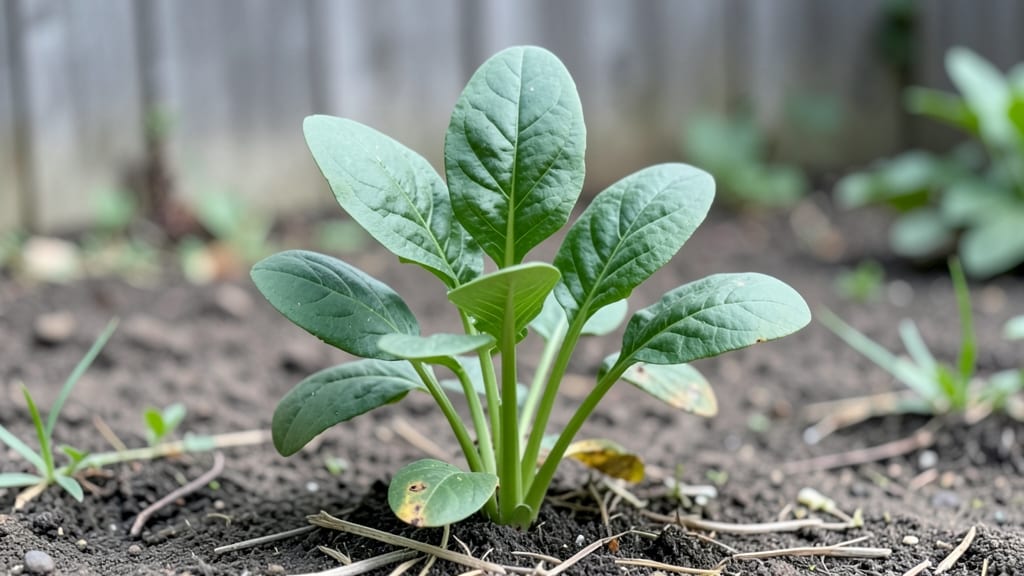
Mastering spinach seedling identification is the first step to avoiding disappointment—because one wrong guess can turn your garden into a patch of weeds instead of a lush harvest. 🌱 I’ve spent years watching seedlings transform—and misidentifying them costs time, space, and patience.
The first leaves, called cotyledons, look nothing like the true spinach leaves that follow, and bolted plants can fool even experienced gardeners.
True spinach seedlings have smooth, dark green leaves with rounded edges, while bolted plants send up tall stems with yellowing leaves. Weeds like purslane or chickweed often mimic spinach’s early growth, but their leaves are thicker and more fleshy.
The key is checking leaf shape and color: healthy spinach leaves stay broad and flat, never narrow or twisted.
When in doubt, pull a seedling and check the roots—spinach roots are white and fibrous, while weeds often have thick, woody roots. Mistakes happen, but catching them early lets you replant or correct issues before they spread.
By the time your seedlings hit 3-4 inches, you’ll spot the difference without hesitation.
This works for all spinach varieties, from savoy to flat-leaf, and even helps with other leafy greens. Once you master the visual cues, you’ll never second-guess a seedling again. Here’s how to decode them step by step.
Root Causes Of Misidentification
When examining spinach seedlings, confusion between true leaves and bolted plants often boils down to a few key factors—some environmental, some biological, and others tied to human error. Understanding these causes helps gardeners and farmers take corrective action before seedlings reach a critical stage.
Below, we break down the most common reasons why spinach seedlings can be misidentified, along with the science behind them.
Spinach seedlings undergo rapid development, and their appearance changes dramatically in short periods. True leaves (the second set of leaves) only emerge after the initial cotyledons (seed leaves) have fully unfurled. If seedlings are checked too early, gardeners may mistake cotyledons for true leaves or overlook early signs of bolting.
- Why it happens: Cotyledons resemble simple, rounded leaves, while true leaves are more lobed or serrated. If you inspect seedlings before true leaves appear, you might misjudge their health or maturity.
- Science behind it: Cotyledons are embryonic leaves that provide initial nutrition via stored seed reserves. True leaves, however, are photosynthetic and structurally distinct, emerging from the plant’s vascular system as it transitions to independent growth.
- Actionable fix: Wait until seedlings have developed at least two sets of mature leaves before assessing their health or identifying bolting. Use a magnifying glass to examine leaf edges for serrations, a hallmark of true spinach leaves.
Spinach is a cool-season crop, and exposure to inconsistent or high temperatures can trigger premature bolting—where the plant shifts focus from leaf production to flowering. This often leads to confusion, as bolted spinach may produce small, yellowish flowers instead of the expected green leaves.
- Why it happens: Spinach bolting is a survival mechanism activated by stress, including heat. When daytime temperatures exceed 75°F (24°C), the plant perceives it as a signal to reproduce before conditions worsen.
- Science behind it: Heat stress disrupts the plant’s hormonal balance, particularly ethylene and gibberellins, which promote flowering. This hormonal shift causes the apical meristem (growth tip) to elongate rapidly, producing a flower stalk instead of leaves.
- Actionable fix:
- Plant spinach in early spring or late summer/fall when temperatures are cooler.
- Use shade cloth (30-50% coverage) to reduce heat exposure during peak afternoon sun.
- Opt for heat-tolerant varieties like 'Tyee' or 'Space', which bolt more slowly in warm conditions.
Spinach seedlings require 12-16 hours of daylight for optimal growth. Insufficient light can lead to leggy, weak seedlings with distorted leaves, while excessive light (especially UV) may cause leaf discoloration or premature bolting.
- Why it happens: Light deprivation slows photosynthesis, forcing seedlings to stretch toward light sources (etiolation). This can make true leaves appear malformed or delayed. Conversely, intense light can stress seedlings, triggering bolting as a defensive response.
- Science behind it: Phytochrome pigments in spinach detect light levels. Low light reduces phytochrome far-red (Pfr) activation, which stunts growth, while high light increases ethylene production, promoting flowering.
- Actionable fix:
- Place seedlings in a south-facing window or under grow lights (12+ hours/day).
- Thin seedlings to avoid overcrowding, which blocks light penetration.
- Use reflective surfaces (like aluminum foil) around seed trays to maximize light reflection.
Spinach is particularly sensitive to nitrogen, phosphorus, and boron levels. Deficiencies or imbalances can distort leaf shape, stunt growth, or even induce bolting-like symptoms, making identification tricky.
| Nutrient Issue | Visual Symptoms | Why It Happens |
|---|---|---|
| Nitrogen Deficiency | Yellowing leaves (chlorosis), stunted growth, small true leaves | Nitrogen is critical for leaf development. Without it, seedlings prioritize root growth over foliage, mimicking poor health or immaturity. |
| Boron Toxicity | Thickened, brittle leaves; distorted leaf edges; premature flowering | Excess boron disrupts cell wall formation and hormone signaling, causing spinach to bolt prematurely. |
| Phosphorus Deficiency | Dark green/purple leaves, slow growth, weak stems | Phosphorus is essential for energy transfer in cells. Without it, seedlings struggle to develop properly, leading to misidentification of "true leaves" as diseased or underdeveloped. |
Actionable fix:
- Test soil pH (ideal: 6.0-7.0) and amend with compost or organic matter for balanced nutrients.
- Avoid over-fertilizing with boron or nitrogen; use a balanced 10-10-10 fertilizer sparingly.
- For container-grown seedlings, use a hydroponic nutrient solution designed for leafy greens.
Not all spinach varieties look the same. Some, like 'Baby’s Leaf Hybrid', have tightly curled leaves, while others, such as 'Bloomsdale Long Standing', grow larger, savoyed leaves. Misidentifying true leaves or bolting can occur if you’re unfamiliar with the specific variety’s growth patterns.
- Why it happens: Hybrid or heirloom spinach may exhibit early leaf crinkling or slower bolting resistance, which can be mistaken for disease or poor growth.
- Science behind it: Genetic markers influence leaf morphology and stress responses. For example, 'Savoy' types have deeply lobed leaves due to BRassinosteroid hormone activity, which can make them look "abnormal" to untrained eyes.
- Actionable fix:
- Research your spinach variety’s expected leaf shape and growth timeline before planting.
- Compare seedlings to reference images from seed packets or gardening guides.
- Start with bolt-resistant varieties like 'Corvair' or 'Merlot' if misidentification is a recurring issue.
By addressing these root causes—whether through timing, environmental control, or nutrient management—you can accurately identify spinach seedlings and ensure they grow into healthy, leafy plants rather than premature flower stalks. 🌿
Fixing Spinach Seedling Confusion
Now that you understand why your spinach seedlings might look like they’re true-leaf or bolted, let’s tackle the how. Whether you’re dealing with misidentified seedlings, stunted growth, or premature bolting, these solutions will help you correct the issue—and prevent future mix-ups.
H3: 🔍 Verify with a Leaf Check If you’ve accidentally planted bolted spinach (or another variety) instead of true-leaf seedlings, don’t panic—you can still salvage the situation.
- 📏 Measure leaf shape: True-leaf spinach has broad, rounded leaves (like a spoon), while bolted spinach may have narrower, jagged, or arrowhead-shaped leaves. Snap a photo for comparison. - 🌿 Check stem thickness: Bolted spinach often has a thicker, woody stem at the base.
If yours feels spongy or fibrous, it’s likely bolted. - 🌱 Transplant carefully: If the seedlings are still small, gently replant them in a separate container or bed to monitor growth. Bolted spinach is edible but less tender—use it for cooking (e.g., sautéed greens) rather than fresh salads.
💡 Pro Tip: If you’re unsure, harvest a few leaves for a taste test. Bolted spinach has a slightly bitter, peppery flavor, while true-leaf varieties are milder and sweeter.
H3: 💧 Optimize Watering & Soil Overwatering or poor drainage can drown seedlings, while underwatering causes wilting. Here’s how to fix it:
| Issue | Fix | Prevention |
|---|---|---|
| Yellowing leaves | Reduce watering; ensure pots have drainage holes. | Use well-draining soil (50% potting mix, 50% perlite). |
| Black, mushy stems | Repot in fresh, dry soil; trim damaged roots. | Water at soil level (not overhead). |
| Slow growth | Fertilize with a balanced 10-10-10 or fish emulsion (diluted). | Add compost or worm castings at planting. |
🌿 Light & Airflow Fix
- 🔆 Move seedlings to a south-facing window or under grow lights (12–14 hours/day).
- 🌬️ Improve airflow by spacing seedlings 2–3 inches apart to prevent fungal diseases like damping-off.
H3: 🌡️ Adjust Temperature & Light Bolting happens when spinach senses heat or long daylight. To delay it:
- 🌡️ Keep temps cool: Spinach thrives at 50–65°F (10–18°C).
Use shade cloth (30–50%) in hot climates. - ⏳ Extend darkness: If growing indoors, cover seedlings with a blackout box for 12+ hours/day to mimic short-day conditions. - 🌱 Choose bolt-resistant varieties: Try ‘Bloomsdale Long Standing’ or ‘Tyee’—they tolerate heat better.
💡 Pro Tip: Harvest leaves early to prevent bolting. Cut outer leaves when they’re 4–6 inches tall, leaving the center to regrow.
H3: 🌱 Start with the Right Seeds
- 📦 Buy certified organic seeds from reputable suppliers (e.g., Baker Creek, Johnny’s Selected Seeds).
- 🔍 Read seed packets for days to maturity—faster varieties (30–40 days) bolt less than slow growers (50+ days).
H3: 🌿 Plant at the Right Time
- 📅 Sow in early spring or late summer (avoid late winter or early fall when temps fluctuate).
- 🌱 Use succession planting: Sow new seeds every 2–3 weeks for a continuous harvest.
H3: 🚫 Avoid Common Mistakes
- ❌ Don’t over-fertilize with nitrogen—it encourages leafy growth but weakens roots, making bolting worse.
- ❌ Don’t let soil dry out completely—spinach needs consistent moisture but hates soggy roots.
Final Thought: With the right care, your spinach seedlings will grow lush, tender, and true-leaf—no confusion needed! 🥬✨ Whether you’re correcting a mix-up or preventing future issues, these steps will keep your spinach thriving from seed to harvest.
Frequently asked questions
How do I tell the difference between spinach seedlings and weeds like purslane?
Examine the leaf texture and growth pattern. Spinach seedlings have smooth, dark green leaves with rounded edges, while purslane has thick, fleshy stems and triangular leaves. Check the base: spinach roots are white and fibrous, while weeds often have thicker, woody roots.
Why do my spinach seedlings look bolted when they're only 2 weeks old?
Premature bolting at this stage usually means heat stress or long daylight hours. Spinach bolts when exposed to temperatures above 75°F (24°C) or more than 14 hours of light daily. Try moving seedlings to cooler conditions or using shade cloth to protect them.
Can I still eat spinach if it bolts?
Yes! Bolted spinach is still edible, though the leaves become more bitter and tough. Harvest outer leaves before they fully flower for the best flavor. For tender greens, use bolted spinach in cooked dishes like sautéed stir-fries or soups.
What's the best way to prevent misidentifying spinach seedlings?
Start by comparing seedlings to reference images from seed packets. Use a magnifying glass to check for serrated leaf edges (true spinach) vs. smooth cotyledons (seed leaves). Always wait until seedlings develop their second set of leaves before transplanting.
How do I fix leggy spinach seedlings?
Leggy seedlings need more light! Move them to a south-facing window or under grow lights for 12-14 hours/day. Thin crowded seedlings to 2-3 inches apart and use reflective surfaces (like aluminum foil) to bounce extra light onto plants.