
Pruning
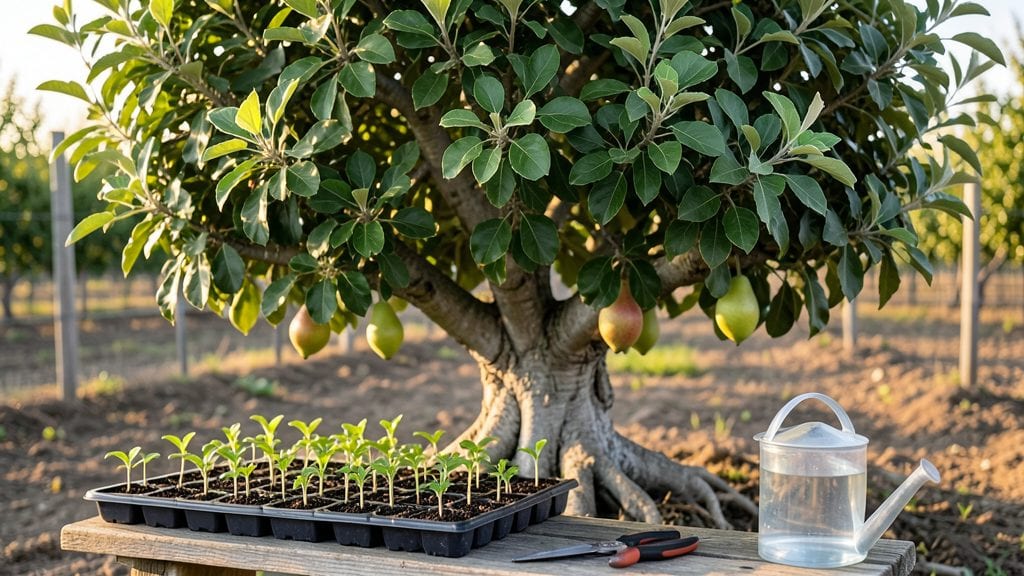
Growing Asian pear tree seeds means waiting for that first fragrant spring bloom—but only if you nail the moisture-controlled chill. I’ve learned the hard way that skipping this step means months of waiting for nothing.
The secret isn’t just cold stratification; it’s keeping those seeds consistently damp while they break dormancy.
You’ll need a few simple supplies: a plastic bag with a damp paper towel, a refrigerator, and patience. Most seeds need 60-90 days of steady moisture and 34-40°F temperatures to germinate.
Too dry, and they won’t wake up; too wet, and they’ll rot before spring arrives. The payoff? Tiny seedlings that’ll one day produce those delicate white flowers.
Once they sprout, you’ll transplant into pots with well-draining soil and keep them bright but not scorched by direct sun. Asian pear seedlings grow slow—expect 1-2 inches per year—but with the right chill and moisture, they’ll reward you with a tree that lives for decades.
The first real harvest might take 5-7 years, but those fragrant blooms in spring make every step worth it.
Works best in USDA zones 5-8, where winters are cold enough for natural dormancy. In warmer climates, you’ll need to mimic the chill artificially. Here’s how to do it right the first time—no guesswork, just fragrant results.
📚 In This Guide
- What you need
- Instructions
- Tips and common mistakes
- Wrapping up and next steps
What you need
- ● Asian pear tree seeds: 5–10 fresh, viable seeds (harvested from ripe fruit or purchased from a reputable supplier).
- ● Small seed-starting pots or containers: 3–4 (4–6 inches in diameter) with drainage holes.
- ● Seed-starting mix: 1 bag (sterilized, well-draining potting mix designed for seeds).
- ● Plastic wrap or humidity dome: 1 (to maintain moisture during germination).
- ● Spray bottle: 1 (for gentle watering).
- ● Refrigerator or cold stratification setup: A standard fridge (35–40°F) or a cold frame for 60–90 days.
- ● Grow lights or sunny windowsill: Access to indirect light (6–8 hours/day) after germination.
- ○ Pruning shears (sterilized): 1 (for future shaping—optional but handy!).
- ● Seed germination heat mat (to speed up sprouting).
- ● pH test kit (to ensure soil pH is 6.0–7.0 for optimal growth).
- ● Fertilizer (balanced, low-nitrogen formula for young seedlings).
- ● Grafting tools (if you plan to graft onto a rootstock later).
- ● Journal or labels (to track seedling progress and transplant dates).
Step-by-step instructions for growing Asian pear tree seeds
Here’s how to coax those tiny seeds into sturdy saplings ready for spring’s fragrant blooms.
Stratify Seeds for Successful Germination
Asian pear seeds need a moist, cold period to break dormancy—this mimics winter in nature. Place the seeds in a paper towel or moistened vermiculite, then fold the towel or seal the container. Store them in the refrigerator for 60-90 days, checking monthly to ensure the medium stays evenly damp (not soggy). I like to wrap the towel loosely around the seeds and tuck it into a plastic bag with a few air holes—this keeps humidity high without risking mold.
After 60 days, transfer the seeds to a warm spot (65-75°F) to encourage sprouting. You’ll see tiny roots emerge first—this is your cue that stratification worked. Once roots reach about ½ inch long, it’s time to plant. Skipping this step often leaves seeds dormant for years, so don’t rush it.
Plant Stratified Seeds in Moist Growing Medium
Fill a small pot (4-6 inches deep) with well-draining potting mix—I mix 50% potting soil and 50% perlite for airflow. Moisten the mix until it’s damp but not wet, then plant seeds ½ inch deep, spacing them 2 inches apart. Gently press the soil around each seed to secure it without compacting.
Place the pot in a warm, bright spot (like a sunny windowsill) but avoid direct sunlight at first—young seedlings can scorch. Keep the soil consistently moist by misting lightly every 2-3 days or when the top inch feels dry. A clear plastic bag draped over the pot (with daily airings) speeds up germination by trapping humidity.
Provide Optimal Light and Temperature
Once seedlings emerge (usually in 4-8 weeks), move them to a south-facing window or under grow lights for 12-14 hours of light daily. Asian pear seedlings need bright, indirect light to prevent leggy growth—watch for stems stretching toward the light or yellowing leaves, which signal insufficient light.
Maintain 65-75°F temperatures during the day and 55-60°F at night for steady growth. If your home runs cooler, a seedling heat mat under the pot keeps roots warm. Water at the base only, avoiding the leaves to prevent fungal issues. You’ll know moisture is right when the soil feels like a wrung-out sponge—damp but not dripping.
Transplant Seedlings to Larger Pots
When seedlings reach 6-8 inches tall with 4-5 true leaves, transplant them to 6-inch pots filled with the same soil-perlite mix. Handle the seedlings gently by their leaves (never the stems) to avoid damage. Bury them deeper than before—up to the first set of leaves—to encourage stronger root development.
Place the pots in a sheltered outdoor spot (like a patio) for 2-3 hours daily starting 2 weeks before last frost. Gradually increase exposure to harden off the seedlings—this toughens their skin for outdoor life. By late spring, they’ll be ready to plant in the ground, where they’ll eventually reward you with fragrant white blooms and crisp fruit.
Maintain Moisture and Sun for Mature Trees
After transplanting outdoors, keep the soil consistently moist (about 1 inch of water per week) for the first year. Asian pear trees thrive in full sun (6+ hours daily) but appreciate afternoon shade in hot climates. Mulch around the base with 2-3 inches of organic mulch to retain moisture and regulate soil temperature.
Prune in late winter to shape the tree and remove dead wood. You’ll see first blooms in 3-5 years—patience pays off with these delicate, fragrant flowers. If you notice yellowing leaves, it’s often a sign of overwatering or nutrient deficiency, so adjust care accordingly.
Tips & tricks for growing Asian pear tree seeds
These simple strategies will help you navigate the delicate balance of moisture and temperature to give your Asian pear seeds the best chance at thriving.
Stratification Success: The 60-90 day cold period is non-negotiable for breaking seed dormancy. I recommend placing your sealed container on a shelf in the crisper drawer of your refrigerator where temperatures stay most consistent. Check monthly by gently lifting the corner of your paper towel or vermiculite—it should feel like a wrung-out sponge, not dripping. If you notice mold developing, discard the seeds immediately and start fresh with a new batch in clean materials.
Warmth Transition: After 60 days in the refrigerator, move your seeds to a warm spot maintaining 65-75°F to trigger sprouting. A sunny windowsill works well, but avoid direct sunlight initially as young roots are sensitive. I place my containers on top of my refrigerator where it stays warm and humid. Watch closely for the first signs of root emergence—this is your confirmation that stratification worked.
Moisture Management: Consistency is key when maintaining moisture levels. For the initial planting, mix your 50% potting soil and 50% perlite thoroughly before adding water. The goal is dampness, not sogginess—think of a wrung-out sponge. After planting, use a spray bottle to mist the soil every 2-3 days rather than pouring from above, which can dislodge seeds. For extra humidity, drape a clear plastic bag over the pot but remember to remove it daily for 10-15 minutes to prevent mold growth.
Light Requirements: Once seedlings emerge in 4-8 weeks, provide 12-14 hours of bright, indirect light daily. I use a south-facing window with sheer curtains to diffuse harsh sunlight. If you notice seedlings stretching toward the light source or developing yellow leaves, they need more light. Consider adding a grow light if natural light isn't sufficient. Remember that Asian pear seedlings are sensitive to temperature fluctuations—keep them within the 65-75°F range during daylight hours.
Pro Tips for Asian Pear Tree Seeds
- These simple strategies will help you navigate the delicate balance of moisture and temperature to give your Asian pear seeds the best chance at thriving.
- Stratification Success: The 60-90 day cold period is non-negotiable for breaking seed dormancy.
- Warmth Transition: After 60 days in the refrigerator, move your seeds to a warm spot maintaining 65-75°F to trigger sprouting.
Frequently asked questions
Got questions about growing Asian pear trees from seeds?
You’re not alone! Here are some of the most common queries—and their answers—to help you navigate the process with confidence.
How long does it take for Asian pear tree seeds to germinate?
Germination can take anywhere from 3 to 6 months, depending on the seed’s dormancy stage and your stratification method. Patience is key—keep the soil consistently moist and warm (around 65–75°F) to encourage sprouting. Some seeds may even take up to a year! Pro tip: Test a few seeds in a separate pot to track progress without waiting for all to germinate.
Why do Asian pear seeds need cold stratification?
Asian pear seeds require a chilling period (usually 6–12 weeks in the fridge) to break dormancy. This mimics winter conditions in their native habitats, signaling the seed that it’s safe to grow. Without stratification, germination rates drop dramatically—or seeds may never sprout. Think of it as a reset button for the seed’s internal clock!
Can I grow an Asian pear tree from store-bought fruit seeds?
Yes, but expect variable results. Store-bought seeds may not be as vigorous as those from a healthy, disease-free tree. For better odds, source seeds from a local nursery or a trusted gardener. If using grocery-store seeds, soak them in warm water for 24 hours first to soften the outer shell and boost germination chances.
What should I do if my Asian pear seedling looks weak or leggy?
Leggy seedlings often mean they’re stretching for light. Move the pot to a sunny windowsill or under grow lights immediately. If the stem is too thin, bury it deeper (up to the first set of leaves) to encourage root growth. Avoid overwatering—let the top inch of soil dry out between waterings. A weak seedling can bounce back with the right care!
Will a tree grown from seed produce fruit like its parent?
Probably not! Seed-grown trees are unpredictable—they may take 10+ years to fruit (if at all) and could produce pears with different flavors, sizes, or even colors. For reliable fruit, consider grafting or buying a young tree from a nursery. If you’re okay with the adventure, seed-grown trees offer a fun surprise—and may develop unique traits!
Wrapping up and next steps
Growing an Asian pear tree from seeds is a rewarding journey that blends patience with the joy of nurturing life! Remember, moisture control and chill hours are your best allies for success—strategically layer seeds, monitor humidity, and embrace the wait for those fragrant spring blooms. 🌱
Ready to take the next step? Start small with a few seeds in your fridge or cold frame, and soon, you’ll be pruning a thriving tree in your own backyard. Happy gardening! 🌸