
Trees
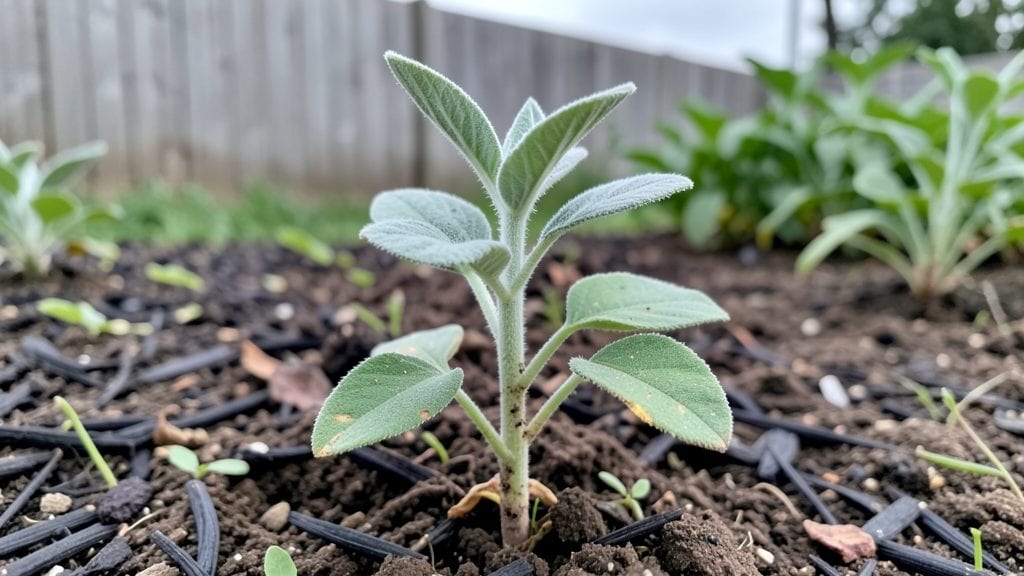
Mastering borage seedling identification early means you’ll never mistake those fuzzy, star-shaped sprouts for weeds again—those first leaves are hairy, blue-green, and nothing else in your garden looks quite like them at this stage. ✨ I’ve pulled up what I thought were weeds, only to realize they were my borage seedlings hiding under the soil surface.
The key is watching how they grow: borage seedlings sprout in tight clusters, with leaves emerging directly from the soil in a rosette pattern. Healthy ones stay compact and velvety, while stressed seedlings stretch thin or develop yellow patches.
A simple trick is to gently brush away soil near your planting area—you’ll spot them within a week if conditions are right.
Once you’ve confirmed those star-shaped leaves, you’ll know you’ve got the real deal. These seedlings thrive in full sun but tolerate partial shade, making them easier to spot than many other herbs.
The first true leaves appear within 10-14 days, and by then, you’ll have a head start on outcompeting weeds.
Common mistakes include mistaking them for lamb’s quarters or purslane—both have rounded leaves—but borage’s fuzzy texture and rapid growth give it away. Keep soil consistently moist but not soggy during this critical stage, and you’ll see those starbursts transform into the striking blue flowers you planted for.
Mistakes That Confuse Young Plants
Identifying borage seedlings can be tricky, especially when their growth patterns mimic other plants or when environmental factors interfere. Understanding the root causes helps you spot and correct issues before they derail your garden. Here’s why misidentification or stunted growth happens—and how to address it:
Borage seeds (Borago officinalis) thrive in specific conditions, and deviations can lead to weak, slow, or deformed seedlings that look nothing like mature plants.
- Cold Soil Temperatures 🥶 Borage seeds need consistent warmth (60–70°F or 15–21°C) to germinate.
If soil is too cold (<50°F or 10°C), seeds may sprout erratically, producing small, pale, or malformed leaves that resemble weeds like lamb’s quarters (Chenopodium album) or purslane (Portulaca oleracea). - Fix: Use a seedling heat mat or start seeds indoors under grow lights until soil warms.
- Incorrect Moisture Levels 💧 Overwatering causes seed rot (seeds swell but fail to sprout), while underwatering leads to stunted, brittle seedlings with twisted stems. Both scenarios make identification harder.
- Fix: Keep soil evenly moist but not soggy—think "damp sponge," not "swamp." Use a spray bottle for precision.
- Low Light Exposure ☀️ Seedlings stretched toward light (etiolation) develop long, weak stems and small leaves, resembling other fast-growing weeds like chickweed (Stellaria media).
- Fix: Provide 12–16 hours of bright light daily (grow lights work if natural light is insufficient).
Young borage seedlings are vulnerable to pests and pathogens, which can alter their appearance before you recognize them.
- Fungal Infections (Damping-Off) 🍄 Overcrowded or damp seedlings may develop soft, mushy stems at the soil line (a classic sign of Pythium or Rhizoctonia fungi).
Infected plants collapse, leaving only isolated, healthy-looking seedlings—making identification unreliable. - Fix: - Space seedlings 1–2 inches apart for airflow. - Use sterilized soil (bake or solarize) and avoid overhead watering. - Apply neem oil or copper fungicide as a preventative.
- Aphid or Spider Mite Infestations 🐜 These pests distort leaves (curling, yellowing, or stippling), making seedlings resemble stressed or diseased plants.
Aphids, in particular, excrete honeydew, attracting sooty mold, which further obscures true borage traits. - Fix: - Inspect undersides of leaves daily for tiny pests. - Blast seedlings with water to dislodge aphids. - Introduce ladybugs or lacewings (natural predators).
- Cutworm Damage 🪰 These nocturnal caterpillars sever stems at soil level, leaving behind decimated seedlings that may regrow as deformed, bushy plants.
- Fix: Use collars made from cardboard tubes around seedlings or apply Bt (Bacillus thuringiensis) spray.
Borage seedlings can easily be overshadowed by weeds or other self-seeded plants in the same family (e.g., forget-me-nots or comfrey).
- Similar-Looking Weeds 🌿
- Chickweed has oval, smooth leaves (vs. borage’s hairy, star-shaped leaves).
- Purslane has succulent, red-tinged stems (borage stems are hairy and green).
- Lamb’s quarters develop arrowhead-shaped leaves (borage’s are rounded and lobed).
- Fix: Pull weeds early and learn the 3-leaf rule: Borage’s true leaves are fuzzy and triangular, while weeds often have smooth, jagged, or serrated edges.
- Cross-Pollination with Related Plants 🌸 If planted near comfrey or hound’s tongue, borage seedlings may exhibit hybrid traits (e.g., larger leaves or different growth habits), confusing identification.
- Fix: Isolate borage plants at least 10 feet from relatives during flowering.
Even experienced gardeners make mistakes that lead to misidentification or poor growth.
- Incorrect Seed Depth 🕳️ Planting seeds too deep (>¼ inch) can cause weak, leggy seedlings that struggle to reach light. Shallow planting may lead to dried-out seeds.
- Fix: Sow seeds ⅛ inch deep in well-drained soil.
- Using Old or Poor-Quality Seeds ⏳ Seeds older than 1–2 years may germinate poorly, producing small, weak seedlings that resemble other struggling plants.
- Fix: Purchase fresh, organic seeds from reputable suppliers (e.g., Baker Creek, Seed Savers Exchange).
- Skipping Hardening Off ❄️ Seedlings transplanted too soon (without gradual acclimation to outdoor conditions) may bolt, yellow, or develop stunted growth, mimicking stress from disease or pests.
- Fix: Harden off seedlings over 7–10 days by exposing them to increasing sunlight and wind.
Pro Tip: 🔍 Use a magnifying glass to examine leaf texture—borage’s hairy, star-shaped leaves are its trademark! If in doubt, wait until the second set of true leaves emerges for accurate ID.
Quick Fixes for Borage Seedling Confusion
Got tangled in borage seedling identification? Don’t stress—solving common mix-ups is easier than you think. Below, we break down the most frequent issues (like misidentifying seedlings or stunted growth) and match them with practical, step-by-step fixes. Plus, we’ll toss in pro tips to keep your borage thriving!
Cause: Young borage seedlings can look like other plants (e.g., comfrey or wild mint) until their hairy stems or star-shaped flowers emerge.
Fix:
- Check the Leaves 🌿
- Borage leaves are rough, jagged, and slightly fuzzy (like a starfish with teeth). Compare with a reference photo.
- Pro Tip: 💡 If leaves are smooth and heart-shaped, it’s likely comfrey—not borage.
- Inspect the Stem 🌱
- True borage stems are covered in fine hairs (almost bristly). Smooth stems = probably a lookalike.
- Wait for Flowers 🌸
- If you’re really unsure, let seedlings grow. Borage blooms bright blue, star-shaped flowers (unlike mint’s tiny clusters).
Prevention:
- Label seedlings immediately with toothpicks or plant tags to avoid future confusion.
- Grow borage in dedicated beds away from comfrey or mint to reduce mix-ups.
Cause: Overcrowding, weak light, or poor soil can leave seedlings thin, stretched, or struggling.
Fix:
- Thin Them Out ⏰
- Keep 6–8 inches between seedlings to prevent competition for nutrients.
- Pro Tip: ✨ Use scissors (not pull) to avoid disturbing roots of nearby plants.
- Boost Light Exposure ☀️
- Move seedlings to a sunny spot (6+ hours of direct light daily). If indoors, use a grow light.
- Warning: 🌡️ Avoid harsh midday sun—use shade cloth if seedlings look scorched.
- Fertilize Lightly 🌱
- Use a balanced, water-soluble fertilizer (10-10-10) at half strength once leaves appear.
- Avoid: Over-fertilizing—borage prefers lean soil and can burn with too much nitrogen.
Prevention:
- Start with quality soil (mix compost with potting soil for drainage).
- Hardening off seedlings (gradually exposing them to outdoor conditions) prevents shock.
Cause: Aphids, slugs, or fungal issues (like powdery mildew) can stunt growth or disfigure leaves.
Fix:
- Spot and Squash Pests 🐜
- Aphids? Blast off with a strong spray of water or use neem oil.
- Slugs? Set up beer traps (bury a shallow dish filled with beer) or use copper tape around pots.
- Treat Fungal Issues 🍄
- If leaves look white or dusty (powdery mildew), spray with baking soda mix (1 tsp baking soda + 1 quart water + a drop of dish soap).
- Prevention: 💡 Improve airflow by spacing plants and avoiding overhead watering.
- Strengthen Seedlings 💪
- Compost tea (homemade or store-bought) boosts natural resistance.
- Avoid: Chemical fungicides—they can harm beneficial insects.
Prevention:
- Rotate crops if growing borage in the same spot yearly.
- Inspect seedlings weekly for early signs of trouble.
Final Pro Tip: 🎯 Keep a seedling journal with photos of each stage—it’s the best way to nail borage identification next time! With these fixes, your seedlings will grow bold, healthy, and unmistakably borage in no time.
Frequently asked questions
How do I tell borage seedlings apart from weeds like lamb's quarters?
Look for hairy, star-shaped leaves with jagged edges—borage’s foliage feels fuzzy to the touch, while lamb’s quarters have smooth, arrowhead-shaped leaves with no fuzz. Also check the stems: borage’s are covered in fine hairs, whereas weeds typically have smooth stems.
Why are my borage seedlings stretching toward the light?
This etiolation happens when seedlings don’t get enough light (12-16 hours daily). Move them to a sunnier spot or use a grow light to prevent weak, leggy growth. Thin crowded seedlings to 6-8 inches apart for better airflow and light access.
Can I transplant borage seedlings too soon after germination?
Yes, but avoid transplanting until seedlings have 2-3 true leaves (usually 3-4 weeks after sowing). Harden them off first by gradually exposing them to outdoor conditions over 7-10 days. Transplant on a cloudy day or in late afternoon to reduce stress.
What should I do if my borage seedlings develop yellow leaves?
Yellowing leaves often signal overwatering or nutrient deficiency. Let the soil dry slightly between waterings and test for drainage issues. If the yellowing starts at the bottom, it’s likely root rot—repot in fresh, well-draining soil. For nitrogen deficiency, use a balanced fertilizer (10-10-10) at half strength.
How long does it take for borage seedlings to flower?
With proper care, borage seedlings typically produce bright blue flowers in 60-70 days from sowing. Early blooms appear in summer, while late plantings may flower into fall. Ensure full sun and well-drained soil to encourage faster flowering.