Vegetables
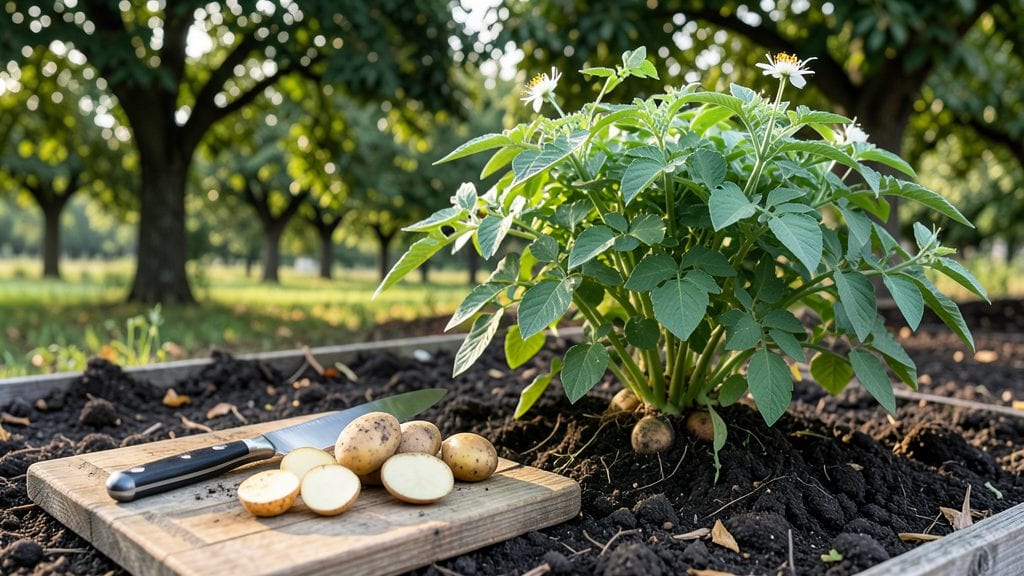
You can cut seed potatoes in half if each piece contains at least one or two healthy eyes (sprouts or buds), which guarantees each section will develop into a full plant with proper planting techniques and spacing.
This method is especially useful when you have limited space or want to maximize your garden's yield. 🌱 The key is ensuring each cut piece has a viable growth point—the "eye"—so it can regenerate roots and shoots.
I always let the cut surfaces dry for 24 hours before planting to prevent rot, which helps the potatoes establish stronger roots faster. Just remember to space them properly to avoid overcrowding, as this can lead to smaller tubers.
For best results, use a clean, sharp knife to make even cuts and avoid damaging the eyes. Planting depth matters too—halved potatoes should sit about 4 inches deep in loose, well-draining soil. This balance of preparation and care turns halving into a smart gardening strategy rather than a risky experiment.
💡 In This Article
- How to Properly Slice Seed Potatoes for Optimal Growth
- Best Practices for Planting Halved Seed Potatoes
How to properly slice seed potatoes for optimal growth
The first step in slicing seed potatoes is using a sterilized, sharp knife to make clean cuts—dull blades crush the cells and invite rot. Start by identifying the eyes (buds), which are the growth points where new plants emerge.
Each cut piece should retain at least one or two healthy eyes; these buds contain meristematic tissue capable of regenerating roots and shoots. The knife should cut through the flesh without scraping the eyes, as damaged buds won’t sprout effectively. 🔥
After cutting, place the potato pieces in a cool, dry location for 24-48 hours to allow the exposed surfaces to form a protective callus layer. This healing process prevents moisture from seeping into the cut edges, which could lead to fungal infections like late blight (Phytophthora infestans).
The callused surface also reduces the risk of soft rot (Erwinia spp.), a bacterial disease that thrives in damp conditions. Think of it like sealing a wound—it’s the potato’s natural defense mechanism kicking in.
Proper drying time is critical because even a slight delay in planting can compromise the tuber’s viability. For example, if you cut potatoes on a humid day (70%+ relative humidity), extend the drying period to 48 hours to ensure full callus formation.
The texture of the cut surface should feel slightly tougher to the touch, indicating successful healing. This step is non-negotiable—skipping it can reduce your yield by up to 30% due to disease pressure.
When cutting, avoid pieces that are smaller than 2 ounces (about the size of a golf ball), as they lack the energy reserves to support new growth. Larger pieces with multiple eyes can be further divided, but each resulting piece must still meet the one-eye minimum rule.
For instance, a 6-ounce potato with four eyes could yield three viable halves, while a 3-ounce potato with two eyes should only be cut once to create two equal pieces.
Another key consideration is the orientation of the cut. Always slice potatoes horizontally (parallel to the ground) rather than vertically. This preserves the natural structure of the tuber’s vascular system, which helps distribute nutrients more efficiently during regrowth.
Vertical cuts can disrupt this flow, leading to uneven sprouting or stunted plants. The science here is about minimizing stress on the tuber’s internal transport pathways.
Finally, store cut potatoes in a single-layer tray rather than stacking them. This ensures air circulates around each piece, preventing condensation buildup—a common cause of mold. The ideal storage temperature is 45-50°F, which slows metabolic activity without causing chilling injury.
With these steps, you’re not just cutting potatoes; you’re setting the stage for robust, disease-resistant plants. ✨