Advice
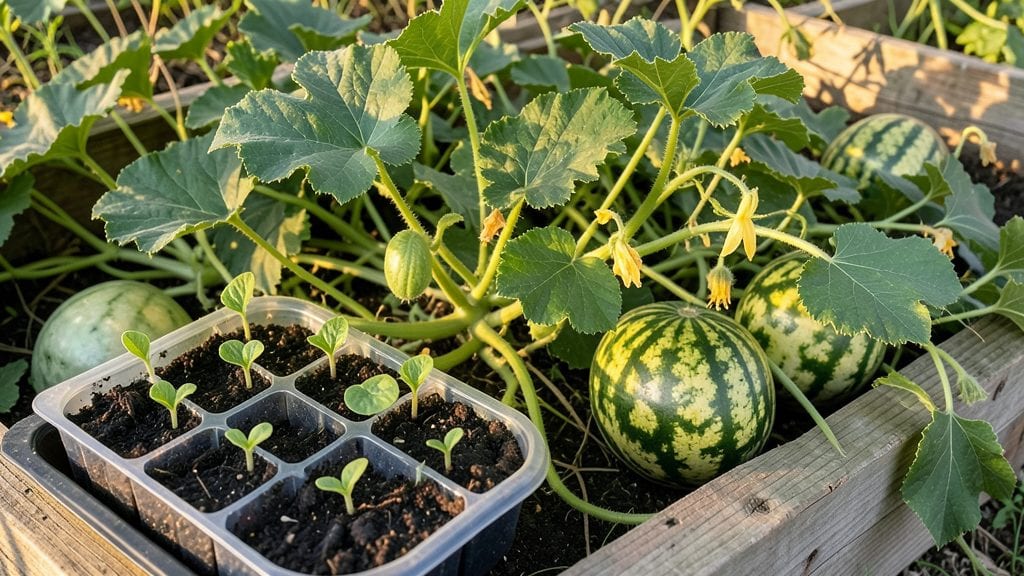
You can grow watermelons from seeds inside store-bought fruit by ensuring they're fresh and viable, then providing consistent warmth, moisture, and bright indirect light. Start them indoors 2-3 weeks before your last frost date for the best chance at strong seedlings.
Watermelon seeds from store-bought fruit often work because commercial varieties are bred for germination success. 🌱 The key is using seeds from fully ripe fruit—those from unripe or old melons may not sprout. I've found that soaking seeds overnight in warm water before planting boosts germination rates.
Once sprouted, watermelon seedlings need plenty of space to grow, as their vines can spread 6-10 feet in warm climates.
For best results, use seed-starting mix rather than garden soil, which can harbor diseases. Transplant seedlings outdoors only after soil temperatures reach 70°F and all frost risk has passed. This timing ensures your young plants won't be shocked by cold snaps.
💡 In This Article
- Watermelon Seed Viability and Germination Science
- Indoor vs. Outdoor Watermelon Seed Starting Guide
Watermelon seed viability and germination science
Watermelon seeds from store-bought fruit have a 60-80% viability rate when fresh, but this drops dramatically after 3 months of storage. The key factor is the seed's moisture content—fresh seeds contain about 10-15% moisture, which triggers metabolic activity needed for germination.
When seeds dry out (below 5% moisture), their cell membranes stiffen, making it harder for water to rehydrate them properly. This is why seeds from recently purchased watermelons sprout more reliably than those from old fruit.
The ideal germination temperature range for watermelon seeds is 75-90°F, with optimal sprouting occurring at 85°F. At these temperatures, enzymes in the seed break down stored starches into sugars at a rate that fuels rapid cell division.
Below 65°F, germination slows dramatically, while above 95°F, seeds may overheat and fail to sprout. Most gardeners use heat mats (set to 80-85°F) for consistent results, especially in cooler climates. 🔥
Moisture requirements are equally critical—seeds need constant dampness (not sogginess) to activate germination. The soil should feel like a wrung-out sponge: moist to the touch but not dripping. Too much water causes oxygen deprivation, leading to mold or rotting seeds, while too little prevents the seed coat from softening.
I've found that using a spray bottle to mist seeds daily maintains perfect moisture levels without oversaturating the medium.
Light exposure during germination is often misunderstood. Watermelon seeds don't need light to sprout—they germinate best in complete darkness for the first 7-10 days. Once the radical (first root) emerges, seedlings develop hypocotyl hooks that pull them upward toward light.
This explains why some gardeners see seedlings "bend" dramatically as they search for light. After the first true leaves appear, move seedlings to bright indirect light (12-14 hours daily) to prevent leggy growth.
Store-bought seeds often outperform home-saved ones because commercial varieties are bred for uniform germination rates and disease resistance.
However, home-saved seeds from heirloom varieties can achieve 90%+ viability if harvested properly—cut open a ripe watermelon, scoop out seeds with surrounding pulp, and dry them on paper towels for 3-5 days in a 70°F environment. The pulp contains natural sugars that help preserve viability during drying.
One surprising factor is seed coat thickness. Watermelon seeds have a hard, fibrous seed coat that can delay germination by 3-5 days if not scarified (lightly scratched).
You can mimic nature's process by rubbing seeds between two sheets of sandpaper or soaking them in lukewarm water for 24 hours before planting. This mimics the digestive action of animals that naturally disperse watermelon seeds. ✨
For maximum success, combine these factors: use seeds from fresh, fully ripe watermelons, maintain 75-90°F soil temperatures, keep moisture consistent, and provide darkness for the first week. With these conditions, you'll see sprouts in 5-10 days—proof that even store-bought watermelon seeds can grow into thriving plants. 💫