Plants
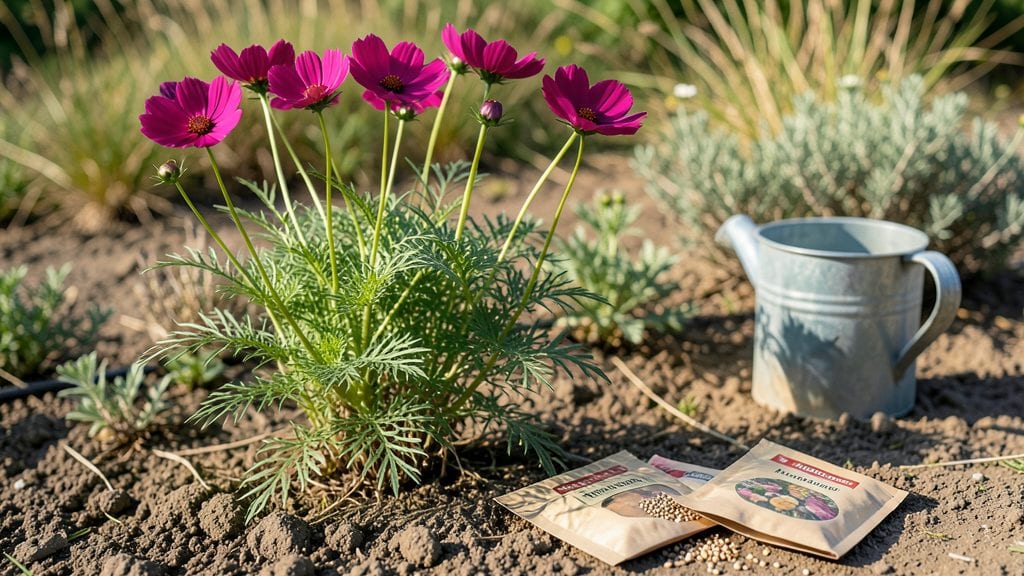
You can plant wildflower seeds in summer, but it requires careful planning to overcome heat stress and drought—choose drought-resistant varieties, water consistently, and plant in shaded or well-drained spots for the best chance of success.
Summer planting works best with species adapted to heat, like Black-Eyed Susans or Lantana, which thrive in full sun and dry conditions.
The key is maintaining moisture without overwatering—think of it like giving your seeds a daily spa treatment to keep them hydrated during the hottest hours. 🌞 I’ve had my best summer results by planting in late afternoon when temperatures drop slightly, giving seeds a fighting chance before evening heat sets in.
Another pro tip: use mulch or shade cloth to protect newly planted seeds from intense afternoon sun, which can bake them before germination even begins. Even the hardiest varieties need this extra care during peak summer months. The payoff? A vibrant, low-maintenance garden that blooms when many other plants struggle.
💡 In This Article
- Summer Wildflower Seed Germination Challenges and Solutions
- Best Summer Wildflower Seed Varieties for Hot Climates
Summer wildflower seed germination challenges and solutions
Here's what's actually happening when you plant wildflower seeds in summer: extreme heat accelerates moisture evaporation from soil at a rate of up to 3 inches per week in dry climates, creating a hostile environment for seeds that need consistent hydration to germinate.
The optimal soil temperature range for most wildflower seeds is 60-75°F, but summer ground temperatures can easily exceed 100°F in direct sunlight, triggering heat shock that prevents seed coats from softening properly. This is why even high-quality seeds may fail to sprout despite appearing healthy.
The science gets even more interesting when you consider seed dormancy mechanisms. Many wildflowers have evolved to germinate in cooler seasons, using chemical inhibitors in their seed coats that only break down under specific temperature and moisture conditions.
Summer's intense heat can actually activate these inhibitors rather than release them, creating a double challenge. For example, Black-Eyed Susans require soil temperatures below 80°F for proper germination, while Lantana can handle up to 90°F but still needs careful moisture management. 🔥
What most people don't realize is how quickly soil moisture dynamics change during summer. A 1-inch watering may only penetrate 2-3 inches deep in hot conditions, leaving seeds at ½-inch depth completely dry within hours.
This is why deep watering techniques—like using soaker hoses for 20-30 minutes twice daily—become essential. The goal is to maintain 60-70% soil moisture in the top 4 inches, mimicking spring rainfall patterns that trigger natural germination cycles.
Mulching works wonders because it creates a microclimate that reduces temperature fluctuations by 10-15°F and retains 30-50% more moisture than bare soil. Organic mulches like straw or wood chips also slowly decompose, adding organic matter that improves soil structure over time.
For extreme heat conditions, 30-50% shade cloth can reduce soil temperatures by 20-30°F while still allowing sufficient light for photosynthesis in emerging seedlings. This combination of strategies transforms what would normally be a failed summer planting into a viable garden project.
Consider these key factors when selecting summer planting sites: soil type plays a surprisingly large role. Sandy soils drain too quickly, while clay soils can become waterlogged and suffocate seeds.
The ideal summer planting medium is loamy soil with 10-30% organic matter that holds moisture while allowing excess water to drain. Amending heavy clay with compost or perlite can create this perfect balance.
Elevation matters too—seeds planted on south-facing slopes receive 20-40% more intense sunlight than those on north-facing areas, requiring additional shade protection.
Timing your watering is almost as important as the amount. Early morning watering (6-8 AM) allows moisture to penetrate before evaporation peaks, while evening watering (6-8 PM) helps cool the soil. Avoid midday watering which can scorch seeds and create surface crusting that blocks oxygen.
The right watering schedule mimics natural summer rainfall patterns where short, frequent showers (rather than heavy downpours) are most effective for seed germination. 💫
Remember this key insight: summer wildflower success isn't about fighting nature—it's about working with its natural rhythms. By understanding these scientific principles and applying targeted solutions, you can transform summer planting from a risky experiment into a reliable gardening strategy that produces beautiful, low-maintenance blooms when many other plants struggle.