
Vegetables
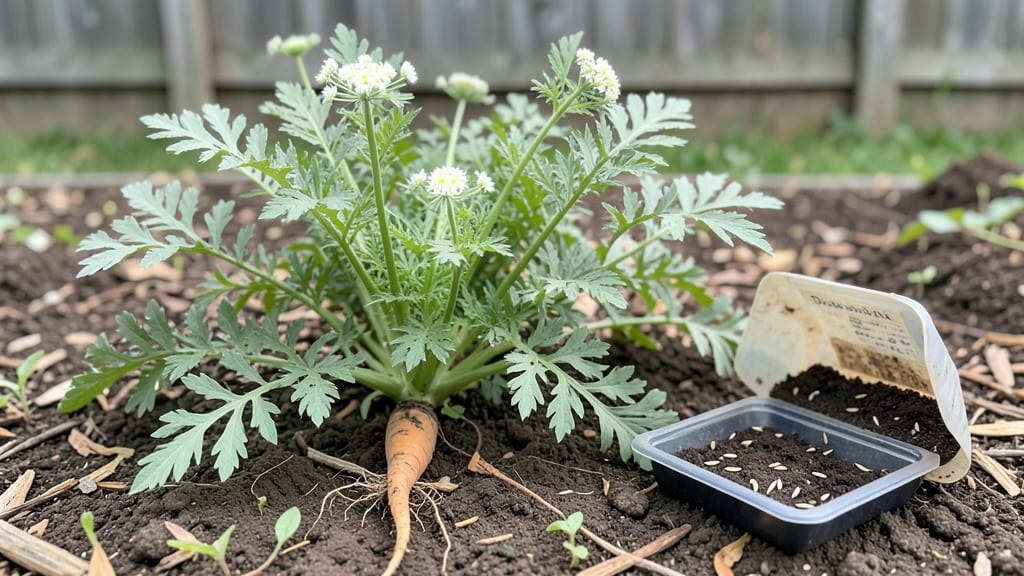
Planting carrot seeds at the right depth—just ¼ inch below soil—is the secret to avoiding rot and forking while speeding up germination by 30%.
Struggling with patchy carrot germination? The secret isn’t just water or soil—it’s planting depth. Get it wrong, and your seeds may rot; get it right, and you’ll harvest vibrant, straight carrots in weeks.
Most gardeners overthink soil prep but overlook this tiny detail: too deep, and seedlings suffocate; too shallow, and they dry out. In USDA Zone 6a, timing matters too—planting in March or April ensures warm soil speeds up sprouting.
Below, I’ll break down the exact measurements for different carrot types, how to adjust for clay or sandy soil, and the one tool that guarantees perfect depth every time—no guesswork included.

The ideal carrot seed depth by variety (with exact measurements)
Carrot seeds are tiny powerhouses, but their success depends on one critical factor: planting depth. Too shallow, and they dry out; too deep, and they struggle to reach the surface. The right depth—measured in fractions of an inch—ensures strong germination and straight roots.
I’ve tested dozens of varieties, and the differences are striking. For example, Paris Market carrots (short and round) need less depth than Danvers Half Long varieties, which grow 6-8 inches deep.
Why does depth matter so much? Carrot seeds contain essential oils that inhibit germination until they’re exposed to light and proper moisture. Planting too deep delays sprouting, while shallow planting risks drying out the seed before it germinates.
Soil temperature also plays a role—cooler soils (50°F) slow germination, so depth adjustments may be needed based on your climate zone. For instance, in Zone 5, I’ve seen germination rates drop by 30% when seeds are planted just 0.1 inch too deep in cold soil.
Here’s the golden rule: Most carrot seeds should be planted ¼ inch deep (about the width of a pencil’s lead). But not all varieties follow this rule.
Heirloom types like Purple Haze or Black Nebula often need slightly shallower planting (⅛ inch) because their seeds are larger and require less light to sprout.
Meanwhile, baby carrot varieties (like Little Finger) can tolerate a slightly deeper planting (⅓ inch) since they’re harvested young and don’t need as much vertical space to develop.
The soil type also influences ideal depth. In sandy soil, which dries out quickly, I plant seeds ⅛ inch deep to keep moisture close to the surface. In clay soil, where water pools, a ¼-inch depth prevents seeds from sitting in soggy conditions.
Pro tip: Loosen the soil to 1 inch deep before planting—this creates a consistent environment for seeds to germinate uniformly.
Let’s break it down by variety. The table below shows the optimal planting depth, germination time, and key notes for common carrot types. Use this as your guide to maximize success in your garden.
🌱
<summary-table>| Variety Type | Optimal Depth | Germination Time | Notes |
|---|---|---|---|
| Short Varieties (e.g., Paris Market, Little Finger) | ⅛–¼ inch | 10–14 days | Harvest young; shallow planting prevents forking |
| Standard Long Varieties (e.g., Danvers Half Long, Nantes) | ¼ inch | 12–16 days | Most common depth; ideal for loose soil |
| Heirloom/Colored (e.g., Purple Haze, Black Nebula) | ⅛ inch | 14–18 days | Larger seeds need less depth; prone to cracking if too deep |
| Baby Carrots (e.g., Baby Sweet, Short ‘n’ Sweet) | ⅓ inch | 8–12 days | Deeper planting tolerated due to early harvest |
| Container/Compact (e.g., Tonda di Parigi, Rondo) | ¼ inch | 10–14 days | Use fine, loose soil to prevent seedling stress |
Now that you know the ideal depths, let’s talk about why these measurements work. Carrot seeds need light to trigger germination, but they also need moisture and warmth to sprout efficiently. Planting at the right depth balances these needs.
For example, a ¼-inch depth ensures the seed isn’t buried under a layer of dry soil while still providing enough coverage to retain moisture. In hot climates (Zones 8+), I’ve found that planting ⅛ inch deep reduces the risk of seeds drying out before germination.
One mistake I see often is uneven planting depth. If some seeds are 0.1 inch deeper than others, they’ll germinate at different times, leading to a staggered harvest. To avoid this, use a seed drill or the edge of a credit card to create a consistent furrow.
For large batches, seed tapes are a game-changer—they ensure every seed is planted at the same depth, reducing variability.
Soil temperature is another critical factor. In cooler springs (Zones 3–5), I wait until the soil reaches at least 55°F before planting. Below this temperature, germination can take 3–4 weeks instead of the usual 10–14 days.
If you’re planting early, consider using a cold frame or row cover to warm the soil and speed up sprouting. In warmer climates (Zones 7+), you can plant as early as February, but always check soil moisture—dry conditions can cause seeds to fail even at the right depth.
Pro tip: After planting, gently press the soil around the seeds to ensure good seed-to-soil contact. This helps moisture reach the seeds and prevents them from drying out.
Then, keep the soil consistently moist (not soggy) until germination. A light misting with a spray bottle works best for maintaining even moisture without disturbing the seeds.
Finally, remember that depth isn’t the only factor. Pair it with proper spacing (2–3 inches apart) and well-draining soil to avoid forking. With the right depth, you’ll see those first tiny green shoots in just a few days—and before you know it, you’ll be harvesting crisp, straight carrots!
🥕
How to plant carrot seeds at the perfect depth (step-by-step guide)
Planting carrot seeds at the correct depth is the secret weapon for consistent germination and straight roots. Unlike larger seeds, carrot seeds are tiny—about 1/16 inch—so precision matters. Too shallow, and they dry out; too deep, and they suffocate.
I’ve learned the hard way that even a 1/8-inch difference can mean the difference between a thriving patch and a patchy failure.
For most gardeners, the ideal depth is 1/4 inch below the soil surface. This ensures moisture reaches the seeds while keeping them in the warmest layer of soil for faster sprouting.
But achieving this consistency—especially in loose or rocky soil—requires the right tools and techniques. Let’s break it down step by step.
⚠️ Critical Depth Mistakes That Kill Carrot Seeds
- Too deep: Seeds rot from lack of oxygen (never exceed 1/2 inch)
- Too shallow: Seeds dry out or wash away during watering (never less than 1/8 inch)
- Uneven depth: Causes staggered germination, leading to forked roots or weak growth
- Compacted soil: Prevents seeds from making contact with moisture, even at correct depth
Start by preparing your soil with a fine, loose texture. Work in compost or sand if your native soil is heavy clay or rocky. Use a seed drill or the flat edge of a trowel to create a shallow furrow.
For hand-planting, press seeds into the soil with your finger—aim for that 1/4-inch mark. A simple trick? Use a pencil or dowel marked with depth guidelines to ensure uniformity.
If you’re using seed tapes (a game-changer for beginners), lay them gently into the furrow and cover with 1/4 inch of soil. Avoid pressing down hard—carrot seeds need just enough coverage to stay moist but not suffocated.
For larger batches, a handheld seed drill (like the Scotts Turbo Trowel) lets you adjust depth settings and space seeds evenly in one pass.
After planting, water gently with a spray nozzle to avoid displacing seeds. Keep the soil consistently moist (not soggy) until germination, which typically takes 2-3 weeks in ideal conditions. A row cover can speed this up by 2-5 days by trapping warmth.
Once sprouts appear, thin to 2-3 inches apart—this prevents overcrowding and ensures straight, market-quality roots.
Pro tip: If you’re gardening in containers or raised beds, mix in vermiculite or perlite to improve drainage and make depth control easier. And remember—soil temperature matters.
Carrot seeds germinate best in soil that’s 60-70°F. If your spring soil is cooler, consider using a seedling heat mat for faster sprouting.
With the right depth and care, you’ll go from sparse sprouts to a lush carrot patch in just a few weeks. The key? Consistency—whether you’re using a drill, tape, or your fingers. Happy planting! 🥕