
Propagation
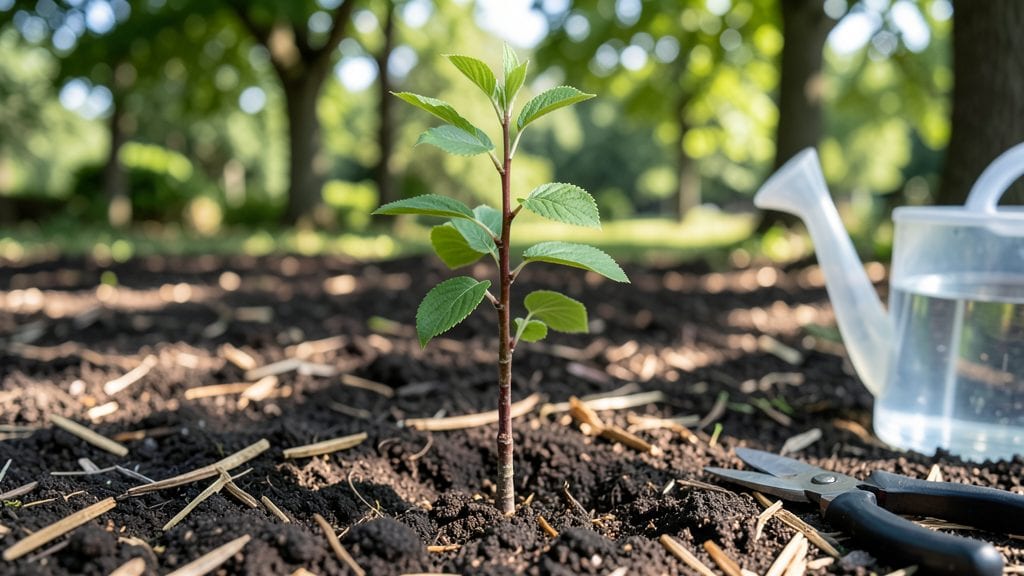
The identification of a cherry seedling begins with those first leaves—sweet cherries have smooth, oval leaves with finely serrated edges, while sour cherries show deeper teeth and a slightly rougher texture. 🌱 I’ve spent years sorting through seedlings, and the difference between... a sweet and sour isn’t just in the fruit—it’s in the details of the plant itself.
The stem color and growth pattern are your next clues: sweet cherry seedlings often have a reddish tint when young, while sour cherries lean toward green or purple. Ornamental cherries, though, might sport leaves with jagged edges or even purple undersides—completely different from fruit-bearing varieties.
Confusing them with plums or peaches? Look for the leaf shape: cherries are more elongated, while plums tend to be broader.
With practice, you’ll spot these traits in minutes—no lab equipment needed. A simple field guide or plant database can back up your guesses, but trust your eyes first. The sooner you identify your seedling, the sooner you can start training it for the tree you want.
Mistakes happen, especially with wild seedlings—so don’t stress if your first guess isn’t perfect. Cross-check with local botanical resources or gardening forums for second opinions. The key is to start observing now, before those tiny stems turn into unmanageable saplings.
Root Causes Of Misidentification
When it comes to identifying cherry seedlings, mistakes often stem from a mix of natural botanical traits and human error. Understanding why misidentification happens can help you spot red flags early and avoid costly mistakes in your orchard or garden.
Below are the most common reasons—backed by science—and how they play out in real-world scenarios.
Cherry trees, especially those from Prunus avium (sweet cherries) or Prunus cerasus (sour cherries), are notorious for cross-pollinating. If you’re growing seedlings from pits (stones) collected from a mixed orchard, the result is often a genetic mishmash. Here’s why this causes confusion:
- Genetic unpredictability: A single cherry pit may carry traits from both parent trees, leading to seedlings that don’t match either variety. For example, a seedling might inherit the leaf shape of a Bing cherry but the stem color of a Montmorency sour cherry.
- Dormancy and delayed expression: Some traits (like disease resistance or fruit color) may not appear until the tree is 3–5 years old. A seedling that looks like a Rainier cherry at 6 months might develop entirely different characteristics later.
- Regional adaptations: Seedlings grown in different climates may develop unique features. A seedling from a California orchard might have thicker cuticles (for drought resistance), while one from the Pacific Northwest could have broader leaves (for cooler, wetter conditions).
Actionable fix: If you’re serious about variety matching, avoid growing from seeds unless you’re testing for breeding programs. Instead, use grafted nursery trees or rooted cuttings from known varieties.
Cherry seedlings are highly sensitive to their growing conditions, and stress can alter their appearance in ways that trick even experienced growers. Here’s how environment plays a trick:
| Stress Factor | How It Affects Seedling Traits | Example Misidentification |
|---|---|---|
| 🌞 Excess sunlight (burn) | Leaves develop thicker, darker edges or reddish hues, mimicking varieties like the Stella cherry, which naturally has deep red stems and leaves. | A sun-stressed Bing seedling might be mistaken for a Lapins cherry (which has dark red foliage). |
| 💧 Waterlogging or drought | Leaves may curl, yellow, or develop irregular serrations, making them look like a different species entirely (e.g., Prunus mahaleb, the mahaleb cherry, which has jagged leaf edges). | A drought-stressed Rainier seedling could be confused with a wild mahaleb cherry. |
| 🌡️ Temperature extremes | Cold snaps can cause purpling of stems or stunted growth, while heat stress may lead to smaller, glossier leaves—traits that don’t align with standard variety descriptions. | A late-spring frost might make a Sweetheart seedling’s stems appear darker than expected, leading to confusion with Montmorency. |
Actionable fix: Grow seedlings in controlled conditions (e.g., a greenhouse or shaded nursery bed) during their first year to minimize environmental distortion. Compare traits across multiple seedlings from the same batch to spot inconsistencies.
Not all cherry identification guides are created equal. Many rely on outdated botanical descriptions, regional variations, or even artist’s interpretations of leaf shapes and stem colors. Here’s how this leads to errors:
- Overlap in descriptions: Some varieties (like Black Republican and Van) have very similar leaf serrations and stem colors, making visual ID difficult without side-by-side comparisons.
- Missing juvenile traits: Many guides focus on mature tree characteristics, but seedlings often look nothing like their adult forms. For example, Lambert cherries have broad, rounded leaves as adults but may start with narrow, serrated juvenile leaves.
- Color fading in digital guides: Stem colors (e.g., red vs. green) can appear differently under natural light vs. screen light. A dark red stem in a photo might look purple-brown in person.
Actionable fix:
- Use multiple sources (e.g., university extension guides, nursery catalogs, and peer-reviewed studies) for cross-verification.
- When in doubt, measure leaf traits:
- Leaf length/width ratio (e.g., Stella leaves are 2–3x longer than wide).
- Number of serrations per inch (e.g., Bing has 10–12 fine serrations vs. Montmorency’s 6–8 coarse ones).
- Visit a local orchard to compare seedlings with known mature trees.
Pathogens and pests can physically alter a seedling’s traits, making it resemble a different variety. Common culprits include:
- Leaf curl virus: Causes thickened, puckered leaves with dark green mottling, mimicking the foliage of a diseased mahaleb cherry.
- Aphids or spider mites: Leave stippled or yellowed patterns on leaves, making them look bleached or sunburned—a trait some growers might mistake for a heat-adapted variety.
- Bacterial canker: Creates sunken, discolored areas on stems, which can be confused with the natural lenticels (pores) of a variety like Rainier.
Actionable fix: Inspect seedlings for symmetrical damage (e.g., if only one side of the leaf is affected, it’s likely pest-related, not varietal). Treat with neem oil or horticultural soap before attempting identification.
Even experienced growers fall into the trap of cherry-picking (pun intended) traits to confirm an ID. For example:
Fixing Common Cherry Seedling Issues
Now that you’ve identified your cherry seedling, you might still face challenges like poor growth, disease, or misidentification. Here’s how to tackle the most common problems—with quick fixes and prevention tips to keep your seedlings thriving.
Cause: Weak seeds, improper planting depth, or inadequate moisture/nutrients. Fix:
- Test seed viability 🔍: Soak seeds in water overnight—if they sink, they’re likely viable. Discard floating seeds.
- Adjust planting depth 🌱: Bury seeds ½ inch deep in moist, well-draining soil (sandy loam works best). Too deep = rot; too shallow = drying out.
- Boost moisture & warmth 💧: Keep soil consistently damp (not soggy) with a humidity dome or plastic wrap. Place near a sunny window or under grow lights (12–16 hours/day).
- Fertilize lightly 🌿: After sprouts appear, use a balanced, water-soluble fertilizer (5-5-5 ratio) at ¼ strength every 2–3 weeks.
Prevention Tips: ✔ Pre-soak seeds for 24 hours before planting to speed up germination. ✔ Use sterile potting mix to avoid damping-off disease. ✔ Maintain 65–75°F soil temps for optimal growth.
Cause: Overwatering, nutrient deficiency, or fungal/bacterial infections (like black spot or powdery mildew). Fix:
- Check watering habits 💦: Let the top 1 inch of soil dry between waterings. Use pots with drainage holes to prevent root rot.
- Diagnose nutrient issues 📊:
- Yellow lower leaves? → Nitrogen deficiency (use a balanced fertilizer or compost tea).
- Purple stems/leaves? → Phosphorus deficiency (add bone meal or superphosphate).
- Weak, pale growth? → Iron/chlorosis (apply chelated iron or adjust soil pH to 6.0–7.0).
- Treat fungal diseases 🍄:
- Prune infected leaves immediately with sterilized scissors.
- Spray with neem oil (1 tsp per quart of water) or baking soda solution (1 tsp baking soda + ¼ tsp dish soap + 1 quart water) weekly.
Prevention Tips: ✔ Water in the morning to allow foliage to dry quickly. ✔ Space seedlings 6–12 inches apart for airflow. ✔ Rotate pots weekly to prevent uneven light exposure.
Cause: Sap-sucking pests weaken seedlings, while borers tunnel into stems. Fix:
- Blast off aphids 💦: Spray with soapy water (1 tsp mild soap per quart of water) or insecticidal soap.
- Combat spider mites 🕷️: Increase humidity (mites hate it!) and spray with neem oil or horticultural oil.
- Treat borers 🪰:
- For young seedlings, soak the soil in beneficial nematodes (like Steinernema carpocapsae).
- For older stems, inject systemic insecticide (e.g., imidacloprid) with a syringe.
Prevention Tips: ✔ Inspect new seedlings before transplanting. ✔ Introduce predator insects (ladybugs, lacewings) to control pests naturally. ✔ Avoid over-fertilizing with nitrogen, which attracts soft-bodied pests.
Cause: Seedlings from pits may not match the parent tree (e.g., a sweet cherry pit might grow a sour cherry). Fix:
- Grafting 🌿 (best for true-to-type results):
- Purchase a whip-and-tongue graft kit or hire a local nursery to graft your desired variety onto the seedling’s rootstock.
- Timing: Late winter/early spring when sap rises.
- Rootstock replacement 🌱:
- If the seedling is healthy but the wrong type, dig it up carefully and graft a scion (cutting from the correct variety) onto its roots.
Prevention Tips: ✔ Buy certified grafts if you need a specific variety. ✔ Label seedlings immediately after germination to track progress. ✔ Take photos of parent trees to compare leaf/stem traits later.
Pro Tip: 💡 Keep a seedling journal! Note planting dates, soil conditions, and growth milestones to spot issues early. Happy growing! 🌳
Frequently asked questions
How can I tell if my cherry seedling is sweet or sour just by looking at the leaves?
Sweet cherry seedlings usually have smooth, oval leaves with fine serrations along the edges, while sour cherries show deeper, more pronounced teeth and slightly rougher leaf textures. Check the underside too—sweet cherries often have lighter green undersides, while sour cherries may appear slightly hairy.
Why does my cherry seedling look different from the parent tree?
Seedlings grown from pits often don’t match the parent tree because they’re genetic hybrids. Traits like leaf shape or stem color may blend unpredictably. For consistent results, use grafted trees or rooted cuttings from known varieties instead of seeds.
Can I identify a cherry seedling by stem color alone?
Stem color helps, but it’s not definitive. Sweet cherries often have reddish or greenish stems when young, while sour cherries lean toward green or purple. Ornamental cherries may show deep purple or almost black stems. Always cross-check with leaf shape and growth pattern for accuracy.
What’s the easiest way to confirm my seedling’s identity?
Compare your seedling to reference images from university extension guides or plant databases like the USDA Plants Database. For best results, examine multiple seedlings from the same batch—variations in traits can reveal inconsistencies. Local botanical gardens often have labeled examples too.
How do I know if my cherry seedling is actually a plum or peach?
Check the leaf shape and arrangement: cherry leaves are more elongated with parallel veins, while plum leaves are broader and more rounded. Peach seedlings have fuzzy undersides and alternate leaf patterns. If unsure, consult a local nursery—they often have comparison charts.