
Pests and Diseases
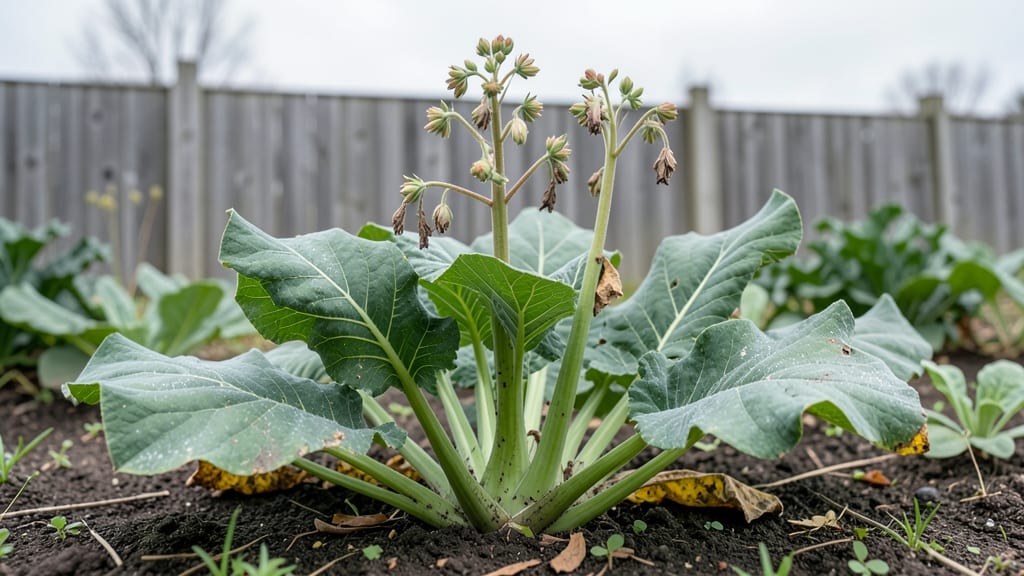
When rhubarb goes to seed, it’s basically throwing a tantrum—sending up a tall, skinny flower stalk that drains energy from the leaves you actually want to eat. 🌱 I’ve watched this happen in my own garden, and let me tell you, it’s frustrating until you know how to stop it.
The good news? With the right timing and a few simple tricks, you can keep your rhubarb focused on producing those tart, vibrant stalks instead of wasting energy on seeds.
Here’s the thing—rhubarb bolts (goes to seed) for a few key reasons: age (older plants bolt more), stress (drought or extreme heat), or just bad timing (planting too early in warm climates). My first year, I ignored the signs until it was too late, and my harvest shrank by half.
But once I learned to monitor plant age, water consistently, and harvest strategically, I got my rhubarb back on track. The secret? Cutting those flower stalks before they form buds and keeping the plant well-watered during heatwaves.
What you’ll end up with is a rhubarb plant that stays productive for years, giving you bold red stalks from early spring through summer. The leaves stay lush and green, and you avoid the bitter, fibrous stalks that come from stressed plants.
Plus, you’ll save yourself the headache of replanting—because once you know how to manage bolting, your rhubarb will keep delivering harvests that put store-bought to shame.
Works for backyard patches, raised beds, or even containers—just adjust your watering schedule based on your climate. Let’s get your rhubarb back to work!
The Hidden Triggers Behind Seed Formation
When your rhubarb starts producing unsightly seed stalks instead of the tender stalks you love, it’s usually a sign that the plant is shifting its energy toward reproduction. But why does this happen?
Understanding the root causes—literally and figuratively—can help you take control and keep your rhubarb focused on growth instead of seeding. Here’s what’s really going on in your garden.
Rhubarb plants are perennials, meaning they live for multiple years, but they don’t stay "young forever." After about 3–5 years, many rhubarb varieties naturally shift their priorities from producing edible stalks to focusing on seed production as a survival strategy.
This is especially true for older plants that have already established a robust root system.
Here’s the science: As rhubarb ages, its meristematic tissue (the growth centers in the crown) begins to allocate more resources toward flowering and seeding rather than leaf and stalk production. This is a built-in mechanism to ensure the plant’s genetic legacy continues—even if it means sacrificing your harvest.
What you can do:
- 🔪 Divide mature plants every 3–5 years to rejuvenate them. Dig up the crown, separate the root sections, and replant them in fresh soil. This tricks the plant into "resetting" its growth cycle.
- 🌱 Prioritize young plants (1–2 years old) for the best stalk production. Older plants will inevitably seed more frequently.
- 📅 Monitor plant age and plan for division before seeding becomes a major issue.
Rhubarb is a hardy plant, but it’s not immune to stress. When exposed to certain environmental or cultural stressors, it may trigger its reproductive mode as a survival tactic. Think of it like a plant version of "fight or flight"—except instead of fighting, it’s preparing to propagate.
Common stress factors include:
| Stressor | Why It Happens | How It Causes Seeding |
|---|---|---|
| ✨ Excessive sunlight | Rhubarb prefers partial shade. Too much direct sun can cause heat stress, especially in hot climates. | The plant perceives harsh conditions and shifts energy to seed production for the next generation. |
| 💧 Water stress (drought or overwatering) | Rhubarb roots need consistent moisture but can’t tolerate soggy soil. Both drought and waterlogging disrupt nutrient uptake. | Stressed roots signal the plant to prioritize survival over growth, leading to flowering. |
| 🌡️ Temperature fluctuations | Extreme heat or cold snaps can shock the plant, especially in early spring or late fall. | The plant may enter a "safe mode," redirecting energy to seed stalks to ensure genetic continuity. |
| 🗹 Poor soil nutrition | Low nitrogen or phosphorus levels weaken the plant, making it less able to support vigorous stalk growth. | With limited resources, the plant defaults to seeding as a lower-energy reproductive strategy. |
What you can do:
- 🌿 Provide 4–6 hours of morning sun and afternoon shade to reduce heat stress.
- 💦 Water deeply 1–2 times per week (adjust for climate), keeping soil moist but not waterlogged.
- 🌱 Amend soil with compost or a balanced fertilizer (10-10-10) in early spring to support robust growth.
- ❄️ Mulch heavily in winter to protect roots from temperature swings.
Sometimes, the culprit isn’t environmental—it’s unwanted guests in your garden. Certain pests and diseases can weaken rhubarb plants to the point where they abandon stalk production in favor of seeding. Here’s how it works:
- 🐜 Crown borers: These larvae burrow into the crown, damaging the plant’s energy reserves. A weakened rhubarb may respond by producing seed stalks as a last-ditch effort to reproduce.
- 🍄 Fungal infections (e.g., leaf spot, rust): Diseases like Cercospora leaf spot reduce the plant’s ability to photosynthesize efficiently. With less energy, it shifts to seeding.
- 🐞 Slugs and snails: While they primarily target leaves, severe defoliation can stress the plant enough to trigger reproductive mode.
What you can do:
- 🔍 Inspect crowns and leaves regularly for signs of borers (sawdust-like frass) or fungal spots (dark, irregular patches).
- 🛡️ Use organic sprays like neem oil for fungal issues or diatomaceous earth for slugs.
- 🌱 Rotate crops annually to prevent soil-borne diseases from taking hold.
By addressing these underlying causes—whether it’s age, stress, or pests—you can minimize seed stalk production and keep your rhubarb focused on delivering the tender, tangy stalks you crave. The key is proactive care and staying one step ahead of your plant’s natural instincts!
Reviving Your Rhubarb Before It’s Too Late
If your rhubarb plants have gone to seed, don’t toss them out just yet! With the right steps, you can often salvage the stalks, improve future growth, and even prevent premature bolting in the next season.
Below are practical solutions tailored to the most common causes—plus prevention tips to keep your rhubarb thriving for years to come.
Older rhubarb plants (typically 5–7+ years) or stalks left too long in the ground may bolt prematurely. This is natural but can be managed.
🔥 How to Fix It:
- Harvest aggressively 🍃: Cut back any seed stalks at ground level to redirect energy to the crown. This won’t reverse bolting but may help the plant recover for next year.
- Divide the plant 🌿: Dig up the crown, separate it into smaller sections (each with at least one bud), and replant the healthiest pieces in fresh soil. Discard any severely damaged or woody parts.
- Adjust planting timing ⏰: If your climate has hot summers, consider replanting rhubarb in a cooler microclimate (e.g., partial shade) or a high-altitude area to delay bolting.
💡 Prevention Tips:
- Replace old plants every 5–6 years to avoid chronic bolting.
- Harvest young stalks (10–12 inches long) to encourage new growth and delay maturity.
- Avoid over-fertilizing with nitrogen—too much can speed up growth and trigger early bolting.
Rhubarb hates extreme heat and dry conditions. Stress from summer droughts or scorching temperatures can force plants to bolt prematurely.
🍳 How to Fix It:
- Water deeply and consistently 💦: Rhubarb needs about 1–1.5 inches of water per week. Mulch with straw or wood chips to retain moisture and cool the roots.
- Provide afternoon shade 🌳: Use shade cloth (30–50%) or plant near taller crops (like corn or sunflowers) to protect leaves from afternoon sun.
- Harvest less during heatwaves ❄️: Reduce stalk harvesting to let the plant conserve energy for root health.
🌡️ Prevention Tips:
- Plant in cooler zones (USDA 3–6) or use containers for easier relocation if summers get too hot.
- Choose heat-tolerant varieties like ‘Victoria’ or ‘Canadian Red’, which bolt later than others.
- Avoid planting in full sun in regions with long, hot summers—opt for dappled shade instead.
Weakened plants from pests (like aphids, slugs, or crown borers) or diseases (such as rhubarb leaf curl virus) may bolt as a survival response.
👨🍳 How to Fix It:
- Inspect and treat pests 🐜:
- Aphids: Spray with soapy water (1 tsp mild soap + 1 quart water) or introduce ladybugs.
- Slugs: Set beer traps or use iron phosphate bait.
- Crown borers: Prune affected stalks at the base and treat the crown with neem oil.
- Remove diseased foliage 🔪: Burn or compost (not reuse!) any yellowed or spotted leaves to prevent spread.
- Apply fungicide 🍄 (if needed): Use copper-based sprays for fungal issues like leaf spot.
🎯 Prevention Tips:
- Rotate crops yearly to starve soil-borne diseases.
- Keep the area weed-free—weeds harbor pests and diseases.
- Buy certified disease-free starts to avoid introducing viruses like rhubarb yellows.
Rhubarb thrives in rich, well-draining soil. Compacted, nutrient-poor, or overly fertile soil can disrupt growth and trigger bolting.
🥘 How to Fix It:
- Test your soil 📊: Aim for a pH of 6.0–6.8. Amend with compost or peat moss if the soil is too alkaline.
- Fertilize correctly 💪:
- Spring: Apply a balanced fertilizer (10-10-10) lightly.
- Avoid high-nitrogen fertilizers in late summer—they encourage leafy (not stalk) growth.
- Improve drainage 🚿: If soil is clay-heavy, mix in sand or plant on a slight mound.
✨ Prevention Tips:
- Add organic matter annually (compost or aged manure) to maintain soil health.
- Avoid fresh manure—it can burn roots and disrupt growth.
- Mulch heavily in winter to protect roots from temperature swings.
With these fixes, your rhubarb can bounce back—especially if you act quickly. For next year, focus on cool conditions, balanced care, and timely harvesting to keep those sweet stalks coming. Happy gardening! 🌿
Frequently asked questions about rhubarb going to seed
Why does my rhubarb suddenly produce flower stalks instead of edible stalks?
Rhubarb bolts (goes to seed) when it shifts energy from leaf production to reproduction, often triggered by age (after 3-5 years), stress from heat/drought, or poor soil conditions. The plant prioritizes survival by creating seeds for the next generation. Cutting flower stalks early can redirect energy back to your harvest.
Can I still harvest rhubarb stalks if the plant has already bolted?
Yes, but focus on younger, smaller stalks first—they’ll be more tender. Once bolted, the plant’s energy shifts, so new stalks may be tougher. Remove any flower stalks immediately to prevent seed formation and give the plant a chance to recover for next season.
How do I prevent rhubarb from bolting next year?
Start with young plants (1-2 years old) and divide mature plants every 5-6 years to rejuvenate them. Provide partial shade in hot climates, maintain consistent moisture, and avoid over-fertilizing with nitrogen. Harvest stalks when 10-12 inches long to encourage continuous growth.
Will cutting off flower stalks save my rhubarb harvest?
Snip flower stalks at the base as soon as they appear to redirect the plant’s energy back to stalk production. For best results, do this before buds form—once seeds develop, the plant’s focus shifts permanently. This simple trick can double your harvest potential in just one season.
Can I grow rhubarb in containers to prevent bolting?
Container-grown rhubarb often bolts later than in-ground plants because you can control soil conditions better. Use a large pot (18+ inches deep) with well-draining soil, provide afternoon shade in hot climates, and keep soil consistently moist. Just be sure to divide plants every 3-4 years to maintain vigor.