
Plants
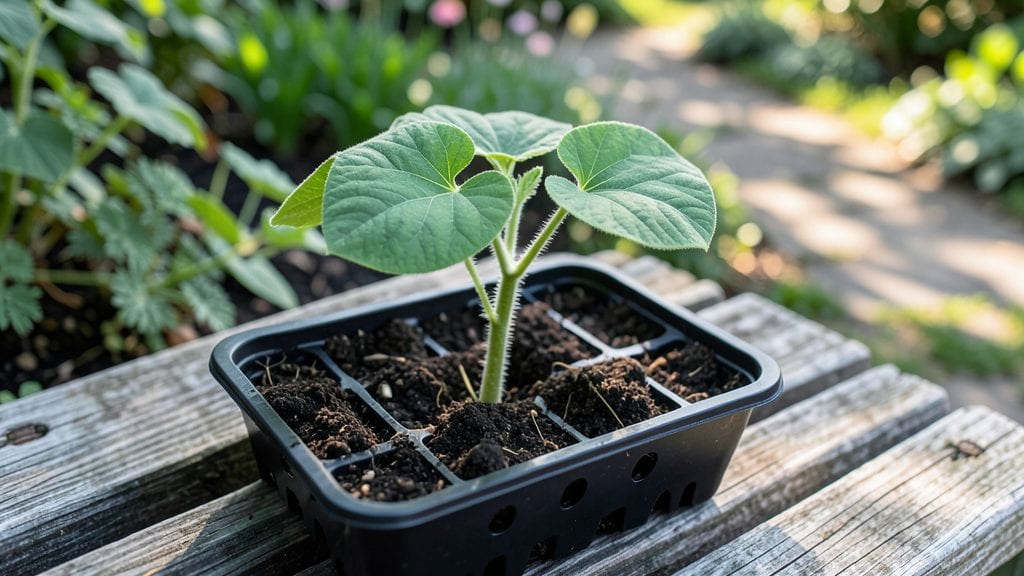
A pumpkin seedling's early appearance can be surprisingly delicate, with those first leaves acting as nature's camouflage. 🌱 The cotyledons (those initial seed leaves) are simple and smooth, but once the true leaves emerge, they become instantly recognizable with their jagged edges and deep lobes.
What's fascinating is how quickly these leaves grow—within just a few days, you'll see the vine's hairy texture and the plant's determination to spread outward. This rapid transformation is why gardeners often confuse young pumpkin seedlings with other squash varieties, so paying attention to those lobed patterns is key.
What sets pumpkin seedlings apart from their squash cousins is the speed of vine development and the distinctive leaf shape—think of tiny oak leaves with serrated edges. The central stem's hairiness is another dead giveaway, as it helps the plant anchor itself while it races toward sunlight.
I've found that keeping seedlings in bright, indirect light from the start helps prevent leggy growth, which can make identification even trickier later on.
💡 In This Article
- Identifying Pumpkin Seedling Stages by Leaf Shape
- Comparing Pumpkin Seedlings to Other Vine Plants
Identifying pumpkin seedling stages by leaf shape
Here's what's actually happening at the microscopic level: A pumpkin seedling begins with two smooth, rounded cotyledons that emerge first, powered by the seed's stored energy. These initial leaves are typically 0.5 to 1 inch wide and have a waxy texture that helps conserve moisture during germination.
What most gardeners don't realize is that these cotyledons aren't true leaves—they're actually modified seed leaves that only last about 7-10 days before falling off as the plant shifts to photosynthesis. 🌱
The real transformation happens when the first true leaves appear, which look nothing like the cotyledons. These leaves develop 3-5 deep lobes with serrated edges, resembling miniature maple or oak foliage.
The leaf margins often have sharp, jagged teeth that can be as fine as 0.1 inch apart, creating a distinctive "finger-like" pattern. This lobing is actually a survival adaptation—more surface area helps capture sunlight while reducing water loss through transpiration.
What sets pumpkin seedlings apart from squash is the stem hairiness and growth speed. The central stem develops fine, bristly hairs (called trichomes) that help protect against pests and retain moisture.
Within 10-14 days of germination, you'll see the vine begin to sprawl, with leaves growing up to 3-4 inches wide by the third week. The rapid expansion is driven by the plant's need to maximize photosynthesis before the first true flowers appear.
Common misidentifications happen because young squash seedlings can look similar. The key difference is that pumpkin leaves typically have more pronounced lobes (often 5+ lobes) compared to squash (usually 3-4 lobes). Also, pumpkin vines develop hairier stems and grow faster—sometimes doubling in size weekly during warm weather.
I've seen gardeners confuse them with cucumber seedlings, but cucumbers have smooth, heart-shaped leaves without the deep lobing.
Another telltale sign is the leaf arrangement. Pumpkin seedlings display alternate leaf placement along the stem, with each new leaf emerging at a 45-90 degree angle from the previous one. This spiral pattern helps maximize light exposure.
The leaves also develop a slightly wrinkled texture when young, which smooths out as they mature. This wrinkling is another moisture-conservation adaptation common in Cucurbitaceae family plants.
For troubleshooting, watch for yellowing cotyledons—this is normal as they senesce, but if true leaves yellow too, it may indicate overwatering or nutrient deficiency. The first true leaves should appear within 7-14 days of germination; if they're delayed, check seed viability or soil temperature (optimal is 70-90°F). 💫