
Vegetables
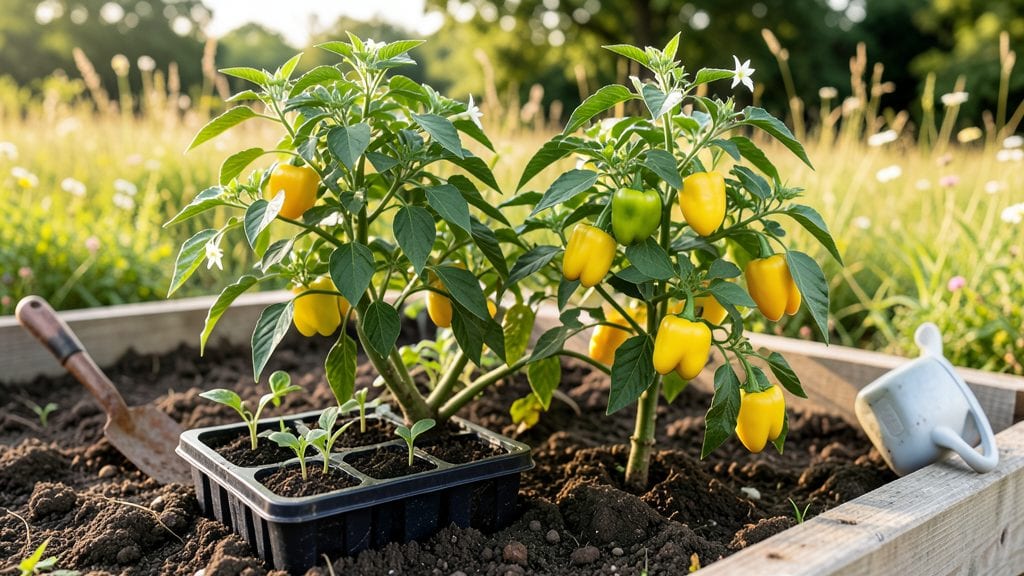
Saving yellow pepper seeds from your homegrown harvest means next year’s plants will taste exactly like your favorites—sweet, smoky, or just the right kick. 🌱 I’ve rescued seeds from overripe peppers that turned into plants just as vibrant as their parents, and the process is simpler than you’d think.
The key is picking the right peppers, letting them ripen fully, and drying the seeds properly so they stay viable for planting.
Most store-bought peppers won’t produce true seeds—you need heirloom or open-pollinated varieties like Golden Calwonder or Yellow Banana. Once you’ve got those seeds, you’ll need a warm spot (70°F or above), well-draining soil, and patience—these peppers take 75-90 days to mature.
The payoff? Plants that grow true to type, with the same flavor and vigor you love.
By the time you’re harvesting those first yellow peppers, you’ll know exactly how to save seeds from them for next season. The plants stay productive for years, and you’ll never have to worry about store-bought peppers again.
Plus, the seeds themselves are a great trade with fellow gardeners—or a way to experiment with new varieties.
This method works for any climate, though you’ll need to adjust planting times for cooler regions. Whether you’re growing in containers or garden beds, the same principles apply. Here’s how to turn your harvest into next year’s star plants!
The Hidden Factors Behind Seed Failure
Growing vibrant, healthy yellow peppers from seed is a rewarding experience—but sometimes, those seeds just don’t cooperate. If your pepper seeds aren’t germinating, sprouting weakly, or producing poor-quality plants, the issue likely stems from one (or more) of these common yet avoidable factors.
Understanding the science behind seed failure helps you troubleshoot like a pro and maximize your harvest potential.
Not all seeds are created equal—and neither are their lifespans. Pepper seeds, like many vegetable seeds, have a limited shelf life. Once harvested, they gradually lose viability due to:
- Moisture loss: Seeds dry out over time, weakening their embryonic cells. Freshly harvested seeds (especially from hybrid varieties) may only stay viable for 1–2 years if stored improperly.
- Enzyme degradation: Enzymes that kickstart germination break down after prolonged storage, leaving seeds dormant or dead.
- Pathogen exposure: Fungal or bacterial contamination during storage can render seeds unusable.
Actionable fix: Test seed viability by placing a few in a damp paper towel—if <20% sprout within 7–10 days, replace your seed stock. Store seeds in a cool (50–60°F), dry (5–10% humidity), and dark environment (e.g., airtight containers with silica gel packets). For long-term storage, refrigerate or freeze seeds in sealed bags with a desiccant.
Peppers are tropical plants, and their seeds thrive in specific temperature ranges. Too hot or too cold during germination can halt growth or kill seedlings:
- Cold shock: Temperatures below 55°F (13°C) slow enzyme activity, delaying or preventing germination. Seeds may rot if soil stays soggy in cold conditions.
- Heat stress: Soil temps above 95°F (35°C) can cook seeds before they sprout, while inconsistent warmth (e.g., near a heater) may cause uneven growth.
- Fluctuations: Rapid temperature swings (e.g., nighttime drops) confuse the seed’s metabolic signals, leading to weak or stunted sprouts.
Actionable fix:
- Use a seedling heat mat (70–80°F/21–27°C) for consistent warmth.
- Keep soil moist but not waterlogged—bottom-watering trays prevent temperature extremes.
- Avoid placing seeds near drafts or direct sunlight until they’ve sprouted.
Water is the lifeblood of germination, but pepper seeds are finicky about hydration. Problems arise from:
- Overwatering: Excess moisture suffocates seeds by blocking oxygen, leading to fungal diseases (e.g., damping-off) or seed rot. Compacted soil traps water around seeds, creating anaerobic conditions.
- Underwatering: Seeds dry out before enzymes activate, resulting in "hard" (ungerminated) seeds. Inconsistent moisture triggers erratic growth.
- Chemical imbalance: Tap water with high chlorine or salts can inhibit germination by disrupting cellular processes.
Actionable fix:
- Use room-temperature, filtered or distilled water to avoid chemical interference.
- Keep soil evenly moist (like a wrung-out sponge)—mist seeds lightly daily or use a spray bottle.
- Cover trays with plastic wrap to retain humidity, but ventilate daily to prevent mold.
Seeds need more than just water—they rely on a balanced environment to break dormancy. Common soil-related issues include:
- Compacted or heavy soil: Clay or poorly aerated mixes restrict oxygen flow, causing seeds to suffocate or rot.
- Lack of organic matter: Peppers need readily available nutrients (like phosphorus) to fuel root development. Sterile or nutrient-poor soil starves seedlings.
- pH imbalances: Peppers prefer a slightly acidic to neutral pH (6.0–7.0). Soil too alkaline (pH >7.5) locks out essential minerals like iron and zinc.
- Pathogens: Reusing contaminated soil or compost can introduce harmful microbes that attack seeds.
Actionable fix:
- Use a light, sterile seed-starting mix (e.g., coco coir + perlite) with added worm castings or compost for nutrients.
- Test soil pH with a kit—amend with sulfur (to lower pH) or lime (to raise pH) if needed.
- Sterilize soil by baking it at 180°F (82°C) for 30 minutes or using hydrogen peroxide (1 tbsp per quart of water) to kill pathogens.
If you’re saving seeds from your homegrown yellow peppers, the drying and storage process is critical. Mistakes here lead to low germination rates:
- Incomplete ripening: Harvesting peppers too early (before full color) means seeds aren’t fully mature. Immature seeds lack the energy reserves to germinate.
- Moisture retention: Seeds dried too slowly (e.g., in humid conditions) develop mold or fail to enter dormancy properly.
- Physical damage: Crushing or mishandling seeds during extraction breaks the seed coat, exposing the embryo to decay.
Actionable fix:
- Let peppers fully ripen on the plant (yellow peppers should be deep, uniform yellow with a slight give when pressed).
- Extract seeds by fermenting the pepper pulp in water for 2–3 days—this removes gelatinous coatings and weak seeds. Rinse and dry on a paper towel in a warm, dark place for 1–2 weeks.
- Store dried seeds in airtight containers with a desiccant packet to prevent moisture absorption.
Pro tip: 💡 If your seeds are consistently underperforming, consider testing a small batch for viability before committing to a full planting. A simple paper towel germination test (fold a damp towel, place seeds inside, and seal in a bag) reveals their true potential in just a week!
Fixing common pepper seed issues
Growing your own peppers from saved seeds can be a rewarding experience, but sometimes those tiny yellow pepper seeds don’t cooperate. Whether they’re not germinating, sprouting unevenly, or producing weak seedlings, here’s how to troubleshoot and turn things around—plus tips to keep your seed-saving game strong.
If your yellow pepper seeds are taking forever to sprout—or not at all—don’t toss them just yet. Germination struggles often stem from a few key issues.
🌱 Fix: Optimize Moisture and Warmth
Yellow pepper seeds need consistent moisture and warmth to wake up. Try these steps: - 💧 Soak seeds overnight in lukewarm water before planting.
This softens the seed coat and kickstarts germination. - 🌡️ Use a heat mat (set to 75–85°F) or place seeds on top of a refrigerator to mimic tropical conditions. - 🌱 Plant in moist, sterile soil—not soggy.
A mix of 50% peat moss or coco coir + 50% perlite works well. - 🔄 Cover with plastic wrap to trap humidity, then remove once sprouts appear.
✨ Pro Tip: If seeds are old (over a year), try stratification—place them in a damp paper towel in the fridge for 7–14 days before planting.
Skinny, pale seedlings that flop over? That’s etiolation, and it happens when seedlings don’t get enough light.
🌿 Fix: Strengthen Seedlings with Light and Support
- 💡 Move seedlings to a sunny window (south-facing is best) or under grow lights (12–16 hours/day).
- 🌱 Use reflective surfaces like aluminum foil or a white board behind seedlings to bounce light.
- 🍃 Thin seedlings if overcrowded—keep only the strongest 2–3 inches apart.
- 💪 Fertilize lightly with a balanced liquid fertilizer (5-5-5 or 10-10-10) once true leaves appear (dilute to half strength).
💡 Quick Fix: If seedlings are already leggy, bury them deeper in soil up to their first leaves. They’ll grow thicker stems from the buried section.
Fuzzy gray mold or black, mushy seeds mean fungal infection—usually from overwatering or poor airflow.
🧼 Fix: Sterilize and Improve Airflow
- 🧴 Treat seeds with hydrogen peroxide (3% solution, soak for 10 minutes) before planting to kill fungi.
- 🌱 Use fresh, sterile potting mix—avoid garden soil, which may harbor pathogens.
- 💨 Improve ventilation by spacing seedlings apart and using a small fan on low speed (24/7) to mimic wind.
- 🚫 Avoid overhead watering—use a spray bottle or bottom-watering tray instead.
🔥 Prevention Tip: Water only when the top inch of soil is dry, and never let seeds sit in water.
Not all seeds germinate at the same time? That’s normal, but you can speed up the process and reduce gaps.
⏱️ Fix: Stagger Planting or Use a Heat Mat
- 📅 Plant seeds in batches every 3–4 days for a steady supply of seedlings.
- 🔥 Use a heat mat to maintain 80–85°F soil temps—this helps seeds germinate faster and more uniformly.
- 🌱 Keep soil consistently moist (not wet) to prevent some seeds from drying out while others sprout.
🎯 Pro Tip: If germination is still spotty, test seed viability by placing 10 seeds in a damp paper towel—if fewer than 5 sprout in a week, your seeds may be old or low-quality.
Once you’ve revived your seeds, keep these best practices to ensure strong, viable yellow pepper seeds next time:
- 🍅 Save seeds from healthy, mature peppers—avoid hybrid varieties (they won’t breed true).
- 🔥 Dry seeds thoroughly before storing: spread them on a paper towel in a warm, dry place for 1–2 weeks.
- 📦 Store seeds in a cool, dark place (like a sealed jar in the fridge) for up to 2 years.
- 🌱 Rotate seed sources—mix seeds from different plants to avoid inbreeding and weak traits.
By addressing these common issues, your yellow pepper seeds should go from struggling sprouts to thriving plants in no time. Happy growing! 🌱🔥
Frequently asked questions
Can I save seeds from any yellow pepper variety?
Only heirloom or open-pollinated varieties will produce true-to-type seeds. Hybrid yellow peppers (like many store-bought ones) won't breed true, so save seeds only from labeled heirloom varieties like Golden Calwonder or Yellow Banana. Cross-pollination can also affect seed purity if growing multiple varieties nearby.
How do I know when yellow pepper seeds are fully mature?
Wait until peppers are fully ripened—deep, uniform yellow with a slight give when pressed. The seeds inside should be plump and dry. Harvesting too early means seeds won't be viable. For best results, let peppers stay on the vine until they're completely yellow and slightly wrinkled.
What's the best way to dry pepper seeds for storage?
After fermenting pulp for 2-3 days, rinse seeds and spread them on a paper towel in a warm, dark place. They're ready when completely dry and brittle (about 1-2 weeks). Store in airtight containers with a desiccant packet in a cool, dark spot for up to 2 years.
Why are my saved yellow pepper seeds not germinating?
Common causes include old seeds (over 1 year), improper drying, or poor storage conditions. Test viability by placing 10 seeds in a damp paper towel—if fewer than 5 sprout in 7-10 days, your seeds may be non-viable. Try stratification (cold treatment) or use a heat mat for better germination.
How long does it take for yellow pepper seeds to germinate?
Under ideal conditions (75-85°F soil temperature and consistent moisture), expect sprouts in 7-14 days. Some varieties may take longer. Use a seedling heat mat to maintain warmth and keep soil evenly moist but not soggy—this speeds up and improves germination rates.