
Lawn
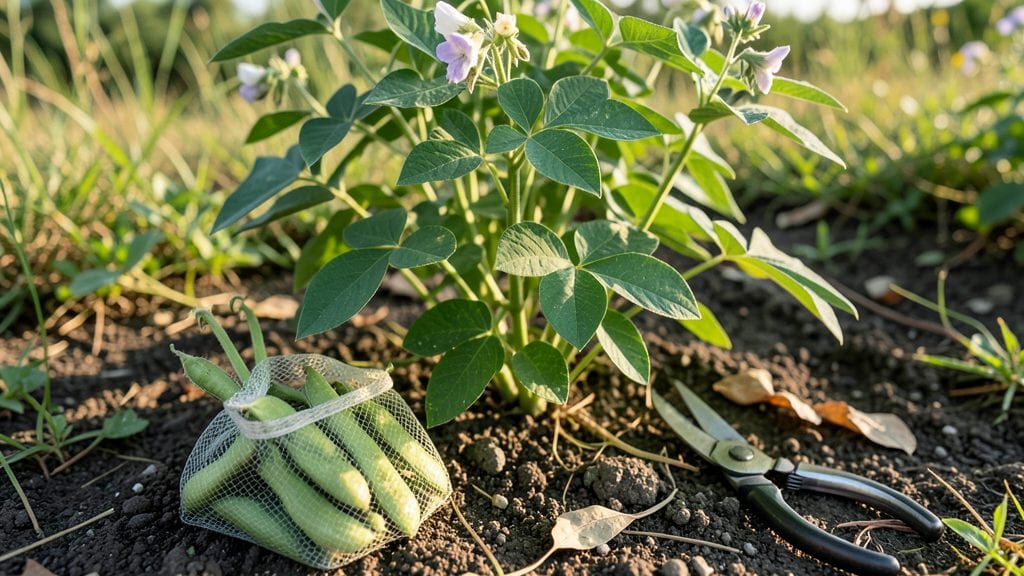
The Federal Seed Act regulates seed labeling, testing, and sales to guarantee purity, germination rates, and honest marketing—shielding gardeners from fraudulent or substandard plant materials.
The Federal Seed Act was created to give gardeners confidence in what they buy. 🌱 This law requires seed sellers to clearly label varieties, germination percentages, and purity standards, making it easier to spot misleading claims.
For example, if a packet claims "90% germination," it must actually meet that standard when tested by the USDA. Small-scale gardeners are often exempt, but commercial sellers face strict compliance checks to prevent fraud—like selling seeds labeled as "organic" when they're not.
What makes this act especially valuable is its role in protecting against common scams, such as mislabeled heirloom seeds or seeds that won’t grow. 💛 Gardeners can verify seed quality by checking for USDA certification labels or purchasing from reputable suppliers.
If you suspect fraud, you can report violations through the USDA Seed Regulatory Program, which investigates complaints and enforces penalties for non-compliance.
💡 In This Article
- Federal Seed Act Labeling Requirements Explained
- How the Federal Seed Act Safeguards Home Gardeners
Federal seed act labeling requirements explained
The Federal Seed Act mandates four core labeling requirements that act as a shield against deceptive seed sales. First, every seed packet must display the exact botanical variety name, such as "Heirloom Cherry Tomato 'Sungold'" rather than vague terms like "tomato seeds."
This prevents sellers from passing off inferior varieties as premium ones. For example, a packet labeled "organic heirloom" must match the exact cultivar listed on USDA-approved seed lists.
Germination rates are another critical standard—sellers must guarantee at least 80% of seeds will sprout under ideal conditions, tested by certified labs. This is verified through USDA-approved germination tests, where seeds are planted in controlled environments and monitored for 7-14 days depending on the species.
For instance, fast-germinating radish seeds are tested for 7 days, while slower varieties like beans require 10-14 days of evaluation.
Purity standards ensure that 98% of seeds in the packet must be from the labeled variety, with no more than 2% contamination from weeds or other crops. This is enforced through USDA purity tests, where a sample is analyzed for foreign matter, inert material, and other seeds.
For example, a bag of "Non-GMO Corn Seeds" must contain 99.9% corn seeds, with only 0.1% allowed as other seeds or debris.
Net weight is also strictly regulated—packets must list the actual weight of seeds, not just the container's capacity. For instance, a 1-ounce packet must contain exactly 1 ounce of seeds, not padded with filler materials.
This prevents sellers from overcharging for lightweight or empty packets, a common scam in bulk seed sales.
Commercial sellers must comply with these rules, while small-scale gardeners (selling less than $1,000 annually) are exempt. However, even exempt sellers must avoid false claims, as the USDA can investigate complaints and impose fines up to $10,000 per violation.
For example, a farmer selling seeds at a local market must truthfully label varieties, even if not required to list germination rates.
What most gardeners don’t realize is how these rules prevent subtle fraud. For example, a seed packet labeled "Hybrid Tomato 'Early Girl'" must match the exact hybrid, not a cheaper substitute.
The USDA’s Seed Regulatory Program audits sellers annually, testing random samples for compliance. If a violation is found, the seller faces corrective actions, including relabeling or refunds for affected customers.
Here’s how to spot compliant seed packets: Look for USDA certification labels, germination percentages, and variety names that match USDA databases. If a packet lacks these details, it may violate the act, putting your garden at risk. 💫