
Companion Plants
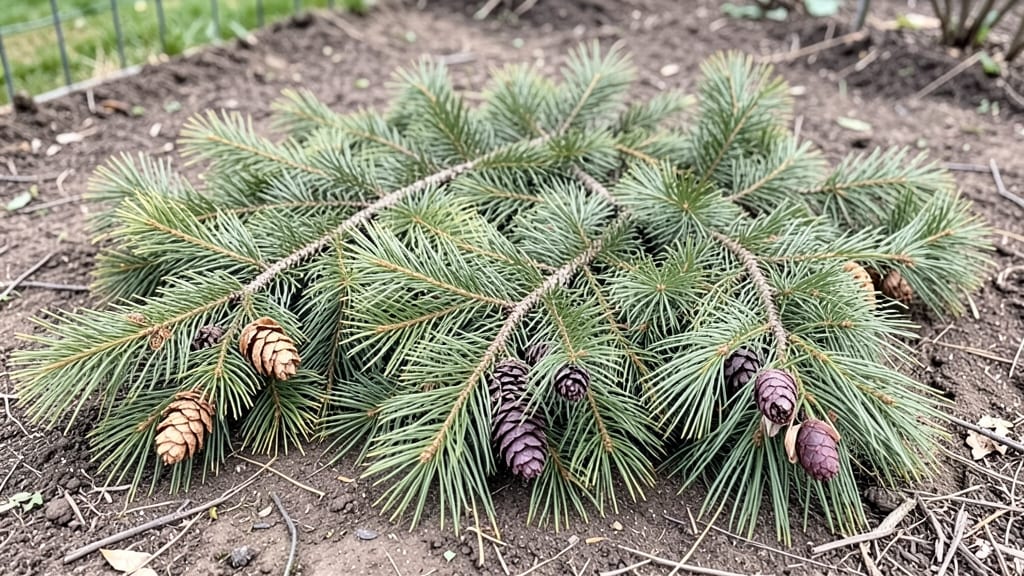
Naked seed plants, or gymnosperms, produce seeds exposed on cones or scales rather than enclosed in fruits, making them distinct from flowering plants like angiosperms. Their seeds develop on the surface of leaf-like structures, allowing direct exposure to air and pollinators like wind or insects.
These plants rely on wind or insects to spread their seeds, which stay visible on specialized structures like cones or scales. 🌲 Unlike flowering plants that hide seeds inside fruits, gymnosperms showcase their seeds openly, making them easier to identify in nature.
Their hardy nature and unique reproduction methods make them stand out in both wild landscapes and cultivated gardens.
Gymnosperms include familiar trees like pine, spruce, and fir, as well as more unusual plants like ginkgo and cycads. Their exposed seeds aren't just a botanical quirk—they play a key role in how these plants survive and thrive in different environments.
💡 In This Article
- Gymnosperm Seed Development and Reproduction
- Common Naked Seed Plant Types and Their Uses
Gymnosperm seed development and reproduction
The defining feature of gymnosperms is their exposed ovules, which develop directly on modified leaves called sporophylls. Unlike angiosperms (flowering plants), these ovules aren't enclosed in an ovary—meaning their seeds sit openly on cone scales or leaf surfaces.
This exposure allows pollen to land directly on the ovule, where fertilization occurs without the need for a protective fruit structure. 🌿 The result is seeds that develop in the open air, often visible as small, winged structures on cones.
Conifer cones like those from pine trees demonstrate this perfectly. Male cones produce pollen that gets carried by wind to female cones, where the ovules reside on fleshy scales. After fertilization, the seed develops externally on these scales, protected only by a thin seed coat.
This process contrasts sharply with angiosperms, where ovules are enclosed in ovaries that later become fruits. The exposed nature of gymnosperm seeds also means they often rely on wind or animals for dispersal rather than fruit-based mechanisms.
Cones play a dual role in gymnosperm reproduction: they protect developing seeds while facilitating pollination. Pine cones, for example, stay closed during dry conditions to preserve moisture but open when humid, releasing pollen.
Female cones remain closed until seeds mature, at which point they may open to release seeds or stay closed as a protective structure. This system creates a 1-3 year development cycle for many gymnosperms, compared to angiosperms' often faster 1-2 month fruit maturation.
One fascinating adaptation is the winged seeds of many gymnosperms, like maple's helicopter seeds. These wings allow seeds to glide on air currents, covering greater distances than wind-dispersed seeds without wings. Some gymnosperms even use water for dispersal—like the Taxodium (bald cypress) seeds that float before germinating.
This diversity in dispersal methods reflects their ancient evolutionary history, predating flowering plants by over 100 million years. 🌬️
The absence of fruits in gymnosperms eliminates the need for animal-based seed dispersal seen in many angiosperms. Instead, gymnosperms have evolved specialized structures like cones that serve both reproductive and protective functions.
While angiosperms use fruits to attract animals for seed spread, gymnosperms rely on physical adaptations—wings, buoyancy, or even explosive seed release—to ensure their survival. This fundamental difference shapes entire ecosystems, from forest understories to coastal wetlands.
Consider the ginkgo tree, one of the oldest living gymnosperms. Its seeds develop on the surface of fleshy structures that resemble small plums, but unlike true fruits, they lack a protective ovary wall.
When mature, these seeds fall to the ground where they can germinate—demonstrating how gymnosperms have successfully adapted to urban environments despite their ancient reproductive methods. This resilience highlights why gymnosperms remain dominant in many ecosystems worldwide.