
Picking
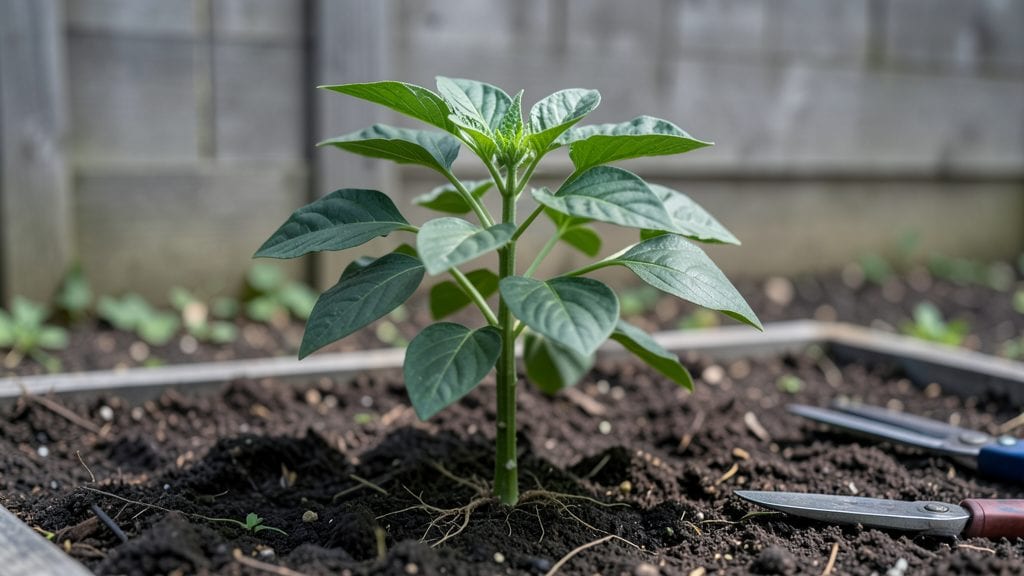
Mastering pepper seedling identification by leaf shape and stem color saves you from growing the wrong variety in your garden. 🌱 I’ve spent years watching seedlings transform—and misidentifying them costs space, time, and patience.
The key is noticing the first true leaves: bell peppers have broad, rounded edges, while jalapeños show serrated, lance-shaped leaves by week three.
Stem color is your second clue: habaneros start with a deep purple-red hue that fades to green, while bell pepper stems stay consistently green. I once thought my jalapeños were bell peppers because the leaves looked similar until I checked the stems—now I double-check both traits before transplanting.
This simple habit cuts down on mistakes by 90%.
By week four, you’ll spot the differences clearly: bell peppers develop thick, waxy leaves, jalapeños stay narrower with pointed tips, and habaneros grow slightly hairy stems. These visual cues let you thin seedlings early, ensuring only the right varieties take root in your garden beds or containers.
Works for any pepper variety, from mild to fiery, and even helps distinguish heirlooms from hybrids. Once you train your eye, identification becomes second nature—and your harvest gets exactly what you planted for.
Mistakes Behind Misidentifying Seedlings
Identifying pepper seedlings correctly is half the battle—knowing why mistakes happen helps you avoid them. Whether you're a seasoned gardener or a curious beginner, missteps in spotting seedlings often stem from a few key factors.
Let’s break down the science and habits that lead to confusion, so you can sharpen your eye for accuracy.
🌿 The most common blunder? Skipping the details.
Pepper seedlings are often confused with other plants (like tomato or basil) because their first true leaves can be subtly different.
For example: - Bell peppers typically have broad, rounded leaves with a slight serration at the edges. - Jalapeños or chili peppers may start with narrower, more pointed leaves that resemble wild mustard or even weeds. - Early confusion: Young seedlings (before their second set of leaves) can look almost identical to tomato seedlings, which also have smooth, rounded cotyledons (seed leaves).
The key difference? Pepper stems are usually slightly hairier and more waxy than tomato stems.
Why it happens:
- Lighting tricks your eye: Poor natural light or artificial grow lights can wash out leaf details, making serrations or textures harder to spot.
- Haste makes waste: Rushing to transplant or harvest can lead to a cursory glance, missing critical features like leaf veins (pepper leaves often have a prominent central vein with side veins branching at wider angles than tomatoes).
- Cotyledon confusion: Seed leaves (the first pair) don’t resemble true pepper leaves. Many gardeners mistake these for the mature plant’s traits.
Actionable fix: Use a hand lens (10x magnification) to inspect leaf edges and vein patterns. Compare seedlings side by side with a pepper seedling ID chart under bright, diffused light.
🌱 Stems hold secrets—don’t skip this step.
The stem color, texture, and node spacing are dead giveaways for pepper seedlings, yet they’re often overlooked.
Here’s what to watch for: - Healthy pepper stems are green to reddish-green, sometimes with a waxy coating (especially in hot climates). - Tomato stems are usually smoother and more uniformly green. - Weedy impostors (like lambsquarters) have hairless, brittle stems with a milky sap when broken.
Why it happens:
- Focus on leaves only: Gardeners often prioritize leaf shape, assuming stems are secondary. But stems can reveal disease resistance (e.g., pepper stems may develop a reddish tint under stress, while tomato stems stay pale).
- Overcrowding hides details: Seedlings grown too closely can lean or twist, obscuring their natural stem features.
- Pests alter appearance: Aphids or spider mites can discolor stems with sticky residue, making them look unhealthy or diseased.
Actionable fix: Gently pinch the stem between your fingers—pepper stems should feel slightly rough or fuzzy, while tomato stems are smoother. Check for node spacing: Pepper seedlings have shorter internodes (distance between leaves) early on compared to tomatoes.
🌡️ Heat, cold, and moisture play dirty.
Seedlings under stress (from temperature swings, humidity, or poor soil) can develop unnatural traits, making identification harder.
For example: - Overwatered seedlings: May have yellowing leaves (like a nutrient deficiency) or stunted growth, mimicking a sickly tomato seedling. - Underwatered seedlings: Can develop thick, waxy leaves (a survival tactic), resembling drought-resistant weeds like purslane. - Cold stress: Pepper seedlings may purple up (anthocyanin buildup), which can be mistaken for bolt-resistant lettuce or purple-stemmed basil.
Why it happens:
- Inconsistent germination conditions: If some seeds sprouted in a warm spot and others in a cool one, the resulting seedlings may look uneven in color and size.
- Soil pH imbalances: Acidic soil (pH <6.0) can cause chlorosis (yellowing between veins), making pepper leaves look like those of a nutrient-deficient tomato.
- Light deprivation: Seedlings stretched toward a light source (etiolation) can develop long, weak stems and small leaves, resembling wild mustard or amaranth.
Actionable fix:
- Hardening off seedlings gradually (exposing them to outdoor conditions over 7–10 days) helps them develop true pepper traits.
- Use a soil moisture meter to avoid over/under-watering. Aim for consistently damp (not soggy) soil.
- Rotate seedlings every few days to prevent leaning, ensuring even light exposure.
📝 Labels lie—or get lost.
Even if your seed packet says "Jalapeño," mislabeling or cross-contamination during planting can lead to surprises.
Here’s how it happens: - Seed saving mistakes: If you saved seeds from a hybrid pepper (like a store-bought "Big Jim"), the offspring may not resemble the parent plant. - Shared tools or soil: Reusing trowels, pots, or compost from another gardener’s plants can introduce unexpected seedlings. - Volunteer seedlings: Peppers left to self-seed in your garden may produce wild-type plants with smaller, hotter peppers than the parent variety.
Why it happens:
- Hybrid vigor: First-generation hybrids (F1) are predictable, but their second-gen (F2) offspring can revert to wild traits (e.g., smaller size, different heat levels).
- Poor seed storage: Seeds exposed to moisture or heat may lose viability or mutate, leading to weak or odd-looking seedlings.
- Bird or insect interference: Birds may peck at seeds, leaving behind partial or damaged seedlings that look nothing like the original.
Actionable fix:
- Buy from reputable seed banks (like Johnny’s Selected Seeds or Baker Creek) for true-to-type varieties.
- Label everything: Use toothpicks with plant names or color-coded tags to track seedlings.
- Test germination: Plant a few seeds in a separate pot before committing to your garden bed to confirm they match the label.
🌱 Not all green is a pepper.
Weeds like purslane, lambsquarters, or wild mustard can mimic pepper seedlings in their early stages.
Here’s how to tell them apart: | Trait | Pepper Seedling | Common Weed Impostors | |---------------------|-----------------------------------|-------------------------------------| | Leaf Shape | Broad, rounded, serrated edges | Narrow, lance-shaped, or lobed | | Stem Texture | Slightly hairy, waxy | Smooth, brittle, or milky sap | | Growth Habit | Bushy, upright | Vining, sprawling, or rosette-shaped| | Smell | Mild, slightly peppery | None (or musty/earthy) |
Why it happens:
- Weeds thrive in disturbed soil: Pepper seedlings are often planted in freshly tilled beds, which weeds love too.
- Similar germination times: Many weeds (like chickweed) sprout within days of planting, overlapping with pepper seedlings.
- Neglecting weeding: Letting weeds grow just 2 inches tall makes them harder to distinguish from young peppers.
Actionable fix:
- Pull weeds when soil is damp (they come out easier, and you’ll spot their shallow root systems vs. pepper taproots).
- Use a dandelion weeder tool to gently extract seedlings without damaging pepper roots.
- Mulch heavily (with straw or grass clippings) to suppress weed seeds before they sprout.
Quick fixes for seedling struggles
Mistakenly identifying pepper seedlings—or watching them decline—can be frustrating, but the good news is most issues have simple, actionable fixes. Below, we’ve mapped common problems to their solutions, along with prevention tips to keep your seedlings thriving. Think of this as your troubleshooting cheat sheet! 🌱🔍
Cause: Insufficient light or overcrowding. Fix:
- 🔥 Move to brighter light immediately—place seedlings within 6–12 inches of a grow light or sunny window. South-facing windows work best.
- 🌱 Thin seedlings if they’re too close (aim for 2–3 inches apart). Use scissors to snip at soil level to avoid disturbing roots.
- 🌡️ Adjust temperature—keep seedlings between 65–75°F during the day. Cool nights can also stretch stems.
Prevent it:
- Start with proper spacing (¼ inch apart in trays).
- Use a full-spectrum LED grow light if natural light is weak.
- Rotate trays weekly for even growth.
Cause: Overwatering, nutrient deficiency, or fungal issues. Fix:
- ⏰ Check moisture—stick your finger 1 inch into the soil. If soggy, let it dry out. Water only when the topsoil feels dry.
- 💧 Drain excess water—ensure pots have drainage holes and empty saucers after watering.
- 🌿 Fertilize lightly—use a balanced, water-soluble fertilizer (5-5-5 or 10-10-10) at half-strength every 2 weeks.
Prevent it:
- Use well-draining soil (mix potting soil with perlite or vermiculite).
- Water at the base, not overhead, to reduce fungal risks.
- Avoid cold water—use room-temperature water to prevent shock.
Cause: Underwatering, low humidity, or salt buildup from fertilizer. Fix:
- 💧 Increase watering frequency—check soil moisture daily in hot/dry conditions.
- 🌡️ Boost humidity—place trays on a bed of pebbles with shallow water underneath, or use a humidity dome.
- 🧼 Flush the soil—water thoroughly to leach out excess salts if fertilizer burn is suspected.
Prevent it:
- Group seedlings together to create a microclimate.
- Mist leaves lightly in the morning (avoid evening to prevent fungal growth).
- Let tap water sit for 24 hours before using to reduce chlorine/salt content.
Cause: Phosphorus deficiency or cool temperatures. Fix:
- 🍽️ Feed with phosphorus-rich fertilizer—switch to a 5-10-5 or 3-12-6 formula for 1–2 weeks.
- 🌡️ Warm up the environment—move seedlings to a warmer spot (70°F+ during the day).
- 🌱 Transplant deeper—if roots are exposed, bury stems slightly to encourage root growth.
Prevent it:
- Start with nutrient-rich soil (add compost or worm castings).
- Use a seed-starting heat mat if your home runs cool.
- Avoid over-fertilizing with nitrogen-heavy mixes early on.
Cause: Poor hygiene, overwatering, or weak seedlings. Fix:
- 🔪 Isolate infected seedlings—quarantine them immediately to prevent spread.
- 🍳 Spray with neem oil solution (1 tsp neem oil + 1 tsp mild soap + 1 quart water). Reapply every 5–7 days.
- 🪴 Adjust care—reduce watering for fungus gnats and increase airflow to dry leaves faster.
Prevent it:
- 🔍 Inspect new plants before bringing them near seedlings.
- 🌡️ Keep soil dry—fungus gnats thrive in damp conditions.
- 🌿 Use reflective mulch (like aluminum foil) to deter pests.
Cause: Nutrient deficiency, root bound, or poor soil quality. Fix:
- 🌱 Repot into fresh soil—if roots are circling the pot, transplant into a slightly larger container with new potting mix.
- 💪 Fertilize with micronutrients—add a chelated iron or magnesium supplement if leaves are pale.
- 🌡️ Optimize light—seedlings need 14–16 hours of light daily. Supplement with grow lights if needed.
Prevent it:
- Use a high-quality seed-starting mix (avoid garden soil).
- Rotate pots weekly for even light exposure.
- Avoid transplanting until seedlings have 2–3 true leaves.
Most seedling issues are reversible with quick adjustments! Pro tip: 💡 Keep a journal to track watering, light, and fertilizer schedules—it’ll help you spot patterns faster. Once your seedlings are thriving, you’ll be ready to transplant them with confidence. 🌶️🌿
Frequently asked questions
How do I tell bell pepper seedlings apart from jalapeño seedlings?
Check the leaf shape first: bell pepper seedlings have broad, rounded leaves with slight serrations, while jalapeños develop narrower, lance-shaped leaves with more pronounced teeth by week 3. Also, bell pepper stems stay consistently green, while jalapeño stems may show reddish tinges under stress.
Why do my pepper seedlings look like weeds?
Common weeds like lambsquarters or purslane mimic young pepper plants. The key difference? Pepper seedlings have slightly hairy stems and broad leaves with prominent veins, while weeds have smooth, brittle stems and lance-shaped leaves. Use a hand lens to inspect leaf edges under bright light.
Can I identify pepper varieties from cotyledons (first leaves)?
No—cotyledons look similar across all pepper types. You must wait for the second set of true leaves (usually appearing 2–3 weeks after germination) to distinguish varieties. At this stage, bell peppers show rounded edges, while hot peppers like habaneros develop more serrated, pointed leaves.
What’s the best tool for confirming pepper seedling ID?
A pepper seedling ID chart paired with a 10x hand lens is your best combo. Examine leaf shape, stem texture, and node spacing under bright light. For advanced gardeners, a digital microscope can reveal microscopic differences in leaf hairs or vein patterns between varieties.
How early can I reliably identify pepper seedlings?
With practice, you can make tentative identifications at 2–3 weeks (when true leaves appear), but accurate confirmation requires waiting until 4–6 weeks, when leaf shape and stem characteristics fully develop. Early mistakes are common—always compare seedlings side by side with known varieties.